





North American Deer Mice
Peromyscus
North American deer mice are small, cute creatures that love to explore! They have soft fur and big eyes, making them great at finding food in the wild.
Habitat: Forests
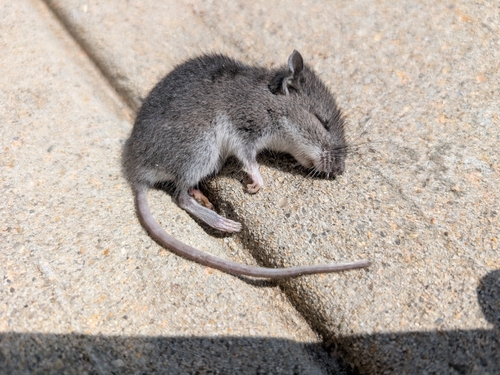
The North American Deer Mouse has soft fur, typically reddish-brown or grayish-brown on its back, sharply contrasting with a pure white belly and feet. Its most distinctive feature is a bicolored tail, dark on top and white underneath, usually as long as or longer than its body, setting it apart from other small rodents.
Category
MammalsRarity
Common
Danger
1/5 · Very low
Snaps
1
Amazing! Deer mice build cozy nests using soft plant materials and even feathers.
Believe it or not, these tiny mice can swim quite well to cross small streams!
Did you know their bicolored tail acts like a rudder for quick turns?
Wow! A female deer mouse can have up to 14 litters in a single year!
North American Deer Mice have large eyes and excellent night vision that helps them forage for food and avoid predators in the dark.
North American Deer Mice can jump surprisingly high and far to escape predators and navigate complex terrain.
North American Deer Mice have a long, bicolored tail that helps them balance while climbing and running.
North American Deer Mice can gather and store large amounts of seeds and nuts for winter survival.
These tiny omnivores munch on a mix of seeds, nuts, fruits, insects, and fungi.
Furry describes animals possessing a dense covering of soft hair or fur.
Social animals live in organized groups, cooperating for survival benefits such as foraging, defense, and raising offspring.
This trait identifies organisms whose diet includes both plant and animal matter.
Arboreal animals live primarily in trees, utilizing them for shelter, food, and protection from predators.

Forest habitats are terrestrial environments dominated by dense tree cover, supporting a high diversity of plant and animal life.

This trait identifies organisms that exhibit exceptional swiftness in movement for hunting, escape, or travel.

Nocturnal animals are primarily active during the nighttime hours, typically resting or sleeping during the day.
No aliases listed yet.
Danger
1/5 · Very low
If you see a deer mouse, it's best to watch from a distance and not try to touch it.
The easiest way to identify North American Deer Mice is to use the Snappit nature identifier app.
7-10 cm
0.01-0.03 kg
1-2 years
12 km/h
These tiny omnivores munch on a mix of seeds, nuts, fruits, insects, and fungi.
Forests
Foraging
Zoom in to split clusters and explore where this object has been snapped.
Jun 12, 2026
Four CornersPhoto attribution
no rights reserved
License: CC0 1.0 ↗
Image may be shown cropped inside the card frame.
Take the discovery with you
Snap it with Snappit to identify it, learn what makes it special, and add the discovery to your collection.







.jpg&width=800)


.JPG&width=800)



.jpg&width=800)
