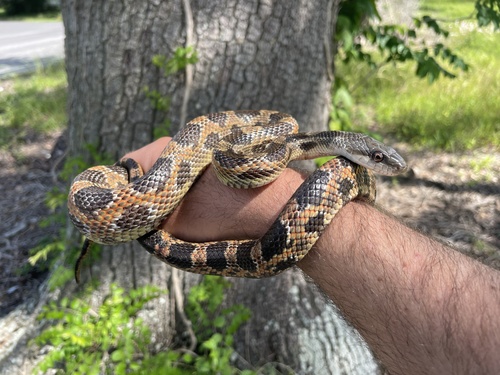
Western Ratsnake
Pantherophis obsoletus
The Western Ratsnake is a long, slender snake that can be black, gray, or brown. They are great climbers and often found in trees, making them fun to watch as they explore their surroundings!
Habitat: Forests
The Western Ratsnake is a large, non-venomous snake with highly variable coloring, often dark brown or black in adults, sometimes with faint blotches. Young snakes are typically gray with darker blotches and stripes. Its body is slender and muscular.
Category
ReptilesRarity
Common
Danger
1/5 · Very low
Snaps
30
These amazing climbers can scale rough brick walls!
They sometimes freeze, kinking their body to perfectly mimic a broken branch!
Western Ratsnakes sometimes raid bird nests high in trees for eggs!
Young Western Ratsnakes look strikingly different with blotchy patterns!
Western Ratsnake can squeeze its prey because of its powerful muscles that helps them capture and subdue meals.
Western Ratsnake can climb high into trees and buildings because of its strong scales that helps them find nests or escape danger.
Western Ratsnake can vibrate its tail rapidly because of its specialized muscles that helps them sound like a venomous rattlesnake to scare threats.
Western Ratsnake has glands that produce a foul-smelling musk that helps them deter predators when they feel threatened.
This snake is a carnivore that primarily eats small mammals and birds, helping to control pest populations!
Age differences: Young snakes often eat more lizards and frogs before moving on to larger prey.
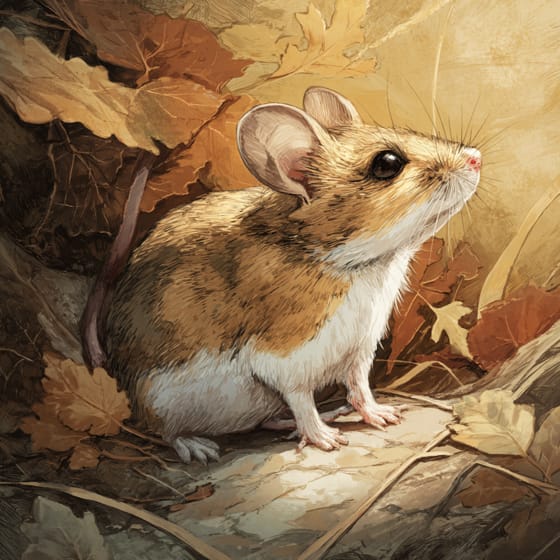
Peromyscus maniculatus
A common meal, especially for younger ratsnakes.
Microtus pennsylvanicus
A frequent target in grassy habitats.
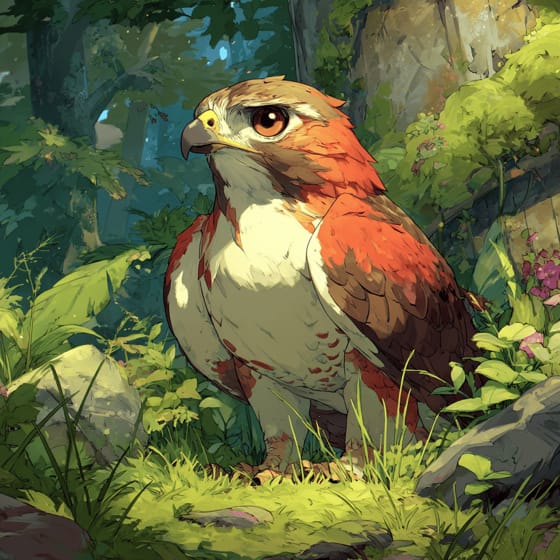
Buteo jamaicensis
A common aerial predator of snakes.
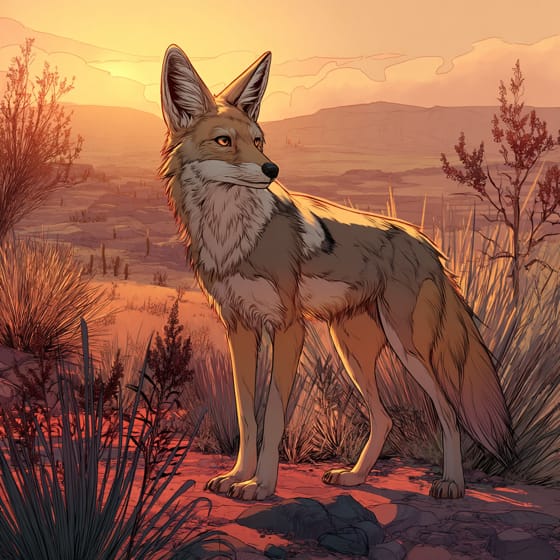
Canis latrans
Opportunistically preys on snakes it encounters.
Solitary animals live alone for most of their lives, only interacting with others for mating or parental care.
Arboreal animals live primarily in trees, utilizing them for shelter, food, and protection from predators.
Forest habitats are terrestrial environments dominated by dense tree cover, supporting a high diversity of plant and animal life.
This trait identifies organisms whose diet consists entirely or primarily of animal tissue.

Diurnal animals are primarily active during daylight hours, typically resting or sleeping at night.
No aliases listed yet.
Danger
1/5 · Very low
If you see a snake, it's best to watch from a distance and not touch it.
The easiest way to identify Western Ratsnake is to use the Snappit nature identifier app.
107-256 cm
0.5-2.5 kg
10-25 years
3 km/h
This snake is a carnivore that primarily eats small mammals and birds, helping to control pest populations!
Forests
Ambush
Zoom in to split clusters and explore where this object has been snapped.
Apr 28, 2025
Crowley Historic DistrictPhoto attribution
(c) Alan Kneidel, some rights reserved (CC BY)
License: CC BY 4.0 ↗
Image may be shown cropped inside the card frame.

Texas, US
You might spot Anole, Monarch, and Pinkladies.
View guide →

Oklahoma, US
You might spot Western Ratsnake and Spotted Chorus Frog.
View guide →

Louisiana, US
You might spot Heavenly Bamboo, Rio Grande Copper Lily, and Ballmoss.
View guide →

Texas, US
You might spot Honey Mesquite, Anacua, and Alamo Vine.
View guide →

Missouri, US
You might spot Painted-Cup Paintbrush and Great Spangled Fritillary.
View guide →

Texas, US
You might spot Giraffes, African Lion, and Eastern Black Rhinoceros.
View guide →
Take the discovery with you
Snap it with Snappit to identify it, learn what makes it special, and add the discovery to your collection.