





northern bush honeysuckle
Diervilla lonicera
The northern bush honeysuckle is a cheerful shrub with bright yellow flowers. It grows in many places and is loved by butterflies and bees for its sweet nectar.
Habitat: Forests
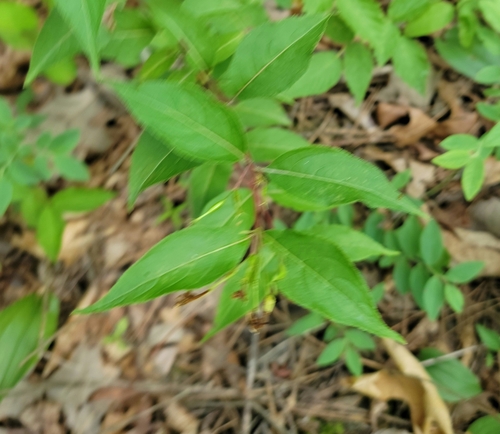
The northern bush honeysuckle is a medium-sized shrub with opposite, oval leaves and clusters of small, trumpet-shaped flowers. These flowers start yellowish-green, fading to reddish-orange, and develop into slender, elongated seed capsules.
Category
PlantsRarity
Common
Danger
1/5 · Very low
Snaps
11
Despite its name, this plant is not a true honeysuckle; it belongs to a different family!
Its scientific name, Diervilla, honors a French surgeon and botanist, Dr. Dierville.
Some Indigenous peoples historically used parts of this plant for traditional medicinal purposes.
The tiny seeds within its fruit can remain dormant in the soil for many years before sprouting.
Northern bush honeysuckle can thrive in dry conditions thanks to its tough root system, helping it survive harsh summers.
This plant has flowers that change color from yellow to reddish as they age, helping to signal to pollinators which flowers offer nectar.
Northern bush honeysuckle produces berries that attract birds, which then help disperse its seeds to new locations, aiding reproduction.
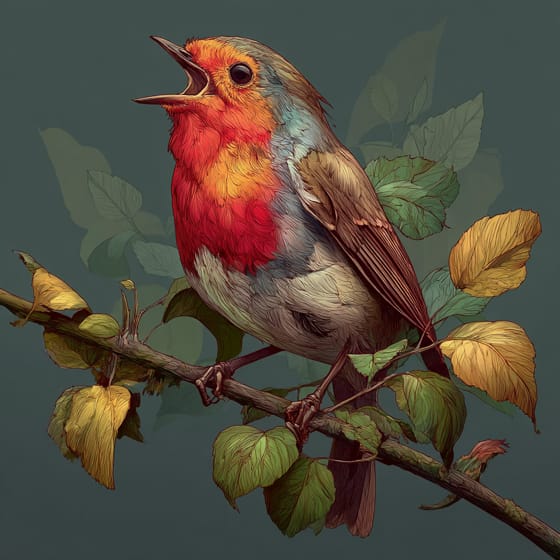
Turdus migratorius
American Robins eat its berries, dispersing seeds.
Bombus impatiens
Bumblebees visit its flowers for nectar, helping with pollination.

Odocoileus virginianus
White-tailed deer browse on its leaves and twigs.
Hemaris thysbe
Its leaves are food for the caterpillars of Hummingbird Clearwing Moths.
Aromatic plants produce and emit fragrant volatile organic compounds, often for defense or to attract pollinators.
Deciduous plants periodically shed all their leaves, typically during autumn or dry seasons.
Flowering plants are any plants that produce flowers as part of their reproductive cycle.
A shrub is a woody plant smaller than a tree, typically with multiple stems branching from or near the ground.

Fragrant flowers emit a pleasant aroma, often to attract pollinators or for defense.

Fruit-bearing plants produce fruits, which are the mature ovaries of flowering plants containing seeds.

Fall color refers to the seasonal change in foliage pigmentation, primarily in deciduous plants, displaying vibrant hues.

Describes plants that are particularly attractive and beneficial to a wide range of pollinating organisms.

Forest habitats are terrestrial environments dominated by dense tree cover, supporting a high diversity of plant and animal life.
No aliases listed yet.
Danger
1/5 · Very low
Always look but don't touch the plants without asking an adult.
The easiest way to identify northern bush honeysuckle is to use the Snappit nature identifier app.
100-200 cm
100-150 cm
1-2 cm
Summer
No
Mild
Perennial
Zoom in to split clusters and explore where this object has been snapped.
Jul 2, 2023
Canoe Landing Prairie State Natural AreaPhoto attribution
(c) aarongunnar, some rights reserved (CC BY)
License: CC BY 4.0 ↗
Image may be shown cropped inside the card frame.

Wisconsin, US
You might spot Turkey, White-Tailed Deer, and Dame's Rocket.
View guide →

Maine, US
You might spot American Bullfrog and Three-Toothed Cinquefoil.
View guide →

Massachusetts, US
You might spot Hemlock Woolly Adelgid, Eastern Newt, and Red Trillium.
View guide →

Indiana, US
You might spot Common Reed, Rosepink, and Bearberry.
View guide →

Quebec, CA
You might spot Alder Buckthorn, Common Blue, and Eastern Gray Squirrel.
View guide →

Massachusetts, US
You might spot Common Eastern Bumble Bee and Eastern Gray Squirrel.
View guide →
Take the discovery with you
Snap it with Snappit to identify it, learn what makes it special, and add the discovery to your collection.






.jpg&width=800)


_001.jpg&width=800)




