





Owston's palm civet
Chrotogale owstoni
Owston's palm civet is a small, furry animal that loves to climb trees! They have big eyes and a long tail, which helps them balance as they explore their forest home.
Habitat: Forests
The Owston's palm civet has a striking appearance with a long, slender body covered in bold black and white stripes and spots. Its face features a distinctive long snout and a white mask, while its bushy tail is ringed with black and white bands, making it easily recognizable.
Category
MammalsRarity
Rare
Danger
2/5 · Low
Snaps
Be the first to snap!
It marks its territory with a special scent from glands under its tail!
Its striking patterns are unique, like fingerprints, no two civets are exactly alike!
This civet uses its long snout to root around like a tiny pig for food!
Unlike many civets, Owston's spends more time on the ground hunting worms!
Owston's palm civet has a super-sensitive nose that helps them sniff out tasty insects, worms, and fallen fruits.
Owston's palm civet can dig for hidden prey because of its strong, non-retractable claws, perfect for unearthing invertebrates.
Owston's palm civet has excellent night vision that helps them hunt insects and worms in the dark forest undergrowth.
This civet loves to snack on a variety of creepy crawlies like worms and insects, plus some fruits!
Lumbricus terrestris
A key food source, dug up from the forest floor.
Ficus racemosa
Enjoys fallen fruits from these trees when available.
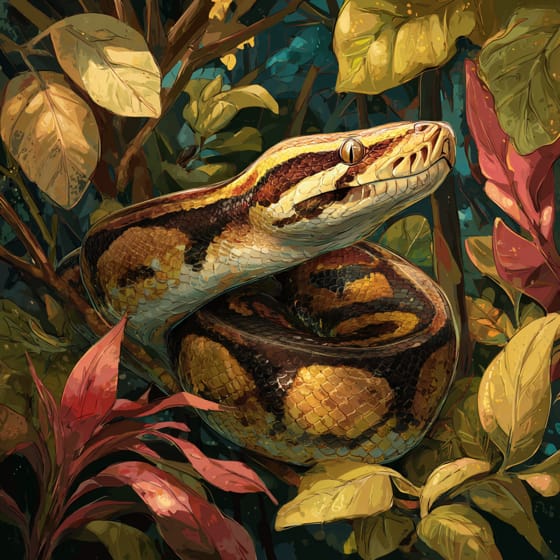
Python bivittatus
Young or unwary civets can become prey for large snakes.

Rattus rattus
Occasionally preys on small rodents found in its habitat.
Furry describes animals possessing a dense covering of soft hair or fur.
This trait identifies organisms whose diet includes both plant and animal matter.
Arboreal animals live primarily in trees, utilizing them for shelter, food, and protection from predators.
Forest habitats are terrestrial environments dominated by dense tree cover, supporting a high diversity of plant and animal life.

Nocturnal animals are primarily active during the nighttime hours, typically resting or sleeping during the day.

Endangered status indicates a species is at a very high risk of extinction in the wild in the near future.
No aliases listed yet.
Danger
2/5 · Low
If you see a wild animal, it's best to watch from a distance and not approach.
The easiest way to identify Owston's palm civet is to use the Snappit nature identifier app.
57-77 cm
3.6-4.8 kg
8-13 years
20 km/h
This civet loves to snack on a variety of creepy crawlies like worms and insects, plus some fruits!
Forests
Foraging
Zoom in to split clusters and explore where this object has been snapped.
Recent snaps will appear here as new observations are added.
Take the discovery with you
Snap it with Snappit to identify it, learn what makes it special, and add the discovery to your collection.




.jpg&width=800)



.JPG&width=800)



.jpg&width=800)
