



Paraugochloropsis
Paraugochloropsis
Paraugochloropsis is a colorful insect that loves to hide among the leaves. It has bright colors that help it blend in with flowers and plants, making it a fun little friend to spot in nature!
Habitat: Forests
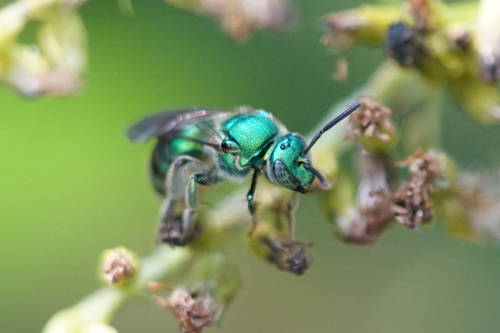
The Paraugochloropsis is a small, often brilliantly metallic green or coppery bee with clear, delicate wings. Its shimmering body makes it stand out like a tiny jewel among garden flowers, often with dark legs and antennae.
Category
InsectsRarity
Common
Danger
1/5 · Very low
Snaps
Be the first to snap!
Did you know some "sweat bees" get their name because they occasionally land on people to lick up sweat?
Paraugochloropsis larvae grow up eating a special "bee bread" made by their mothers from pollen and nectar!
Their amazing metallic bodies aren't paint, but special light-bending structures in their exoskeleton!
These tiny bees are super important pollinators for many wild flowers and even some farm crops!
Paraugochloropsis can carry tiny grains of pollen on their fuzzy legs, which helps new plants grow fruits and seeds.
Paraugochloropsis has strong mandibles and legs for digging, which helps them tunnel underground to build safe nests for their babies.
Paraugochloropsis can navigate using the sun's position, which helps them find their way back to their hidden nest after foraging far away.
They primarily feed on nectar for energy and pollen for protein, collected from various flowering plants.
Helianthus annuus
helps this flower produce seeds
Misumena vatia
hides on flowers to ambush bees

Mantis religiosa
a stealthy predator that catches bees
Sphecodes rufiventris
lays eggs in their nests to steal food
Solitary animals live alone for most of their lives, only interacting with others for mating or parental care.
Camouflaged describes organisms that possess coloring or patterns that allow them to blend into their environment.
Colorful describes organisms or objects displaying a wide range of bright and distinct colors.
This trait characterizes organisms whose diet consists entirely or primarily of plant material.
Describes plants that are particularly attractive and beneficial to a wide range of pollinating organisms.
Forest habitats are terrestrial environments dominated by dense tree cover, supporting a high diversity of plant and animal life.
Diurnal animals are primarily active during daylight hours, typically resting or sleeping at night.
Describes organisms that transfer pollen, enabling the fertilization and reproduction of plants.
No aliases listed yet.
Danger
1/5 · Very low
Always watch where you step in nature to avoid stepping on tiny insects like this one.
Look for six legs, antennae, three body sections and the shape of the wings. Beetles have hardened front wings; flies have just one working pair. Tiny insects may need a close view before their group is clear. Insect Identifier: upload a photo and compare the visible details.
8-20 mm
4-10 mm
30-90 days
12 km/h
They primarily feed on nectar for energy and pollen for protein, collected from various flowering plants.
Forests
Foraging
Zoom in to split clusters and explore where this object has been snapped.
Recent snaps will appear here as new observations are added.
Take the discovery with you
Snap it with Snappit to identify it, learn what makes it special, and add the discovery to your collection.