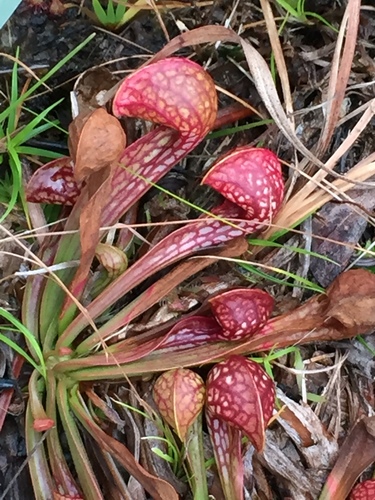


Parrot Pitcher Plant
sarracenia psittacina
The Parrot Pitcher Plant (Sarracenia psittacina) is a fascinating carnivorous plant native to the damp, boggy wetlands of the southeastern United States. Unlike its upright relatives, this low-growing species forms a prostrate rosette of pitchers that lie flat against the wet soil. Its unique evolutionary design allows it to flourish in habitats that undergo frequent, temporary flooding, making it one of the few pitcher plants that can capture prey both on land and underwater. When submerged, it acts like a lobster trap, snaring small aquatic critters. Beloved by botanists for its elaborate, colorful foliage and clever survival tactics in nutrient-poor soils, it utilizes specialized leaves that mimic the look of a parrot's beak to lure unsuspecting prey into its chambered trap.
Habitat: Found in wet pine savannas, flatwoods, and boggy margins, especially in areas prone to seasonal flooding.
This plant is easily recognized by its decumbent, ground-hugging rosettes of highly modified leaves that range from 10 to 30 cm in length. Each pitcher ends in a highly inflated, globose hood with a distinct hook-like beak resembling a parrot's head. The pitchers are brightly colored with rich reddish-maroon veining set against a green or yellowish background, and are heavily speckled with white, translucent patches known as fenestrations. A narrow, wing-like ridge runs along the top of each tube, guiding ground-crawling insects toward the tiny, dark entrance hidden beneath the curved beak.
Category
PlantsRarity
Common
Danger
1/5 · Very low
Snaps
1
Instead of open vertical tubes, it uses a horizontal tunnel system that resembles a lobster trap, directing insects inward with specialized hairs.
It is the only pitcher plant species in its genus that routinely uses an underwater trapping mechanism during seasonal floods.
Its species name 'psittacina' translates to 'parrot-like', referencing the plant's distinctive hooked pitchers.
Uses a narrow entrance lined with inward-pointing hairs that make it easy for prey to enter but nearly impossible to crawl back out.
Can survive prolonged periods underwater during floods, utilizing its pitchers to capture aquatic invertebrates and small tadpoles.
Employs translucent, window-like spots on its hood that confuse trapped insects, which mistake them for exits and fly deeper into the digestive tract.
Captures terrestrial insects such as ants and beetles on land, as well as small aquatic invertebrates and tadpoles when the plant is temporarily submerged.
Age differences: Seedlings consume microscopic soil organisms and small mites, while mature pitchers capture larger crawling insects and aquatic prey.
Exyra semicrocea
The larvae of this moth live inside and feed exclusively on the pitcher tissues of Sarracenia species, damaging the traps.
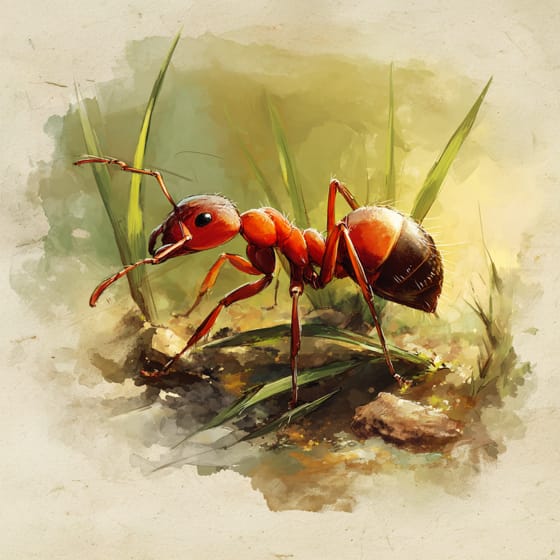
Solenopsis invicta
Attracted by nectar secretions, these insects crawl into the pitchers and are digested as a vital nutrient source.
Bombus pennsylvanicus
Pollinator that visits the red, nodding flowers of the pitcher plant in spring, facilitating cross-pollination.
No trait badges are assigned for this object yet.
No aliases listed yet.
Collections for this object will appear here as more themes are added.
Danger
1/5 · Very low
No special safety notes yet.
The easiest way to identify Parrot Pitcher Plant is to use the Snappit nature identifier app.
10-30 cm
0.05-0.2 kg
10-30 years
Captures terrestrial insects such as ants and beetles on land, as well as small aquatic invertebrates and tadpoles when the plant is temporarily submerged.
Found in wet pine savannas, flatwoods, and boggy margins, especially in areas prone to seasonal flooding.
Ambush
Zoom in to split clusters and explore where this object has been snapped.
Take the discovery with you
Snap it with Snappit to identify it, learn what makes it special, and add the discovery to your collection.












.jpg&width=800)



_001.jpg&width=800)




