





Pectoral Sandpiper
Calidris melanotos
The Pectoral Sandpiper is a small bird that loves to wade in shallow waters. It has a special pectoral muscle that helps it run fast and catch food like insects and tiny fish.
Habitat: Wetlands
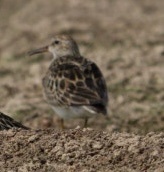
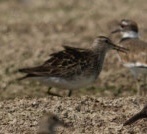
The Pectoral Sandpiper has a streaky brown back and a striking white belly with a sharply defined brown breast band. Its yellowish legs and a slightly downcurved bill help it forage in wet areas. This distinct breast band makes it look like it's wearing a 'vest'.
Category
BirdsRarity
Common
Danger
1/5 · Very low
Snaps
6
Pectoral Sandpipers lay eggs with pointy ends, so they fit snugly in the nest!
Some Pectoral Sandpipers travel from the Arctic all the way to Antarctica's doorstep!
The mother Pectoral Sandpiper raises her chicks all by herself in the frosty Arctic!
These birds fly past the equator TWICE every year on their amazing journey!
Pectoral Sandpiper has mottled brown feathers that help it blend perfectly into muddy tundra and shorelines, hiding from predators.
Pectoral Sandpiper males can inflate a special chest sac to make booming calls during dazzling aerial courtship displays.
These little birds love to slurp up small insects and tiny critters from soggy ground.
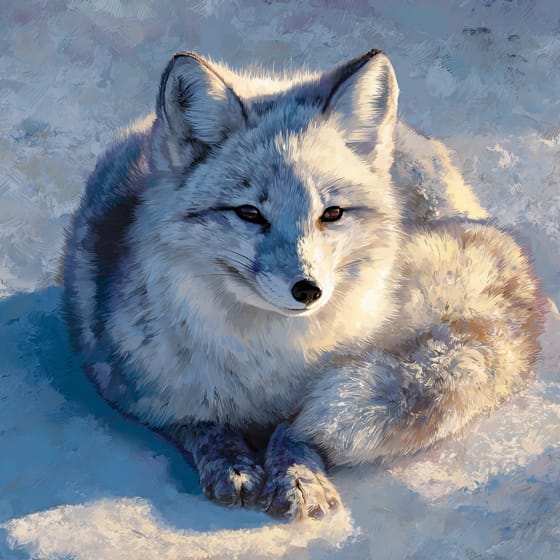
Vulpes lagopus
Eggs and chicks are prey for this cunning tundra predator.
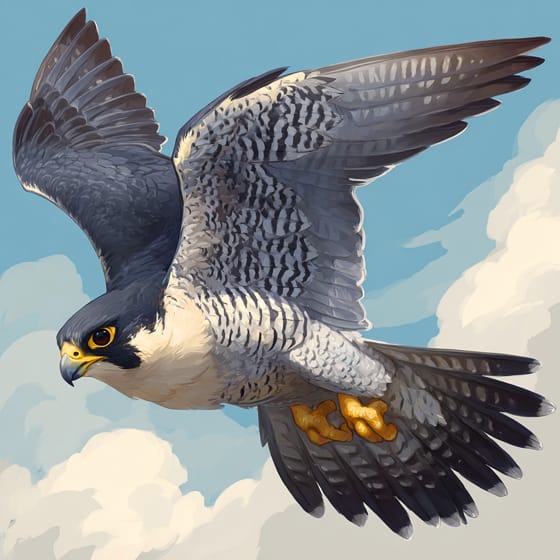
Falco peregrinus
Swift falcons hunt adult sandpipers during migration and breeding.
Chironomus tentans
Eats larvae and adults of midges and other small insects.
Carex aquatilis
Relies on sedges for nesting cover in wet tundra habitats.
Feathered describes animals, primarily birds, possessing a covering of feathers.
Colorful describes organisms or objects displaying a wide range of bright and distinct colors.
This trait identifies organisms whose diet primarily consists of insects and other small invertebrates.
This habitat trait identifies species found in wetlands, which are areas of land saturated with water, either permanently or seasonally, including marshes, swamps, and bogs.

This trait identifies organisms whose diet consists entirely or primarily of animal tissue.

Diurnal animals are primarily active during daylight hours, typically resting or sleeping at night.

This trait identifies organisms that exhibit exceptional swiftness in movement for hunting, escape, or travel.

Migratory animals undertake seasonal movements from one region to another, typically in response to changes in climate or food availability.
No aliases listed yet.
Danger
1/5 · Very low
Always watch birds from a distance so they feel safe and can fly away if they need to.
The easiest way to identify Pectoral Sandpiper is to use the Snappit nature identifier app.
18-25 cm
38-48 cm
0.04-0.12 kg
6-8 years
70 km/h
These little birds love to slurp up small insects and tiny critters from soggy ground.
Wetlands
Zoom in to split clusters and explore where this object has been snapped.
Aug 17, 2025
Crowley Historic DistrictPhoto attribution
(c) Brandon Johnson, some rights reserved (CC BY)
License: CC BY 4.0 ↗
Image may be shown cropped inside the card frame.
Aug 17, 2025
Crowley Historic DistrictPhoto attribution
(c) Brandon Johnson, some rights reserved (CC BY)
License: CC BY 4.0 ↗
Image may be shown cropped inside the card frame.

Tennessee, US
You might spot Pond Slider, White-Tailed Deer, and Great Blue Heron.
View guide →

Kansas, US
You might spot African Elephant, Gorilla, and Panthera Pardus Orientalis.
View guide →

Louisiana, US
You might spot Pectoral Sandpiper, Sprague's Pipit, and Anole.
View guide →

Nebraska, US
You might spot Purple Martin, Prairie Rattlesnake, and Lesser Scaup.
View guide →

New Hampshire, US
You might spot Eastern White Pine, Trailing Arbutus, and White Oak.
View guide →
Take the discovery with you
Snap it with Snappit to identify it, learn what makes it special, and add the discovery to your collection.




.jpg&width=800)






