



Diamondback Terrapin

Discover a unique chapter of American history at Meeting House Hill Historic District.
Discover a unique chapter of American history at Meeting House Hill Historic District. This serene Connecticut landmark preserves an exceptional tableau of early 19th-century religious tolerance and architectural heritage. Set atop a commanding hill in North Guilford, it offers visitors a peaceful journey back to a time when two distinct congregations forged a path to peaceful coexistence.
The district's heart features two significant churches: the stately North Guilford Congregational Church, a fine example of Federal architecture from 1812-1814, and the eclectic St. John's Episcopal Church, showcasing a blend of Classical and Gothic styles from the same period, altered in later decades. Surrounding these ecclesiastical anchors are their historic associated buildings, including an 1823 Congregational parsonage and an 1851 Greek Revival rectory for St. John's, alongside a venerable cemetery and the ancient Ledge Hill Road. These structures collectively tell a story of community, faith, and the evolving American landscape.
Visiting Meeting House Hill is an opportunity to immerse yourself in a quiet corner of New England history, where the architectural beauty of Federal, Greek Revival, and Gothic styles intertwines with a narrative of reconciliation. It's a place for reflective walks, appreciating historical craftsmanship, and understanding the profound social shifts that shaped early American communities. The district's preserved landscape and significant buildings provide a memorable and educational experience for all who explore its hallowed grounds. Enhance your adventure: download the Snappit app to identify the local species you encounter.
Meeting House Hill in North Guilford, Connecticut, served as an agricultural outpost of Guilford from its early settlement. Land was first designated for a common in 1705, followed by allocations for a meeting house and cemetery in 1717. The area was initially dominated by a strong Congregationalist population, whose church was supported by town taxes. However, by 1747, a segment of the North Guilford populace declared allegiance to the Church of England (later Episcopalian), leading to disputes over church taxation. A spirit of reconciliation emerged in the early 19th century, culminating in the Congregationalists permitting the Episcopalians to construct their church adjacent to the existing one. This unique arrangement of two prominent churches from different denominations side-by-side, along with their associated buildings and the historic cemetery, led to the district's listing on the National Register of Historic Places in 1987, recognizing its architectural and historical significance, particularly as a testament to religious tolerance.
Each card links to a full Explore page with photos, traits, and fun facts.
Start with the big picture, then zoom in to explore individual wildlife observations around this place.
Wear comfortable walking shoes as you'll be exploring the grounds and potentially uneven paths in the cemetery.
Bring a camera to capture the beautiful historic architecture and scenic New England landscape.
Consider researching the history of the churches and prominent figures buried in the cemetery beforehand to enhance your visit.
Pack a light snack or picnic to enjoy in the peaceful surroundings, but remember to carry out all trash.
Be respectful of any ongoing church services or private events if visiting during operational hours of the churches.
Check for any local events or historical society programs that might coincide with your visit, offering deeper insights into the district.
Jun 5, 2026
Jun 5, 2026
Jun 5, 2026
Jun 4, 2026
Jun 1, 2026

Maryland, US
You might spot White-Tailed Deer and Eastern Gray Squirrel.
View guide →

District of Columbia, US
You might spot Eastern Gray Squirrel, Duck, and House Sparrow.
View guide →

Illinois, US
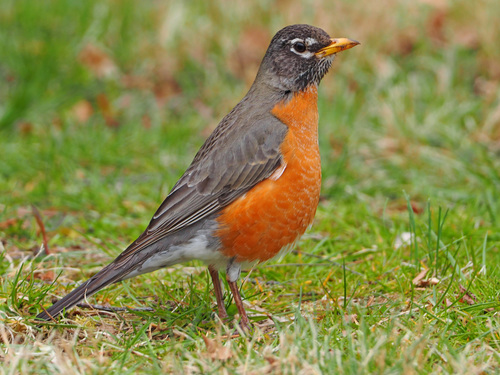
You might spot American Robin, Canada Goose, and House Sparrow.
View guide →

Virginia, US
You might spot Spotted Lanternfly and Northern Cardinal.
View guide →
Take the discovery with you
Identify the wildlife you spot, learn as you go, and keep a collection of the adventure.