





pointed-leaved tick-trefoil
Hylodesmum glutinosum
The pointed-leaved tick-trefoil is a lovely plant with long, pointed leaves. It grows in fields and meadows, adding beauty to the landscape with its delicate flowers.
Habitat: Fields and meadows
The pointed-leaved tick-trefoil has distinctive three-part leaves, each leaflet tapering to a point. Its small, reddish-purple to pink flowers bloom on upright stalks. After flowering, it produces flat, sticky seed pods that easily attach to passersby.
Category
PlantsRarity
Common
Danger
1/5 · Very low
Snaps
8
Did you know its leaves can fold up like it's sleeping every night? Wow!
Even though it's called "tick-trefoil," it's not a tick and it doesn't cause ticks!
Its scientific name, glutinosum, means "sticky," just like its amazing seed pods!
This plant is a cousin to peas and beans, but its fruits are flat and super sticky!
The pointed-leaved tick-trefoil has fuzzy, sticky seed pods that latch onto fur or clothes, helping it travel to new places and spread its seeds.
This plant can team up with tiny root bacteria to pull nitrogen from the air, making the soil healthier for other plants to grow.
The pointed-leaved tick-trefoil's leaves fold together at night, a cool trick that might help it save energy or avoid pests.
Apis mellifera
collects nectar from its small flowers
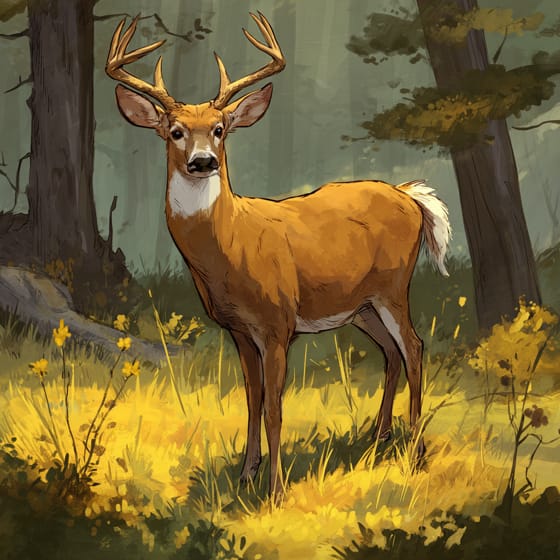
Odocoileus virginianus
browses the plant's foliage and stems
Ceratoma trifurcata
feeds on the plant's leaves as a host
Rhizobium leguminosarum
fixes nitrogen in its root nodules
Deciduous plants periodically shed all their leaves, typically during autumn or dry seasons.
Flowering plants are any plants that produce flowers as part of their reproductive cycle.
Describes organisms capable of converting atmospheric nitrogen into compounds usable by plants.
Ornamental plants are cultivated primarily for their aesthetic appeal, enhancing landscapes and gardens with their attractive foliage, flowers, or form.

Grassland habitats are terrestrial biomes dominated by grasses and herbaceous plants, supporting a variety of grazing animals.

Describes plants that are particularly attractive and beneficial to a wide range of pollinating organisms.
No aliases listed yet.
Danger
1/5 · Very low
Always look but don't touch wild plants unless a grown-up says it's okay.
The easiest way to identify pointed-leaved tick-trefoil is to use the Snappit nature identifier app.
30-100 cm
30-60 cm
0.5-1 cm
Summer
No
None
Perennial
Zoom in to split clusters and explore where this object has been snapped.

Wisconsin, US
You might spot Eastern Redcedar, Rock Polypody, and Vulture.
View guide →

Michigan, US
You might spot Hickory Tussock Moth, Mayapple, and Winged Euonymus.
View guide →

Wisconsin, US
You might spot American Cancer-Root and Eastern White Pine.
View guide →

Illinois, US
You might spot American Robin, Monarch, and Duck.
View guide →

Michigan, US
You might spot Prairie Trillium, Large White Trillium, and Wild Geranium.
View guide →

Pennsylvania, US
You might spot Solomon's Plume, Moonseed, and Virginia Waterleaf.
View guide →
Take the discovery with you
Snap it with Snappit to identify it, learn what makes it special, and add the discovery to your collection.







.jpg&width=800)



_001.jpg&width=800)




