





Police Car Moth
Gnophaela vermiculata
The Police Car Moth is a special insect that looks like a tiny police car! It has bright colors and patterns that help it blend in with its surroundings. This moth is fun to spot while exploring nature.
Habitat: Forests
The Police Car Moth has striking black and white striped forewings that resemble a police car's pattern. Its head and thorax often display bright orange or red, contrasting with its dark body. The hindwings are typically yellow or orange with a distinct black border.
Category
InsectsRarity
Common
Danger
1/5 · Very low
Snaps
7
Even though it's a moth, it loves to fly around in the sunshine, not just at night!
It belongs to a family of moths called 'tiger moths,' famous for bold patterns and defensive toxins.
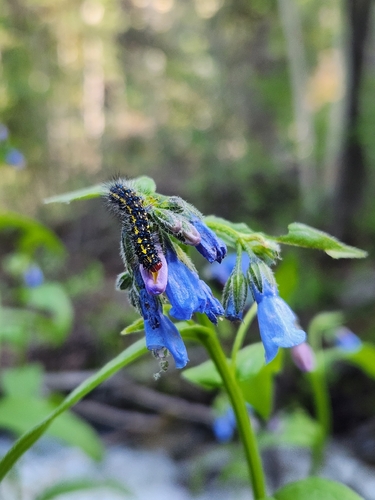
Its caterpillars are fuzzy and colorful, often striped orange and black, eating toxic plants.
The chemicals it collects from its food can even protect its eggs from being eaten!
Police Car Moth can warn predators with its bright colors because it stores toxins from its food, making it taste bad.
Police Car Moth can fly during the day because it adapted to a diurnal lifestyle, helping it find specific host plants in sunlight.
Police Car Moth has special chemicals that protect it from predators because it absorbs poisons from the ragwort plants it eats.
Caterpillars eat toxic plants, while adults might sip nectar, or not feed.
Age differences: Larvae feed on specific toxic plants; adults primarily sip nectar or do not feed.
Senecio jacobaea
Caterpillars feed on its toxic leaves.

Cyanocitta stelleri
Birds might try to eat but quickly learn of its toxins.
Achillea millefolium
Adults may visit flowers for nectar, aiding pollination.
Marked with parallel bands or lines of color.
Colorful describes organisms or objects displaying a wide range of bright and distinct colors.
This trait characterizes organisms whose diet consists entirely or primarily of plant material.
Forest habitats are terrestrial environments dominated by dense tree cover, supporting a high diversity of plant and animal life.

Nocturnal animals are primarily active during the nighttime hours, typically resting or sleeping during the day.

Describes organisms that transfer pollen, enabling the fertilization and reproduction of plants.
No aliases listed yet.
Danger
1/5 · Very low
Always look but don't touch insects, as some can be delicate.
The easiest way to identify Police Car Moth is to use the Snappit nature identifier app.
35-50 mm
15-25 mm
7-20 days
8 km/h
Caterpillars eat toxic plants, while adults might sip nectar, or not feed.
Forests
Foraging
Zoom in to split clusters and explore where this object has been snapped.
Jul 1, 2023
Lehman Orchard and AqueductPhoto attribution
(c) Cristhian Mace, some rights reserved (CC BY)
License: CC BY 4.0 ↗
Image may be shown cropped inside the card frame.

Montana, US
You might spot Great Blanketflower and Seven-Spotted Lady Beetle.
View guide →

Montana, US
You might spot Bighorn Sheep and Mountain Goat.
View guide →

Montana, US
You might spot Field Crescent, Thimbleberry, and Baker's Mariposa Lily.
View guide →

Oregon, US
You might spot Rough-Skinned Newt and Northern Red-Legged Frog.
View guide →

Nevada, US
You might spot Great Basin Bristlecone Pine and Holmgren's Buckwheat.
View guide →

Wyoming, US
You might spot Moose, Black Bear, and Sticky Geranium.
View guide →
Take the discovery with you
Snap it with Snappit to identify it, learn what makes it special, and add the discovery to your collection.








.jpg&width=800)


