





Porcelain Berry
Ampelopsis glandulosa
Porcelain Berry is a colorful vine that grows beautiful blue and purple berries. It can climb up trees and fences, making it look very pretty in gardens and parks.
Habitat: Urban areas
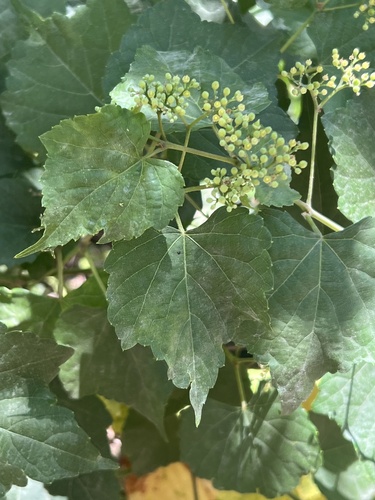
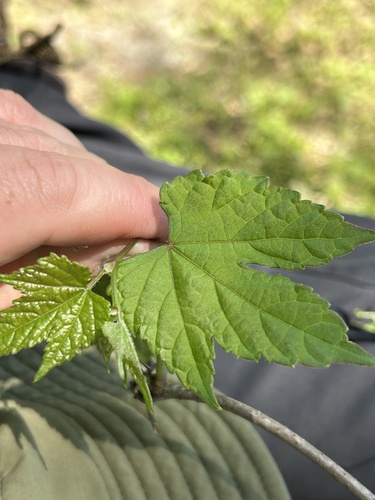
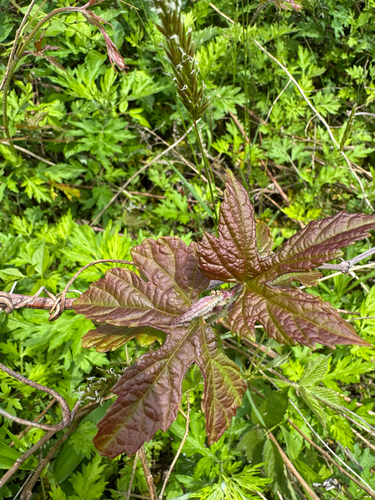
The Porcelain Berry is a vigorous woody vine with deeply lobed leaves. Its most striking feature is its clusters of marble-like berries that transition from green to white, pink, purple, and dazzling iridescent blue.
Category
PlantsRarity
Common
Danger
2/5 · Low
Snaps
23
Its berries look like tiny jewels, shimmering with iridescent colors!
Porcelain Berry is a super climber, using tiny "hands" called tendrils to grip!
This plant can grow over 25 feet in a single season!
Though beautiful, it's considered an invasive bully to native plants in some places!
Porcelain Berry can rapidly climb using tendrils, allowing it to reach sunlight over other plants and structures.
This plant has berries that change through a spectrum of colors—green, white, pink, purple, and blue—as they mature.
Even if cut back, Porcelain Berry can quickly regrow from its root system, making it very persistent.
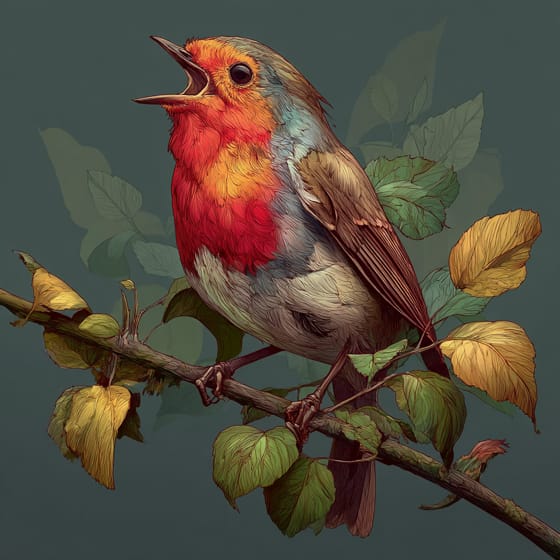
Turdus migratorius
eats berries, dispersing seeds
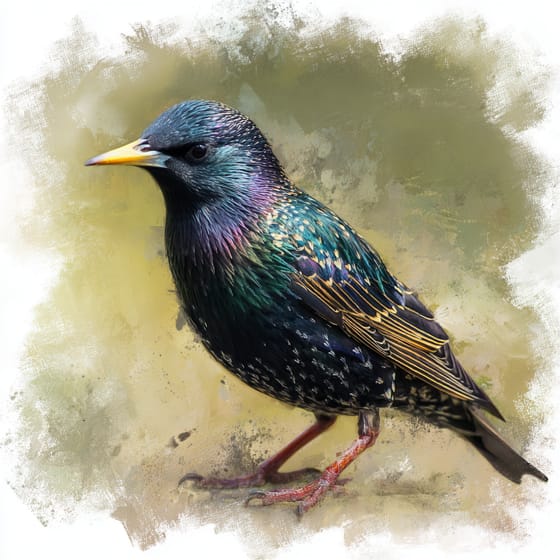
Sturnus vulgaris
consumes berries, aiding dispersal
Apis mellifera
collects nectar from its flowers
Climbing or vine plants are characterized by a growth habit that allows them to ascend upwards by twining, tendrils, or adhesive roots.
Ornamental plants are cultivated primarily for their aesthetic appeal, enhancing landscapes and gardens with their attractive foliage, flowers, or form.
Fruit-bearing plants produce fruits, which are the mature ovaries of flowering plants containing seeds.
Colorful describes organisms or objects displaying a wide range of bright and distinct colors.

Fall color refers to the seasonal change in foliage pigmentation, primarily in deciduous plants, displaying vibrant hues.

Rapid growing plants exhibit accelerated growth rates, quickly increasing in size and biomass within a short period.

This habitat trait indicates species that can coexist with humans in urban and suburban environments, utilizing man-made structures and green spaces.

Invasive species are non-native organisms that cause harm to the environment, economy, or human health.
No aliases listed yet.
Danger
2/5 · Low
While the berries are pretty, it's best to not eat them. Always ask an adult before touching plants.
The easiest way to identify Porcelain Berry is to use the Snappit nature identifier app.
300-600 cm
150-300 cm
0.3-0.5 cm
Summer
No
Mild
Perennial
Zoom in to split clusters and explore where this object has been snapped.
Jun 19, 2026
BloomingdalePhoto attribution
(c) Frederick Nunley, some rights reserved (CC BY)
License: CC BY 4.0 ↗
Image may be shown cropped inside the card frame.
Jun 4, 2026
Frelinghuysen ArboretumPhoto attribution
(c) Bonnie Semmling, some rights reserved (CC BY)
License: CC BY 4.0 ↗
Image may be shown cropped inside the card frame.
May 27, 2026
Slocum's River ReservePhoto attribution
no rights reserved
License: CC0 1.0 ↗
Image may be shown cropped inside the card frame.

Rhode Island, US
You might spot Rugosa Rose and American Herring Gull.
View guide →

District of Columbia, US
You might spot Eastern Gray Squirrel, Duck, and House Sparrow.
View guide →
.jpg)
District of Columbia, US
You might spot Eastern Gray Squirrel, Duck, and House Sparrow.
View guide →

New York, US
You might spot Common Eastern Bumble Bee and American Robin.
View guide →

Ohio, US
You might spot Spotted Lanternfly and Eastern Fox Squirrel.
View guide →

District of Columbia, US
You might spot Duck, Eastern Gray Squirrel, and House Sparrow.
View guide →
Take the discovery with you
Snap it with Snappit to identify it, learn what makes it special, and add the discovery to your collection.









.jpg&width=800)


_001.jpg&width=800)




