





purple loosestrife
Lythrum salicaria
Purple loosestrife is a tall, beautiful flower with bright purple spikes. It grows in wet areas and is loved by many butterflies and bees.
Habitat: Wetlands
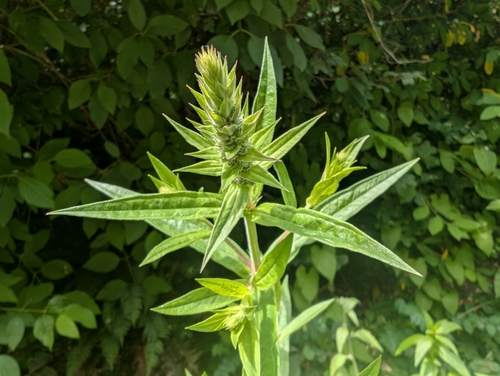
The purple loosestrife has tall, stiff stems topped with striking, dense spikes of magenta-purple flowers. Each spike is crowded with many small, star-shaped blossoms, making it stand out brightly in wetland environments.
Category
PlantsRarity
Common
Danger
1/5 · Very low
Snaps
12
Even small fragments of this plant can grow into a whole new plant!
Its dense growth can block waterways, harming fish and other aquatic life!
One single plant can produce over two million tiny seeds a year!
This plant arrived in North America in the 1800s, likely in ship ballast!
purple loosestrife can produce millions of tiny seeds that easily spread by wind and water to new locations.
purple loosestrife has strong roots that help it grow rapidly in waterlogged soils, outcompeting native plants.
purple loosestrife can regrow from small root or stem pieces, making it incredibly difficult to completely remove.
Apis mellifera
gathers nectar and pollen
Galerucella calmariensis
larvae and adults consume its leaves

Bombus impatiens
visits flowers for nectar
Flowering plants are any plants that produce flowers as part of their reproductive cycle.
Biennial plants complete their life cycle over two growing seasons, typically forming foliage in the first year and flowering/seeding in the second.
Summer blooming plants produce their flowers during the summer season, often providing vibrant color when many other plants have finished.
Fragrant flowers emit a pleasant aroma, often to attract pollinators or for defense.

Colorful describes organisms or objects displaying a wide range of bright and distinct colors.

Describes plants that are particularly attractive and beneficial to a wide range of pollinating organisms.

Rapid growing plants exhibit accelerated growth rates, quickly increasing in size and biomass within a short period.

This habitat trait identifies species found in wetlands, which are areas of land saturated with water, either permanently or seasonally, including marshes, swamps, and bogs.

Invasive species are non-native organisms that cause harm to the environment, economy, or human health.
No aliases listed yet.
Danger
1/5 · Very low
Always look but don't touch plants without asking an adult first.
The easiest way to identify purple loosestrife is to use the Snappit nature identifier app.
50-250 cm
30-100 cm
1-2 cm
Summer-early fall
No
None
Perennial
Zoom in to split clusters and explore where this object has been snapped.
Jun 19, 2026
Discovery ParkPhoto attribution
(c) Zachary M.C., some rights reserved (CC BY)
License: CC BY 4.0 ↗
Image may be shown cropped inside the card frame.

New Jersey, US
You might spot Garlic Mustard, Sensitive Fern, and Common Mugwort.
View guide →

New York, US
You might spot Common Eastern Bumble Bee and American Robin.
View guide →

Washington, US
You might spot Great Blue Heron, Aggregating Anemone, and Ochre Sea Star.
View guide →

New Jersey, US
You might spot Duck, Canada Goose, and Red-Winged Blackbird.
View guide →

District of Columbia, US
You might spot Blue Dasher, Fragile Forktail, and Slaty Skimmer.
View guide →

District of Columbia, US
You might spot Duck, Blue Dasher, and Eastern Gray Squirrel.
View guide →
Take the discovery with you
Snap it with Snappit to identify it, learn what makes it special, and add the discovery to your collection.








.jpg&width=800)

_001.jpg&width=800)




