



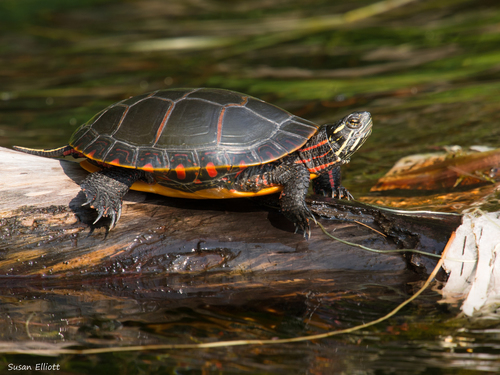
Painted Turtle
Canoe Meadows Wildlife Sanctuary offers a tranquil escape into nature in the heart of the Berkshires.
Canoe Meadows Wildlife Sanctuary offers a tranquil escape into nature in the heart of the Berkshires. This beautiful 263-acre sanctuary, managed by Mass Audubon, protects a rich mosaic of habitats including open fields, wetlands, and forests, providing critical space for diverse wildlife. Visitors can enjoy peaceful walks and immerse themselves in the natural beauty of western Massachusetts.
The sanctuary boasts over 3 miles of easy walking trails, including a universally accessible trail, that wind through scenic landscapes. Along these paths, you might spot a variety of birds, including eastern bluebirds, tree swallows, and red-winged blackbirds, especially near the sanctuary's numerous bird boxes and wetland areas. Keep an eye out for deer, beavers, and river otters, particularly around the Housatonic River and its adjacent meadows. The diverse habitats also support a rich array of plant life, with vibrant wildflowers blooming in the meadows during warmer months.
Canoe Meadows is a perfect destination for nature lovers of all ages, offering serene environments for birdwatching, photography, and leisurely strolls. Its commitment to accessibility ensures that many can connect with nature, making it an ideal spot to unwind, observe wildlife, and appreciate the ecological richness of the region. Planning to visit? Download the Snappit app to identify the wildlife you spot in real-time.
Canoe Meadows Wildlife Sanctuary was established through a series of generous gifts from the Appleton and Whitney families. In 1974, Mary C. Appleton donated the initial 150 acres to Mass Audubon, with additional parcels acquired over time, expanding the sanctuary to its current 263 acres. The sanctuary was created to protect significant natural habitats and provide a haven for wildlife, while also offering educational and recreational opportunities for the public. Today, it remains a vital part of Mass Audubon's network of wildlife sanctuaries dedicated to conservation.
Walk the extensive trail system, enjoy birdwatching, look for signs of beaver and otter activity, photograph wildflowers, and observe insects.
Spring: Migratory birds return, wildflowers begin to bloom, and the meadows turn green.
Summer: Lush foliage, abundant insects including butterflies and dragonflies, and active young wildlife. Meadows are vibrant with wildflowers.
Fall: Stunning fall foliage, hawk migration, and preparations by animals for winter.
Winter: Snowshoeing and cross-country skiing are popular activities, with opportunities for tracking wildlife.
The sanctuary features a universally accessible trail, ensuring that visitors with mobility challenges can enjoy a portion of the sanctuary. This trail includes a firm, level surface. The main sanctuary building also has accessible restrooms.
An easy-to-navigate path suitable for all abilities, offering views of meadows and wetlands.
Opportunities to observe riverine wildlife like otters and various waterfowl.
Areas around the numerous bird boxes and wetland edges are excellent for spotting eastern bluebirds, tree swallows, and red-winged blackbirds.
Dedicated gardens that attract butterflies and other pollinators during warmer months.
Each card links to a full Explore page with photos, traits, and fun facts.
Start with the big picture, then zoom in to explore individual wildlife observations around this place.
Bring binoculars
** Essential for birdwatching and spotting distant wildlife, especially in the open meadows.
Wear comfortable shoes
Even the accessible trail is best enjoyed with appropriate footwear, and other trails can be uneven.
Visit in the morning
Wildlife is often most active during the early hours, offering better viewing and photography opportunities.
Stay on marked trails
This protects delicate habitats and ensures your safety.
Pack insect repellent
Especially during warmer months, ticks and mosquitoes can be present, particularly near wetland areas.
Check the Mass Audubon website
Before visiting, check the official website for current hours, trail conditions, and any scheduled programs or events.

Maryland, US
You might spot White-Tailed Deer and Eastern Gray Squirrel.
View guide →

District of Columbia, US
You might spot Eastern Gray Squirrel, Duck, and House Sparrow.
View guide →

Illinois, US
You might spot American Robin, Canada Goose, and House Sparrow.
View guide →

Virginia, US
You might spot Spotted Lanternfly and Northern Cardinal.
View guide →
Take the discovery with you
Identify the wildlife you spot, learn as you go, and keep a collection of the adventure.