





resurrection fern
Pleopeltis michauxiana
The resurrection fern is a special plant that can dry up and look dead, but when it gets water, it comes back to life! It loves to grow on tree trunks and rocks in warm places.
Habitat: Forests
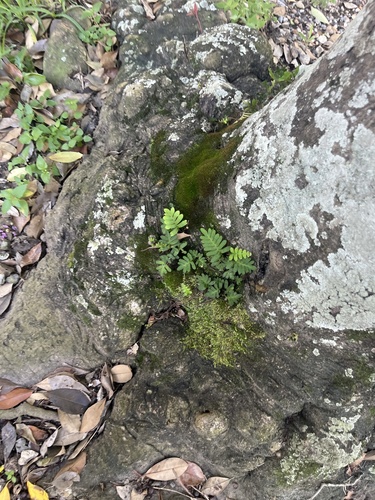
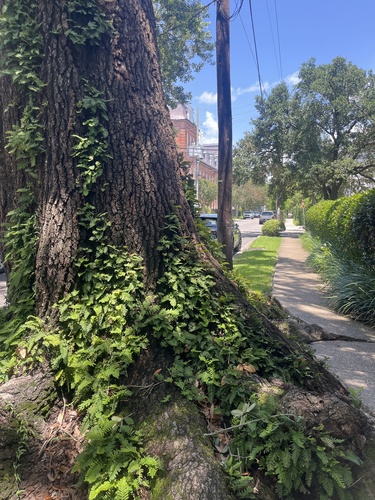
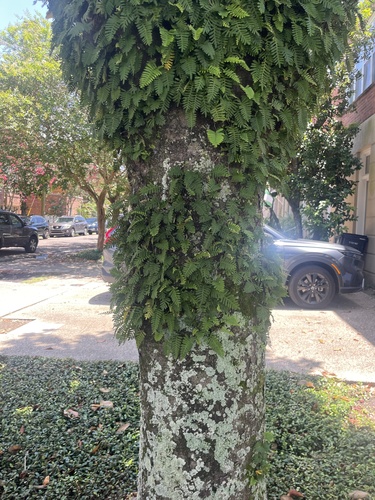
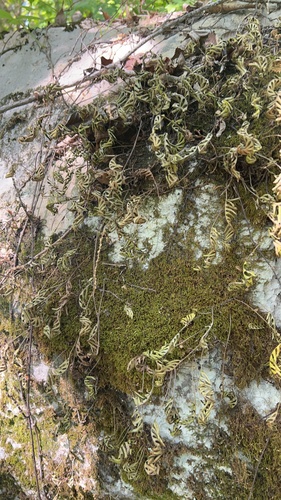
The resurrection fern has small, leathery fronds that appear curled and greyish-brown when dry. When it rains, these fronds quickly unfurl, transforming into a vibrant, deep green. Its unique ability to seemingly 'come back to life' makes it visually distinct.
Category
PlantsRarity
Common
Danger
1/5 · Very low
Snaps
25
It can sometimes grow on power lines or even old tires if conditions are right!
It can stay brown and dry for over 100 years and still turn green again!
The resurrection fern uses tiny spores instead of seeds to make new ferns. Spore-tastic!
This amazing fern doesn't need soil! It grows directly on trees and sometimes rocks.
Resurrection fern can shrivel and lose 75% of its water, a real adaptation that helps it survive long periods without rain.
Resurrection fern has special cells that allow it to quickly absorb water, helping it rehydrate and revive after drought.
Resurrection fern can grow on trees, a real adaptation that helps it reach sunlight and avoid ground competition.

Quercus virginiana
Its bark provides a safe, elevated place for the fern to grow.
Cepaea nemoralis
Snails sometimes munch on its fronds when they are rehydrated.

Hypnum cupressiforme
Often shares tree bark with other mosses, creating mini-ecosystems.
Shade tolerant plants are adapted to grow and thrive in areas with low light levels, requiring less direct sunlight.
Evergreen plants retain their foliage throughout the year, never shedding all their leaves at once.
Spore-producing organisms reproduce by releasing small, often single-celled, reproductive units called spores.
Drought-tolerant plants can survive and flourish in conditions with limited water availability.

Forest habitats are terrestrial environments dominated by dense tree cover, supporting a high diversity of plant and animal life.

Regenerative organisms possess the ability to regrow lost or damaged body parts, tissues, or organs.
Danger
1/5 · Very low
Always look but don't touch plants in the wild, as some can be prickly or cause allergies.
The easiest way to identify resurrection fern is to use the Snappit nature identifier app.
10-30 cm
15-40 cm
No
None
Perennial
Forests
Zoom in to split clusters and explore where this object has been snapped.
Jun 19, 2026
BroadmoorPhoto attribution
(c) Elliot Greiner, some rights reserved (CC BY)
License: CC BY 4.0 ↗
Image may be shown cropped inside the card frame.
Jun 19, 2026
BroadmoorPhoto attribution
(c) Elliot Greiner, some rights reserved (CC BY)
License: CC BY 4.0 ↗
Image may be shown cropped inside the card frame.
Jun 19, 2026
BroadmoorPhoto attribution
(c) Elliot Greiner, some rights reserved (CC BY)
License: CC BY 4.0 ↗
Image may be shown cropped inside the card frame.
Apr 14, 2026
Nickajack CavePhoto attribution
(c) will shepard, some rights reserved (CC BY)
License: CC BY 4.0 ↗
Image may be shown cropped inside the card frame.

Florida, US
You might spot Atala, Monarch, and Brown Anole.
View guide →

Louisiana, US
You might spot Brown Anole, White Ibis, and Duck.
View guide →

Alabama, US
You might spot American Beautyberry, White-Tailed Deer, and Peppervine.
View guide →

Alabama, US
You might spot Anole, Eastern Box Turtle, and Resurrection Fern.
View guide →

Florida, US
You might spot American Alligator, Brown Anole, and Red-Shouldered Hawk.
View guide →

Alabama, US
You might spot Painted Bunting, House Finch, and Red-Shouldered Hawk.
View guide →
Take the discovery with you
Snap it with Snappit to identify it, learn what makes it special, and add the discovery to your collection.








.jpg&width=800)



_001.jpg&width=800)


