





Rhinoceros Auklet
Cerorhinca monocerata
The Rhinoceros Auklet is a special bird that looks like it has a little horn on its beak! It loves to swim in the ocean and can dive deep to catch fish. These birds are fun to watch as they flap their wings and dive underwater.
Habitat: Coastal areas
The Rhinoceros Auklet is a medium-sized seabird with a dark gray back, a lighter belly, and a vibrant orange bill. During breeding season, it grows a distinct pale horn-like projection on its bill and white "whiskers" near its eyes, setting it apart.
Category
BirdsRarity
Common
Danger
1/5 · Very low
Snaps
Be the first to snap!
Rhinoceros Auklets spend almost their entire lives out at sea, rarely touching land.
Some Rhinoceros Auklets are known to live to be over 25 years old!
Their unique "horn" on the bill actually falls off after breeding season!
They use their strong webbed feet to help steer while diving deep for food.
Rhinoceros Auklets visit their nesting burrows only at night, a clever trick that helps them avoid hungry daytime predators.
Rhinoceros Auklets have a special bill that helps them carry many small fish crosswise at once, perfect for feeding their chicks.
Rhinoceros Auklets can dig their own deep nesting burrows on islands, providing a safe, cozy home for their single egg.
These seabirds are expert divers, hunting small fish, squid, and krill deep in the ocean.
Ammodytes hexapterus
A primary food source.
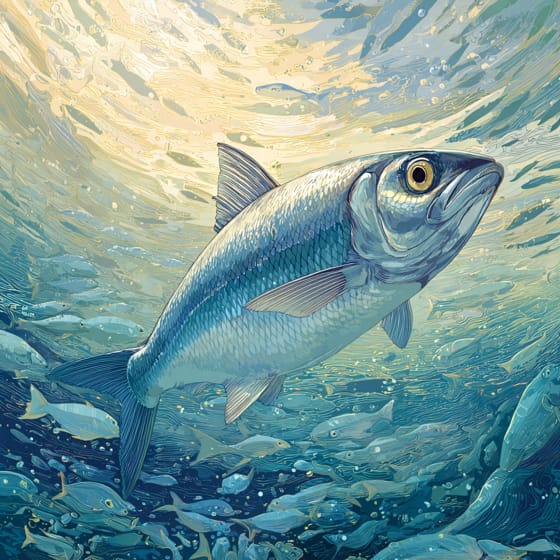
Clupea pallasii
An important part of their diet.

Haliaeetus leucocephalus
Eagles can prey on adults and chicks.
Lontra canadensis
Otters can raid their nesting burrows.
Feathered describes animals, primarily birds, possessing a covering of feathers.
Social animals live in organized groups, cooperating for survival benefits such as foraging, defense, and raising offspring.
Piscivorous organisms are animals that primarily subsist on a diet of fish.
Coastal habitats are dynamic environments located along the interface between land and sea, influenced by tides, waves, and saltwater.

This trait identifies organisms whose diet consists entirely or primarily of animal tissue.

Diurnal animals are primarily active during daylight hours, typically resting or sleeping at night.

Marine habitats encompass all saltwater environments of the Earth's oceans, supporting an immense diversity of aquatic life.

Migratory animals undertake seasonal movements from one region to another, typically in response to changes in climate or food availability.

Endangered status indicates a species is at a very high risk of extinction in the wild in the near future.
No aliases listed yet.
Danger
1/5 · Very low
Always watch birds from a distance and do not try to touch them.
The easiest way to identify Rhinoceros Auklet is to use the Snappit nature identifier app.
35-41 cm
60-70 cm
0.5-0.8 kg
20-25 years
60 km/h
These seabirds are expert divers, hunting small fish, squid, and krill deep in the ocean.
Coastal areas
Zoom in to split clusters and explore where this object has been snapped.
Recent snaps will appear here as new observations are added.
Take the discovery with you
Snap it with Snappit to identify it, learn what makes it special, and add the discovery to your collection.





.jpg&width=800)







