





rue anemone
Thalictrum thalictroides
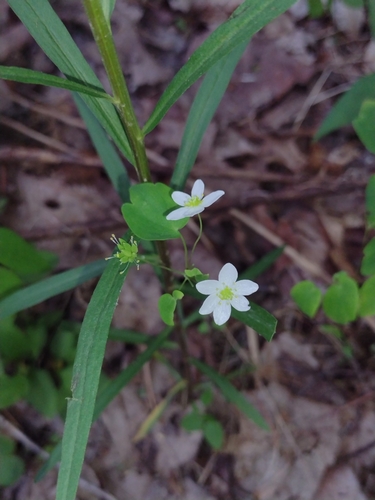
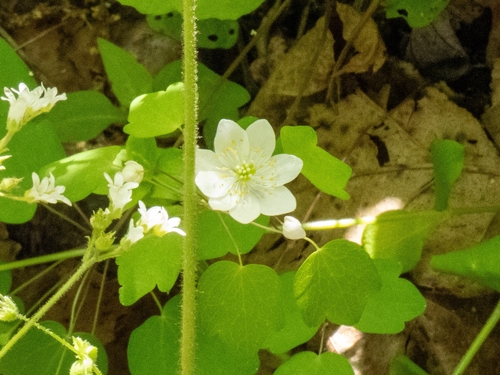
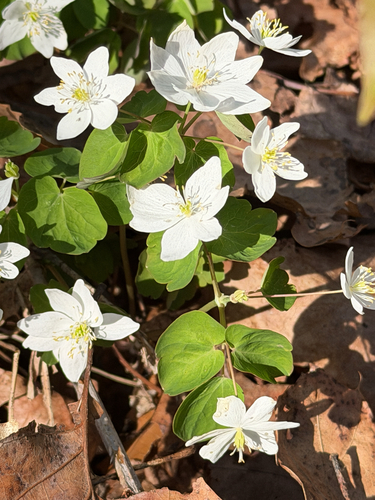
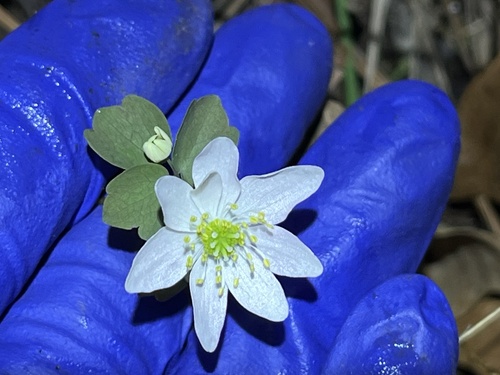
Rue anemone is a pretty little flower that blooms in spring. Its delicate white petals and yellow centers make it look like tiny stars in the forest!
Habitat: Forests
The rue anemone is a delicate woodland plant with airy, white to sometimes pinkish flowers that resemble tiny stars. Its leaves are finely divided, similar to a maidenhair fern, giving it a soft, feathery appearance distinct from other early spring bloomers.
Category
PlantsRarity
Common
Danger
2/5 · Low
Snaps
42
Its name "anemone" comes from a Greek word meaning "windflower," referring to its delicate stems.
Rue anemone leaves look a bit like the herb meadow rue, giving it its common name.
The plant often goes completely dormant by early summer, waiting for next year's spring!
Those beautiful white "petals" on the rue anemone are actually sepals, not true petals!
Rue anemone has seeds with a fatty cap called an elaiosome that ants carry, helping spread its seeds!
Rue anemone can bloom in early spring, soaking up sunlight before the forest canopy fills in with leaves.
Rue anemone's leaves and flowers disappear by summer, letting it survive heat and drought underground!
Andrena erythrogaster
Visits flowers for nectar

Odocoileus virginianus
Browses on its foliage
Formica subsericea
Disperses seeds for treats
Deciduous plants periodically shed all their leaves, typically during autumn or dry seasons.
Flowering plants are any plants that produce flowers as part of their reproductive cycle.
Shade tolerant plants are adapted to grow and thrive in areas with low light levels, requiring less direct sunlight.
Spring blooming plants produce their flowers during the spring season, often signifying the end of winter and the start of new growth.

Medicinal plants possess chemical compounds that can be used for therapeutic purposes to treat illnesses or maintain health.

Describes plants that are particularly attractive and beneficial to a wide range of pollinating organisms.

Forest habitats are terrestrial environments dominated by dense tree cover, supporting a high diversity of plant and animal life.
No aliases listed yet.
Danger
2/5 · Low
Always look but don't touch flowers without asking an adult, as some plants can be sensitive.
The easiest way to identify rue anemone is to use the Snappit nature identifier app.
15-30 cm
15-30 cm
1-2.5 cm
Early spring to late spring
No
Mild
Perennial
Zoom in to split clusters and explore where this object has been snapped.
May 27, 2026
Bald Eagle State ForestPhoto attribution
(c) Cecil Smith, some rights reserved (CC BY)
License: CC BY 4.0 ↗
Image may be shown cropped inside the card frame.
May 3, 2026
Crystal GrottoesPhoto attribution
no rights reserved
License: CC0 1.0 ↗
Image may be shown cropped inside the card frame.
Apr 13, 2026
South Mountain ReservationPhoto attribution
(c) Tom Pollard, some rights reserved (CC BY)
License: CC BY 4.0 ↗
Image may be shown cropped inside the card frame.
Mar 6, 2026
Berry CollegePhoto attribution
(c) Ethan, some rights reserved (CC BY)
License: CC BY 4.0 ↗
Image may be shown cropped inside the card frame.

New York, US
You might spot Sundial Lupine, Spotted Horsemint, and New Jersey Tea.
View guide →

Pennsylvania, US
You might spot Mountain Laurel, Ghost Pipe, and Sweetfern.
View guide →

Ohio, US
You might spot Large White Trillium, Fire Pink, and Christmas Fern.
View guide →

Pennsylvania, US
You might spot Large Yellow Underwing and Eastern Black Carpenter Ant.
View guide →

Maryland, US
You might spot American Cancer-Root and Rue Anemone.
View guide →

Alabama, US
You might spot Cave Salamander and Pink Lady's Slipper.
View guide →
Take the discovery with you
Snap it with Snappit to identify it, learn what makes it special, and add the discovery to your collection.






.jpg&width=800)



_001.jpg&width=800)



