





Sawsepal Beardtongue
Penstemon glaber
The Sawsepal Beardtongue is a beautiful flower with unique, tubular blooms. It often grows in sunny places and attracts butterflies and bees, making gardens lively and colorful.
Habitat: Grasslands
The Sawsepal Beardtongue has striking, tubular flowers, typically a vibrant blue-purple, that grow in tall spikes. Its name comes from the jagged (saw-like) sepals and the fuzzy, sterile stamen (beardtongue) inside each flower. The smooth, green leaves are often lance-shaped.
Category
PlantsRarity
Common
Danger
1/5 · Very low
Snaps
1
Each flower is perfectly shaped like a tube, a custom fit for long-tongued insect visitors!
Its 'beardtongue' is actually a sterile stamen, a fuzzy landing strip for thirsty bees!
The plant's scientific name 'glaber' means 'smooth,' referring to its slick, hairless leaves!
This tough plant can grow in very rocky or sandy soil where many other plants struggle!
Sawsepal Beardtongue has brightly colored, tubular flowers that act like a visual target, attracting buzzing bees for pollination.
Sawsepal Beardtongue has a fuzzy 'beardtongue' stamen inside its flower, guiding insects to the nectar and pollen!
Sawsepal Beardtongue can thrive in dry, rocky soils thanks to adaptations that help it conserve precious water.
Bombus occidentalis
Visits flowers for nectar and pollen.
Apis mellifera
Collects nectar and pollen from blooms.
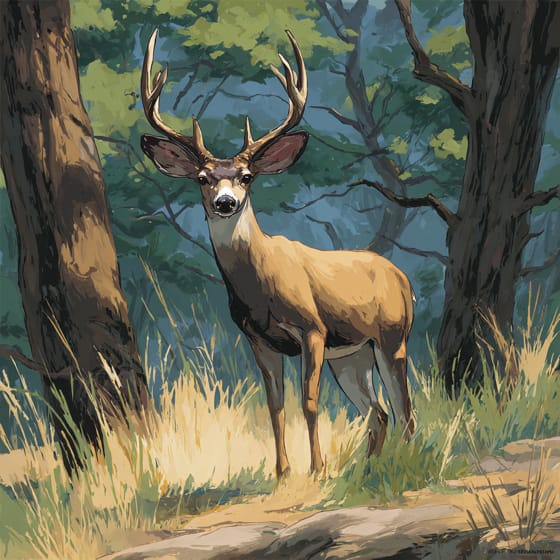
Odocoileus hemionus
Occasionally browses on the plant's leaves.
Flowering plants are any plants that produce flowers as part of their reproductive cycle.
Summer blooming plants produce their flowers during the summer season, often providing vibrant color when many other plants have finished.
A tube flower has petals fused together at the base, forming a distinct tubular structure that typically holds nectar deep within.
Fragrant flowers emit a pleasant aroma, often to attract pollinators or for defense.

Colorful describes organisms or objects displaying a wide range of bright and distinct colors.

Grassland habitats are terrestrial biomes dominated by grasses and herbaceous plants, supporting a variety of grazing animals.

Describes plants that are particularly attractive and beneficial to a wide range of pollinating organisms.
No aliases listed yet.
Danger
1/5 · Very low
Always look but don't touch flowers without asking an adult first.
The easiest way to identify Sawsepal Beardtongue is to use the Snappit nature identifier app.
30-90 cm
30-60 cm
2-3 cm
Late spring to mid-summer
No
None
Perennial
Zoom in to split clusters and explore where this object has been snapped.
Take the discovery with you
Snap it with Snappit to identify it, learn what makes it special, and add the discovery to your collection.










.jpg&width=800)


_001.jpg&width=800)




