





Scrub Hickory
Carya floridana
The Scrub Hickory is a special tree that grows in sandy places. It has strong wood and produces tasty nuts that many animals love to eat!
Habitat: Sandy forests
The Scrub Hickory is a small, often shrubby tree with distinctively ridged bark, which is darker brown than its smooth, younger branches. Its leaves are glossy green and compound, bearing small, round nuts encased in thick, reddish-brown husks.
Category
PlantsRarity
Common
Danger
1/5 · Very low
Snaps
Be the first to snap!
Its tiny nuts taste super sweet, making them a delicious treat for both animals and people!
Native Americans would pound its sweet nuts to make flour or a rich, milky drink.
This tough little tree can grow in incredibly sandy places where most other plants struggle to survive.
When animals bury its nuts for later, they often forget some, accidentally planting new hickory trees!
Scrub Hickory can thrive in dry, sandy soils thanks to its deep root system, helping it find water others can't.
This hickory has thick bark that protects it from wildfires, and it can even resprout from its roots after a burn.
Scrub Hickory produces small, sweet nuts, providing essential energy and food for many animals in its harsh habitat.
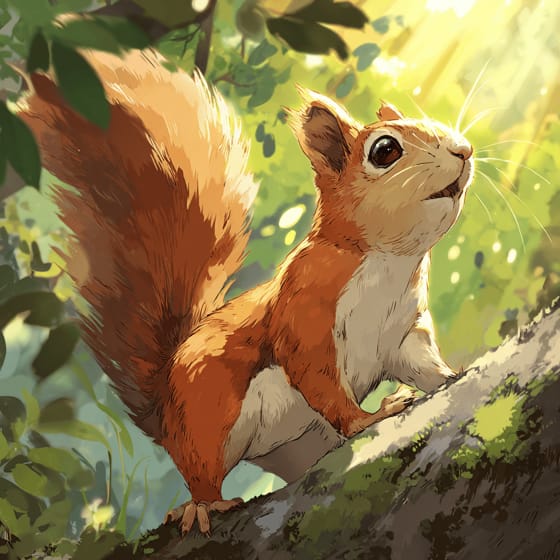
Sciurus carolinensis
Loves to gather and bury its sweet, tiny nuts.

Pinus clausa
Often found growing alongside this dominant scrub tree species.
Quercus chapmanii
Co-exists in dry scrub environments, sharing resources.
Deciduous plants periodically shed all their leaves, typically during autumn or dry seasons.
Broadleaf trees are angiosperms characterized by flat, wide leaves that are typically shed annually in temperate climates.
Nut bearing plants produce hard-shelled fruits, commonly known as nuts, which contain a single seed and are a valuable food source.
Edible plants are those parts of a plant that are considered safe for human consumption.
Timber refers to wood that has been prepared for use in building and carpentry.

Forest habitats are terrestrial environments dominated by dense tree cover, supporting a high diversity of plant and animal life.

This trait characterizes organisms with an exceptionally long lifespan compared to others of their kind.

Describes a species whose presence and role have a disproportionately large effect on its environment.
No aliases listed yet.
Danger
1/5 · Very low
Be careful around trees; don't climb too high and watch for falling branches.
The easiest way to identify Scrub Hickory is to use the Snappit nature identifier app.
500-1000 cm
300-800 cm
Spring
Yes
None
Perennial
Wind
Zoom in to split clusters and explore where this object has been snapped.
Recent snaps will appear here as new observations are added.
Take the discovery with you
Snap it with Snappit to identify it, learn what makes it special, and add the discovery to your collection.







.jpg&width=800)


_001.jpg&width=800)


