silver arowana
Osteoglossum bicirrhosum
The silver arowana is a beautiful fish with shiny scales that look like silver. It has a long body and can jump out of the water to catch its food, which makes it very special!
Habitat: Freshwater rivers and lakes
The silver arowana has a long, slender body covered in large, iridescent silver scales that shimmer like metal. Its distinctive upturned mouth, paired with two barbels, gives it a prehistoric, bony-tongued appearance.
Category
FishRarity
Common
Danger
1/5 · Very low
Snaps
Be the first to snap!
Arowanas carry their eggs in their mouth to protect them, a behavior called mouthbrooding!
These ancient fish have been around for millions of years, even since the time of dinosaurs.
They are sometimes called 'dragon fish' because of their large, shimmering scales.
Young silver arowanas sometimes have a yellowish-orange tint before turning entirely silver.
silver arowana can jump out of the water to catch prey because it has powerful muscles and an upturned mouth for surface feeding.
silver arowana can breathe air from the surface because it has a specialized swim bladder that acts like a lung.
silver arowana has excellent eyesight that helps them spot insects and small animals on branches above the water.
Arowanas are hungry hunters that eat many small animals found in and around the water.
Age differences: null
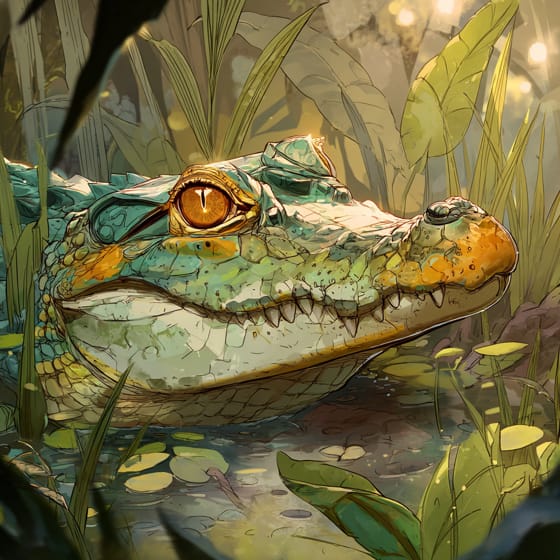
Caiman crocodilus
Larger caimans sometimes prey on adult arowanas.

Pteronura brasiliensis
Giant otters are skilled hunters of fish, including arowanas.
Anax junius
Arowanas leap to catch flying insects like dragonflies.
Cichla ocellaris
Arowanas hunt and consume smaller fish, including young peacock bass.
Solitary animals live alone for most of their lives, only interacting with others for mating or parental care.
Camouflaged describes organisms that possess coloring or patterns that allow them to blend into their environment.
Colorful describes organisms or objects displaying a wide range of bright and distinct colors.
Piscivorous organisms are animals that primarily subsist on a diet of fish.

This trait signifies organisms belonging to a very old evolutionary group with ancestors dating back millions of years.

This trait characterizes organisms with an exceptionally long lifespan compared to others of their kind.

Diurnal animals are primarily active during daylight hours, typically resting or sleeping at night.

Freshwater habitats include non-saline aquatic environments such as rivers, lakes, ponds, and wetlands, vital for numerous species.

This trait identifies organisms that exhibit exceptional swiftness in movement for hunting, escape, or travel.
No aliases listed yet.
Danger
1/5 · Very low
Always watch fish from a safe distance and never try to touch them in the water.
The easiest way to identify silver arowana is to use the Snappit nature identifier app.
60-90 cm
2-6 kg
10-20 years
Arowanas are hungry hunters that eat many small animals found in and around the water.
20 km/h
Freshwater rivers and lakes
Ambush
Zoom in to split clusters and explore where this object has been snapped.
Recent snaps will appear here as new observations are added.
Take the discovery with you
Snap it with Snappit to identify it, learn what makes it special, and add the discovery to your collection.