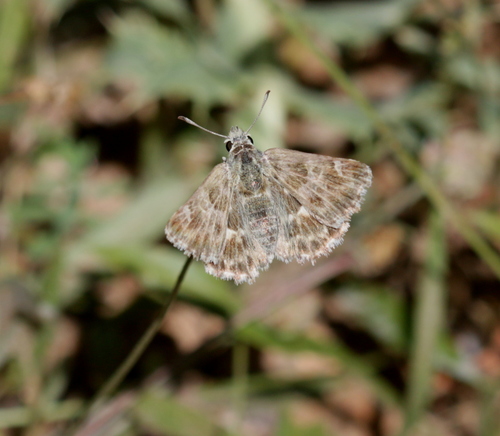


Southern Marbled Skipper
muschampia baeticus
The Southern Marbled Skipper (Muschampia baeticus) is a small, energetic butterfly belonging to the skipper family (Hesperiidae). Found primarily in the sun-baked, rocky environments of southern Europe and parts of North Africa, this species is named for its beautifully intricate, marbled wing patterns. Like many skippers, it flies with a rapid, darting motion that makes it challenging to track, easily blurring the line between a traditional butterfly and a moth. This species is a true specialist of arid scrublands, closely tied to the specific mint-family host plants that nourish its caterpillars. Observing a Southern Marbled Skipper often requires patience, as they flit quickly from flower to flower or rest with their wings spread flat against stones to absorb the warmth of the Mediterranean sun.
Habitat: Typically found on hot, dry, rocky slopes, Mediterranean scrublands, and flowery arid meadows where its host plants grow abundantly.
This skipper is a relatively small butterfly with a stout, furry body and a wingspan of 26 to 30 millimeters. Its upper wings feature a distinct mottled or 'marbled' pattern consisting of gray, dark brown, and white spots, providing excellent camouflage against rocky backgrounds and dry soil. The underside of the hindwings is typically paler, displaying distinctive light veining and white bands that help separate it from closely related species. It is further characterized by its large eyes and hooked antennae (apiculus), which are hallmarks of the Hesperiidae family.
Category
InsectsRarity
Common
Danger
1/5 · Very low
Snaps
Be the first to snap!
Skippers get their name from their rapid, erratic, 'skipping' flight pattern, which is powered by unusually robust thoracic muscles that make them look almost moth-like.
To protect themselves from predators and harsh weather, Southern Marbled Skipper caterpillars build small, folded-leaf shelters bound together with silk on their host plants.
Unlike most typical butterflies, skippers have backward-curving hooks at the tips of their antennae, known as an apiculus.
When at rest, many skippers hold their front wings angled upwards while their hind wings lie flat; however, the Southern Marbled Skipper often rests with all wings spread entirely flat.
Possesses exceptionally powerful thoracic flight muscles that allow it to fly in rapid, erratic bursts, a trademark 'skipping' motion that helps it evade predators.
Basks in the sun with its wings held completely flat against warm surfaces to rapidly elevate its body temperature for optimal flight performance.
The intricately marbled brown, gray, and white pattern on its wings allows it to blend seamlessly into rocky or sandy substrates when resting motionless.
Adults feed entirely on floral nectar, while the caterpillars are specialist herbivores that consume the leaves of plants in the mint family.
Age differences: Larvae consume host plant foliage, whereas mature adults forage exclusively for liquid nectar from low-growing flowers.

Marrubium vulgare
Caterpillars rely almost exclusively on this plant and its close relatives for food and shelter.

Misumena vatia
Often ambushes the adult skippers when they visit flowers for nectar.

Mantis religiosa
Preys on adult skippers as they forage or rest in dry scrublands.
No trait badges are assigned for this object yet.
No aliases listed yet.
Collections for this object will appear here as more themes are added.
Danger
1/5 · Very low
No special safety notes yet.
Compare the wing outline, spots, bands, eyespots and wing edges. The underside can look completely different from the top. Check for tails, the antennae and where the markings sit instead of relying on color alone. Butterfly Identifier: upload a photo and compare the visible details.
12-15 cm
2-3 cm
0.0001-0.0003 kg
0 years
18 km/h
Adults feed entirely on floral nectar, while the caterpillars are specialist herbivores that consume the leaves of plants in the mint family.
Typically found on hot, dry, rocky slopes, Mediterranean scrublands, and flowery arid meadows where its host plants grow abundantly.
Zoom in to split clusters and explore where this object has been snapped.
Recent snaps will appear here as new observations are added.
Take the discovery with you
Snap it with Snappit to identify it, learn what makes it special, and add the discovery to your collection.