





Spineless Yucca
yucca gigantea
The Spineless Yucca is a tall, unique plant that loves the warm sun! Its long, green leaves grow like a big, friendly fan and it can even produce beautiful white flowers!
Habitat: It lives in deserts and dry areas, especially in the southwestern United States.
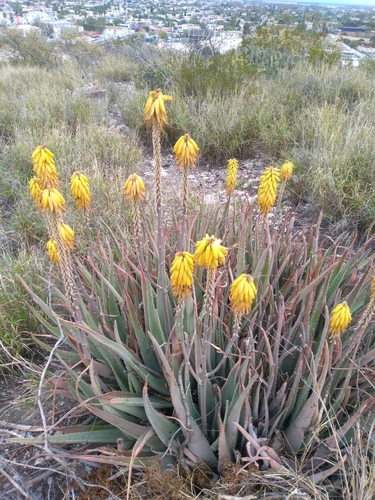
The Spineless Yucca is a tree-like plant with a thick trunk that often branches. It has many long, glossy green, strap-like leaves growing in rosettes, completely lacking sharp spines. Tall stalks of creamy white, bell-shaped flowers emerge from the center.
Category
PlantsRarity
Common
Danger
0/5 · No known danger
Snaps
1
Despite its common name, some older plants can develop slightly rough leaf edges.
Its trunk can grow so wide, it looks like an elephant's foot, giving it another nickname!
The Spineless Yucca can live for many decades, becoming a grand centerpiece in gardens.
Yucca flowers taste a bit like artichoke and are often used in salads or cooked.
Spineless Yucca can store water in its thick stem and leaves, helping it survive long periods of drought in dry climates.
Spineless Yucca has flowers and young stems that are safe and tasty to eat, providing a food source for humans and animals.
Spineless Yucca can help clean indoor air by absorbing toxins, making homes a healthier place for people to live.
Tegeticula elatella
This special moth pollinates Yucca while laying its eggs inside.
Apis mellifera
Honey bees visit Yucca flowers to collect nectar and pollen.
Homo sapiens
Humans use its edible flowers and stems as a food source.
Solitary animals live alone for most of their lives, only interacting with others for mating or parental care.
This trait characterizes organisms whose diet consists entirely or primarily of plant material.
Coastal habitats are dynamic environments located along the interface between land and sea, influenced by tides, waves, and saltwater.
Diurnal animals are primarily active during daylight hours, typically resting or sleeping at night.

Describes organisms that transfer pollen, enabling the fertilization and reproduction of plants.
Danger
0/5 · No known danger
No special safety notes yet.
The easiest way to identify Spineless Yucca is to use the Snappit nature identifier app.
600-900 cm
300-450 cm
3-5 cm
Late spring to summer
Yes
None
Perennial
Zoom in to split clusters and explore where this object has been snapped.
Take the discovery with you
Snap it with Snappit to identify it, learn what makes it special, and add the discovery to your collection.










.jpg&width=800)



_001.jpg&width=800)




