.jpg&width=800)





Spotted Cucumber Beetle
Diabrotica undecimpunctata
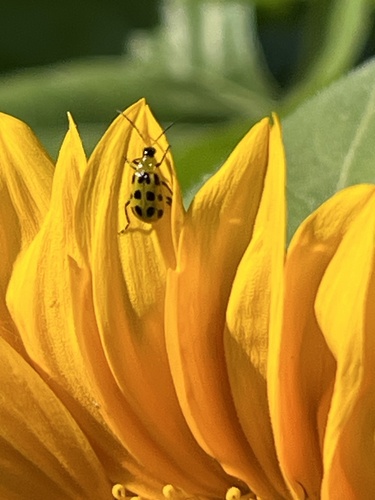
The Spotted Cucumber Beetle is a small, colorful bug with bright yellow-green skin and black spots. They love to munch on plants, especially cucumbers, making them easy to spot in gardens!
Habitat: Gardens
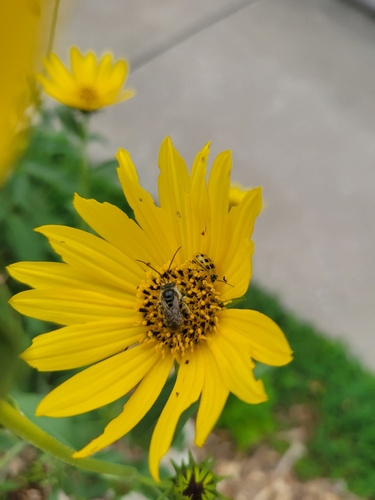
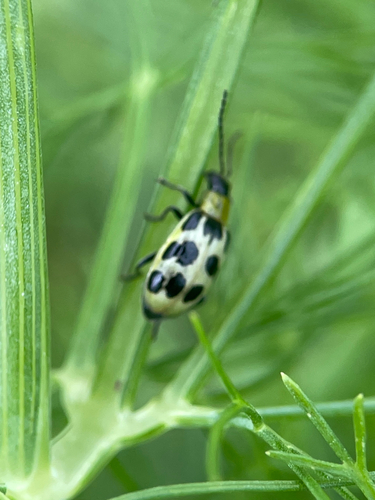
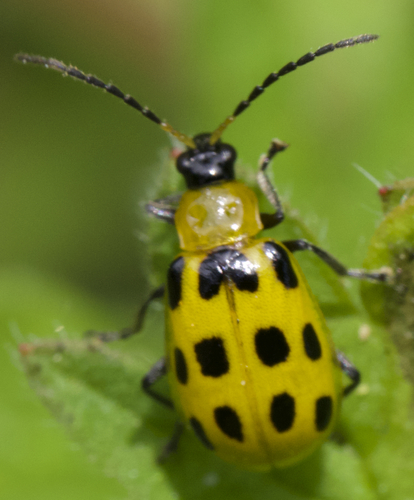
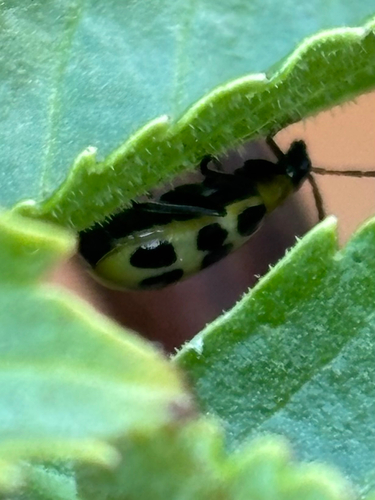
The Spotted Cucumber Beetle has a bright greenish-yellow body with eleven distinctive black spots arranged on its wing covers. Its head and legs are typically black. This beetle's slender shape and vibrant spotted pattern make it stand out from other garden insects.
Category
InsectsRarity
Common
Danger
1/5 · Very low
Snaps
62
Even with 'cucumber' in their name, they love over 200 different plant types!
Their hungry larvae, called corn rootworms, live underground and munch on plant roots!
These beetles lay hundreds of tiny eggs hidden in the soil near their favorite plants!
They are speedy eaters and can cause serious damage to farmers' crops very quickly!
Spotted Cucumber Beetles have a super strong exoskeleton that helps them protect their soft bodies from bumps and predators.
Spotted Cucumber Beetles can munch through plant leaves and roots because of their strong jaws, helping them get vital nutrients.
Spotted Cucumber Beetles can fly swiftly because of their powerful wings, helping them travel far to find new food sources.
These beetles eat leaves, flowers, and fruits, while their larvae feast on roots underground.
Age differences: Larvae eat roots underground, while adults feed on leaves, flowers, and fruits above ground.

Cucumis sativus
Adults and larvae feast on the leaves and roots.

Zea mays
Larvae cause significant damage to corn roots.

Cucurbita pepo
They chew holes in leaves and damage fruits.
Podisus maculiventris
This predatory bug will feed on beetle larvae and eggs.
Marked with spots or patches of a different color.
Solitary animals live alone for most of their lives, only interacting with others for mating or parental care.
Colorful describes organisms or objects displaying a wide range of bright and distinct colors.
This trait characterizes organisms whose diet consists entirely or primarily of plant material.

Describes plants that are particularly attractive and beneficial to a wide range of pollinating organisms.

Diurnal animals are primarily active during daylight hours, typically resting or sleeping at night.

This habitat trait indicates species that can coexist with humans in urban and suburban environments, utilizing man-made structures and green spaces.

Describes organisms that transfer pollen, enabling the fertilization and reproduction of plants.
Danger
1/5 · Very low
Don't touch beetles without asking an adult, as some bugs can bite.
The easiest way to identify Spotted Cucumber Beetle is to use the Snappit nature identifier app.
5-8 mm
30-90 days
These beetles eat leaves, flowers, and fruits, while their larvae feast on roots underground.
Gardens
Foraging
6
Zoom in to split clusters and explore where this object has been snapped.
Jun 19, 2026
Centennial ArboretumPhoto attribution
no rights reserved
License: CC0 1.0 ↗
Image may be shown cropped inside the card frame.
Jun 9, 2026
Palo Alto Baylands Nature PreservePhoto attribution
no rights reserved
License: CC0 1.0 ↗
Image may be shown cropped inside the card frame.
Jun 6, 2026
Bartram's GardenPhoto attribution
no rights reserved
License: CC0 1.0 ↗
Image may be shown cropped inside the card frame.
Jun 6, 2026
Conservatory of FlowersPhoto attribution
(c) Dan Scali, some rights reserved (CC BY)
License: CC BY 4.0 ↗
Image may be shown cropped inside the card frame.
Jun 4, 2026
Oxon Run ParkwayPhoto attribution
(c) Frederick Nunley, some rights reserved (CC BY)
License: CC BY 4.0 ↗
Image may be shown cropped inside the card frame.

Virginia, US
You might spot Cope's Gray Tree Frog and Basilica Orbweaver.
View guide →

California, US
You might spot Western Fence Lizard and California Brittlebush.
View guide →

California, US
You might spot Monarch, Canada Goose, and Western Gull.
View guide →

District of Columbia, US
You might spot Eastern Gray Squirrel, Duck, and House Sparrow.
View guide →

Texas, US
You might spot Anole, Monarch, and Pinkladies.
View guide →

Michigan, US
You might spot Monarch, Canada Goose, and Eastern Gray Squirrel.
View guide →
Take the discovery with you
Snap it with Snappit to identify it, learn what makes it special, and add the discovery to your collection.







.jpg&width=800)



