





Spotted spurge
Euphorbia maculata
Spotted spurge is a small plant with pretty green leaves and tiny yellow flowers. It grows close to the ground and can be found in many places, making it easy to spot in gardens and fields.
Habitat: Urban areas
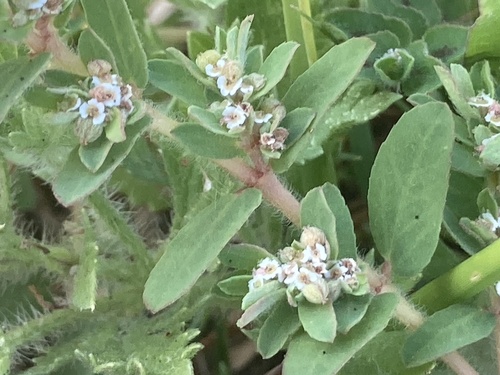
The Spotted spurge is a low-growing plant with reddish, branching stems that spread along the ground. Its small, oval leaves have a distinctive dark reddish-purple spot in the center. Tiny, inconspicuous greenish-white flowers cluster where the leaves meet the stems.
Category
PlantsRarity
Common
Danger
2/5 · Low
Snaps
7
Each plant can produce thousands of microscopic seeds.
It's related to the beautiful poinsettia plant!
Its seeds can shoot out like tiny cannons when ripe!
Spurge sap was once used in folk medicine to "purge."
Spotted spurge has a milky white sap that helps it defend against hungry animals trying to eat it.
Spotted spurge can grow flat along the ground, which helps it stay cool and survive being walked on.
Spotted spurge can produce many seeds quickly, helping it spread and colonize new open areas fast.
Spotted spurge has a deep taproot that helps it find water and survive in dry, poor soils.
Uromyces euphorbiae
Causes rust-colored spots and damage on spurge leaves.
Euschistus servus
Feeds on sap from its stems and developing seeds.
Apis mellifera
Visits its tiny, inconspicuous flowers for nectar.
Marked with spots or patches of a different color.
Flowering plants are any plants that produce flowers as part of their reproductive cycle.
Medicinal plants possess chemical compounds that can be used for therapeutic purposes to treat illnesses or maintain health.
Drought-tolerant plants can survive and flourish in conditions with limited water availability.

Describes plants that are particularly attractive and beneficial to a wide range of pollinating organisms.

Rapid growing plants exhibit accelerated growth rates, quickly increasing in size and biomass within a short period.

This habitat trait indicates species that can coexist with humans in urban and suburban environments, utilizing man-made structures and green spaces.
No aliases listed yet.
Danger
2/5 · Low
Do not touch the sap, as it can make your skin itchy.
The easiest way to identify Spotted spurge is to use the Snappit nature identifier app.
5-15 cm
15-60 cm
0.1-0.2 cm
Summer to Fall
No
Mild
Annual
Zoom in to split clusters and explore where this object has been snapped.
Jul 3, 2022
Clover Bend Historic DistrictPhoto attribution
(c) Joseph McPhail, some rights reserved (CC BY)
License: CC BY 4.0 ↗
Image may be shown cropped inside the card frame.

Florida, US
You might spot Atala, Monarch, and Brown Anole.
View guide →

Virginia, US
You might spot Northern Cardinal and Eastern Gray Squirrel.
View guide →

Illinois, US
You might spot American Robin, Canada Goose, and House Sparrow.
View guide →

Massachusetts, US
You might spot Common Eastern Bumble Bee and Eastern Gray Squirrel.
View guide →
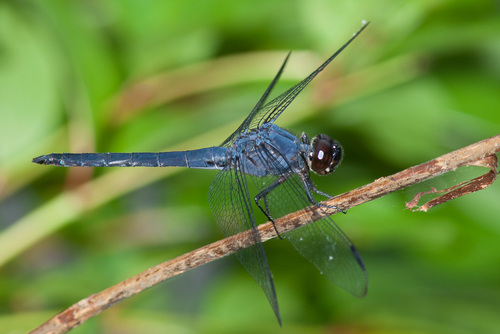
Arkansas, US
You might spot Slaty Skimmer and Common Eastern Bumble Bee.
View guide →

Indiana, US
You might spot American Robin, Canada Goose, and Eastern Gray Squirrel.
View guide →
Take the discovery with you
Snap it with Snappit to identify it, learn what makes it special, and add the discovery to your collection.








.jpg&width=800)



_001.jpg&width=800)




