





striped wintergreen
Chimaphila maculata
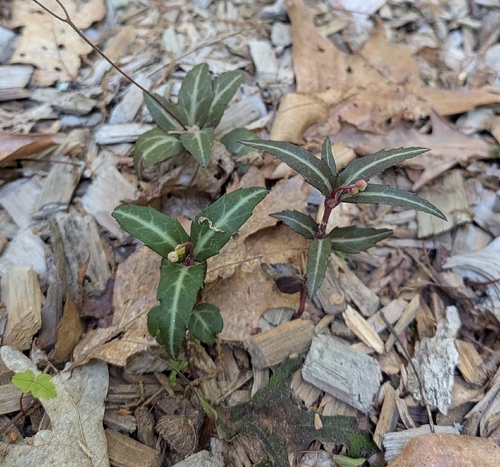
Striped wintergreen is a small plant with pretty, striped leaves and lovely white flowers. It grows close to the ground and loves shady, forested areas.
Habitat: Forests
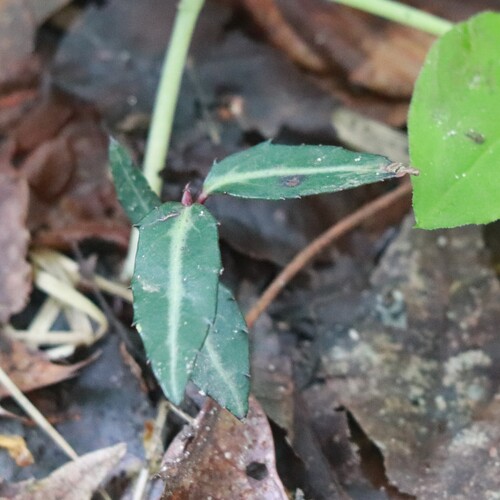
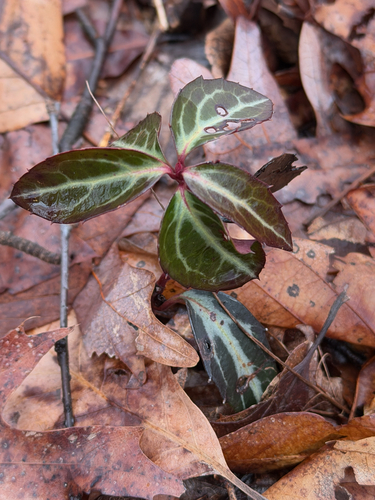
The striped wintergreen has shiny, dark green leaves with striking silvery-white stripes along the veins, making it easily recognizable. Its small, waxy leaves grow in whorls, and it produces delicate, nodding white or pinkish-white flowers.
Category
PlantsRarity
Common
Danger
1/5 · Very low
Snaps
74
Did you know "wintergreen" means its leaves stay green all year long?
Its tiny flowers face downward, like they're shyly looking at the ground!
Its underground stem lets it pop up in new places like magic!
Some people call it "pipsissewa," a cool Native American name!
Striped wintergreen has tough, waxy leaves that stay green all winter, allowing it to make food when other plants are dormant.
Striped wintergreen can spread using underground stems called rhizomes, helping it form colonies and pop up in new spots.
Striped wintergreen connects with special fungi in the soil to get extra nutrients, helping it grow strong in shady forests.
Bombus impatiens
Helps carry pollen between its delicate flowers.
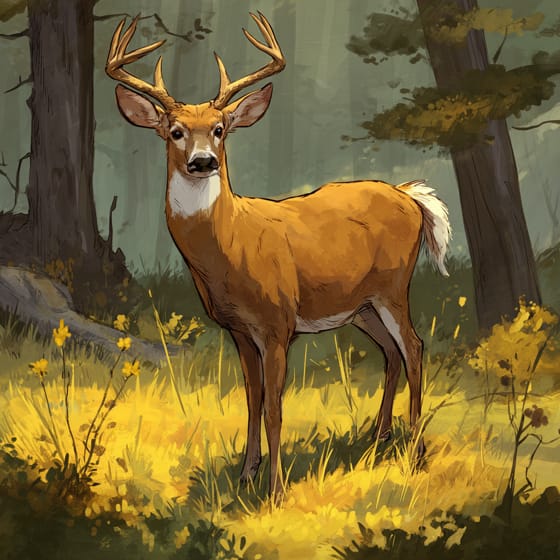
Odocoileus virginianus
Deer browse on its evergreen leaves, especially in winter.
Puccinia chimaphilae
This fungus forms spots and can weaken the plant.
Marked with parallel bands or lines of color.
Flowering plants are any plants that produce flowers as part of their reproductive cycle.
Shade tolerant plants are adapted to grow and thrive in areas with low light levels, requiring less direct sunlight.
Fruit-bearing plants produce fruits, which are the mature ovaries of flowering plants containing seeds.

Medicinal plants possess chemical compounds that can be used for therapeutic purposes to treat illnesses or maintain health.

Edible plants are those parts of a plant that are considered safe for human consumption.

Forest habitats are terrestrial environments dominated by dense tree cover, supporting a high diversity of plant and animal life.
No aliases listed yet.
Danger
1/5 · Very low
Always look but don't touch plants unless you know they are safe.
The easiest way to identify striped wintergreen is to use the Snappit nature identifier app.
10-25 cm
15-30 cm
0.8-1.2 cm
Late spring to mid-summer
No
None
Perennial
Zoom in to split clusters and explore where this object has been snapped.
May 30, 2026
Quaker Farms Historic DistrictPhoto attribution
(c) Jessica Utrup, some rights reserved (CC BY)
License: CC BY 4.0 ↗
Image may be shown cropped inside the card frame.
May 25, 2026
East Granby Historic DistrictPhoto attribution
(c) Mark Apgar, some rights reserved (CC BY)
License: CC BY 4.0 ↗
Image may be shown cropped inside the card frame.
Mar 23, 2026
South Mountain ReservationPhoto attribution
(c) Tom Pollard, some rights reserved (CC BY)
License: CC BY 4.0 ↗
Image may be shown cropped inside the card frame.

New Jersey, US
You might spot Garlic Mustard, Sensitive Fern, and Common Mugwort.
View guide →

South Carolina, US
You might spot Anole, Green Treefrog, and Eastern Gray Squirrel.
View guide →

District of Columbia, US
You might spot Eastern Gray Squirrel, Duck, and House Sparrow.
View guide →
.jpg)
Virginia, US
You might spot Great Blue Heron and Canada Goose.
View guide →

Maryland, US
You might spot American Cancer-Root and Rue Anemone.
View guide →
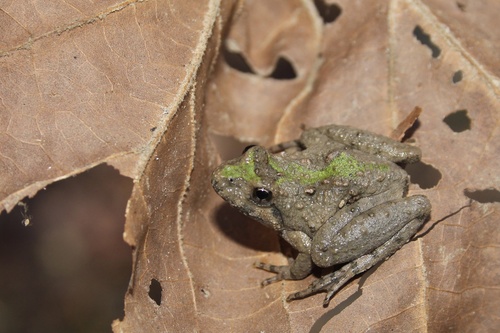
Maryland, US
You might spot Northern Cricket Frog and Common Whitetail.
View guide →
Take the discovery with you
Snap it with Snappit to identify it, learn what makes it special, and add the discovery to your collection.







.jpg&width=800)



_001.jpg&width=800)


