_-_(imago)%2C_Cape_Cod_(MA)%2C_United_States.jpg&width=800)





Summer Fishfly
Chauliodes pectinicornis
The Summer Fishfly is a special insect that loves warm weather! It has big, beautiful wings and can often be seen near water, especially at night when it comes out to play.
Habitat: Wetlands
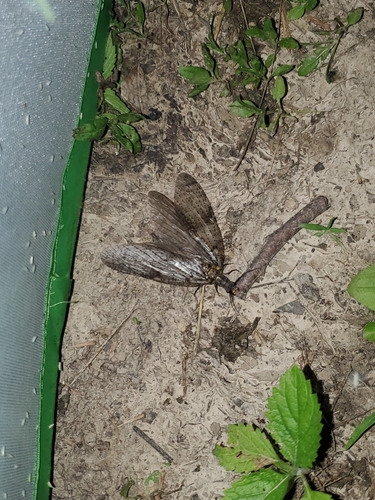
The Summer Fishfly is a large, brownish insect with two pairs of distinctive dark-veined wings. Males have prominent, comb-like antennae, while females have slender ones. Its mottled wings and robust body differentiate it from delicate lacewings.
Category
InsectsRarity
Common
Danger
1/5 · Very low
Snaps
15
Adult Summer Fishflies don't eat anything at all; they only live to find a mate and lay eggs!
Even though they're called 'fishflies', they are not true flies; they're more closely related to dobsonflies!
Their tough larvae can live for several years hidden under rocks in rivers and streams!
They are part of an ancient insect group that has been around for millions of years!
Summer Fishfly can ambush prey with powerful jaws because of its predatory larval stage that helps them control aquatic insect populations.
Summer Fishfly has special gill filaments that help them breathe underwater, allowing them to live for years in streams.
Summer Fishfly can fly effectively at night, attracted to light sources, because of its nocturnal adult stage that helps them find mates.
Summer Fishfly males possess large, comb-like antennae that helps them locate females by sensing their scent in the air.
As larvae, they are fierce underwater hunters, but adults don't eat at all!
Age differences: Larvae are active predators; adults do not feed at all.
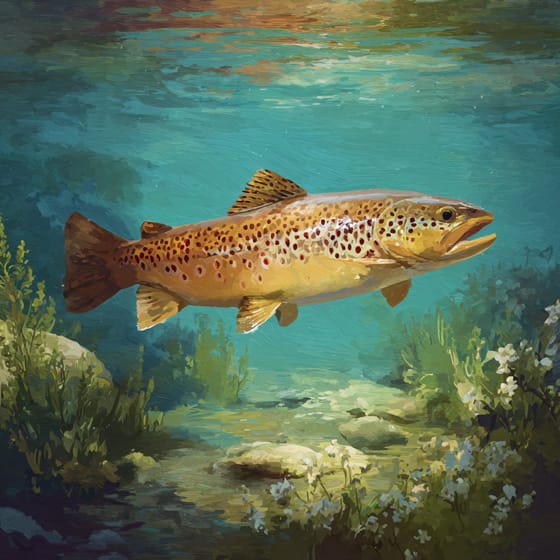
Salmo trutta
Trout prey on fishfly larvae in their aquatic habitat.
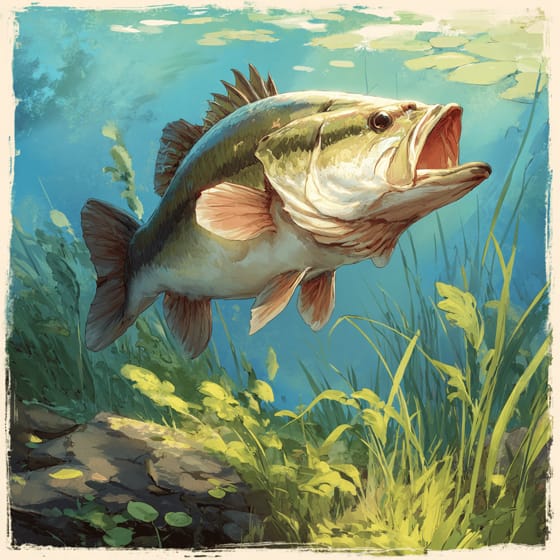
Micropterus salmoides
Bass consume fishfly larvae, especially larger ones.
Ephemerella subvaria
Fishfly larvae actively hunt mayfly nymphs in streambeds.
Hydropsyche betteni
Caddisfly larvae are a common food source for fishfly larvae.
Solitary animals live alone for most of their lives, only interacting with others for mating or parental care.
This trait identifies organisms whose diet includes both plant and animal matter.
Colorful describes organisms or objects displaying a wide range of bright and distinct colors.
This habitat trait identifies species found in wetlands, which are areas of land saturated with water, either permanently or seasonally, including marshes, swamps, and bogs.

Giant describes organisms or objects of significantly larger size than average for their species or type.

Nocturnal animals are primarily active during the nighttime hours, typically resting or sleeping during the day.

Describes organisms that transfer pollen, enabling the fertilization and reproduction of plants.
No aliases listed yet.
Danger
1/5 · Very low
Fishflies are harmless, but it's best to watch them from a distance.
The easiest way to identify Summer Fishfly is to use the Snappit nature identifier app.
50-100 mm
25-40 mm
5-10 days
As larvae, they are fierce underwater hunters, but adults don't eat at all!
Wetlands
Ambush
6
Zoom in to split clusters and explore where this object has been snapped.
May 28, 2026
Shaw Nature ReservePhoto attribution
(c) Katie Kucera, some rights reserved (CC BY)
License: CC BY 4.0 ↗
Image may be shown cropped inside the card frame.

Rhode Island, US
You might spot Common Mugwort, Duck, and Azure Bluet.
View guide →

Illinois, US
You might spot Brown-Belted Bumble Bee and Eastern Gray Squirrel.
View guide →

Massachusetts, US
You might spot Threeleaf Goldthread and Spotted Salamander.
View guide →

Rhode Island, US
You might spot Common Eastern Bumble Bee and Asian Lady Beetle.
View guide →

Rhode Island, US
You might spot White-Tailed Deer, Great Egret, and Duck.
View guide →

New Hampshire, US
You might spot Eastern White Pine and White-Tailed Deer.
View guide →
Take the discovery with you
Snap it with Snappit to identify it, learn what makes it special, and add the discovery to your collection.









.jpg&width=800)



