





Swamp Milkweed Leaf Beetle
Labidomera clivicollis
The Swamp Milkweed Leaf Beetle is a colorful little bug that loves to munch on milkweed plants. With its bright colors, it can be spotted easily in gardens and wetlands.
Habitat: Wetlands
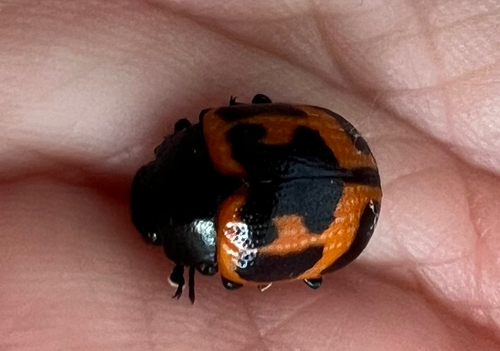
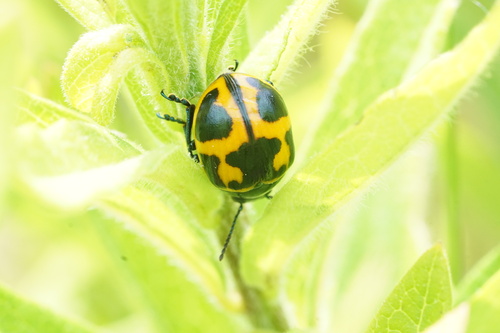
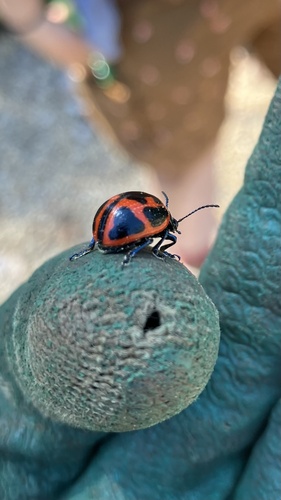
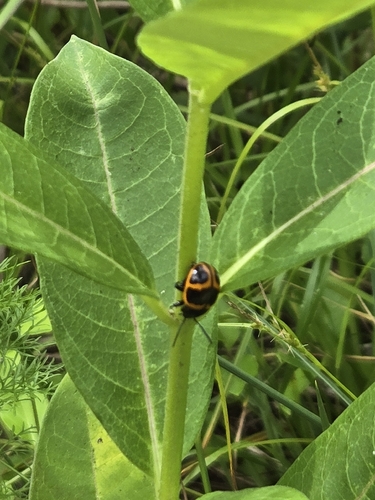
The Swamp Milkweed Leaf Beetle has a shiny, oval body, usually bright yellow or orange with irregular black spots or stripes, giving it a distinctive checkerboard appearance. This pattern makes it stand out from most other leaf beetles found on milkweed plants.
Category
InsectsRarity
Common
Danger
1/5 · Very low
Snaps
53
Even their larvae are brightly colored, looking like tiny, bumpy, orange and black beetles!
Their vibrant colors are a natural warning sign, like a "Do Not Eat" label for predators.
They can fly, but often prefer to crawl and munch happily on their favorite milkweed plant.
They're immune to the sticky, white sap of milkweed, which traps and deters most other insects!
Swamp Milkweed Leaf Beetles can taste bad to predators because they absorb defensive chemicals from the milkweed plants they eat.
Swamp Milkweed Leaf Beetles have bright colors that warn hungry predators, "Don't eat me, I'm toxic!" before they try.
Swamp Milkweed Leaf Beetles can chew tough milkweed leaves using their strong jaws that help them get all the plant's nutrients.
These beetles munch on milkweed leaves, absorbing their plant power to grow big and strong!
_-_Guelph%2C_Ontario.jpg&width=800)
Asclepias incarnata
Primary food source for larvae and adults.
Podisus maculiventris
This predatory bug preys on beetle larvae.
Rana pipiens
An opportunistic predator in its wetland habitat.
Solitary animals live alone for most of their lives, only interacting with others for mating or parental care.
Camouflaged describes organisms that possess coloring or patterns that allow them to blend into their environment.
Colorful describes organisms or objects displaying a wide range of bright and distinct colors.
This trait characterizes organisms whose diet consists entirely or primarily of plant material.

Describes plants that are particularly attractive and beneficial to a wide range of pollinating organisms.

This habitat trait identifies species found in wetlands, which are areas of land saturated with water, either permanently or seasonally, including marshes, swamps, and bogs.

Diurnal animals are primarily active during daylight hours, typically resting or sleeping at night.

Describes organisms that transfer pollen, enabling the fertilization and reproduction of plants.
No aliases listed yet.
Danger
1/5 · Very low
These beetles are safe to observe, but it's best to look and not touch.
The easiest way to identify Swamp Milkweed Leaf Beetle is to use the Snappit nature identifier app.
15-20 mm
8-11 mm
30-90 days
These beetles munch on milkweed leaves, absorbing their plant power to grow big and strong!
Wetlands
Foraging
6
Zoom in to split clusters and explore where this object has been snapped.
Jun 10, 2026
Wildwood Preserve MetroparkPhoto attribution
no rights reserved
License: CC0 1.0 ↗
Image may be shown cropped inside the card frame.
Jun 5, 2026
Wesleyan GrovePhoto attribution
(c) Matt Pelikan, some rights reserved (CC BY)
License: CC BY 4.0 ↗
Image may be shown cropped inside the card frame.
Jun 4, 2026
Charter Street Historic DistrictPhoto attribution
no rights reserved
License: CC0 1.0 ↗
Image may be shown cropped inside the card frame.
May 31, 2026
Daniel Stowe Botanical GardenPhoto attribution
(c) Leigha S, some rights reserved (CC BY)
License: CC BY 4.0 ↗
Image may be shown cropped inside the card frame.

Virginia, US
You might spot Eastern Box Turtle and White-Tailed Deer.
View guide →

Wisconsin, US
You might spot Turkey, White-Tailed Deer, and Dame's Rocket.
View guide →

Vermont, US
You might spot Japanese Knotweed and Red-Bellied Woodpecker.
View guide →
Virginia, US
You might spot White-Tailed Deer and House Sparrow.
View guide →
Illinois, US
You might spot Canada Goose, House Sparrow, and Rock Pigeon.
View guide →

Wisconsin, US
You might spot White-Tailed Deer, American Robin, and Canada Goose.
View guide →
Take the discovery with you
Snap it with Snappit to identify it, learn what makes it special, and add the discovery to your collection.







.jpg&width=800)



