





swift fox
Vulpes velox
The swift fox is a small, quick animal that loves to run and play in the grasslands. They have beautiful orange and gray fur and are known for their playful nature.
Habitat: Grasslands
The swift fox is a small, lean fox with yellowish-tan fur, a pale underside, and large, prominent ears. It has distinctive dark patches on either side of its muzzle and a bushy tail with a black tip, helping it blend into its grassland home.
Category
MammalsRarity
Common
Danger
2/5 · Low
Snaps
Be the first to snap!
Swift foxes are one of North America's smallest wild canids!
Swift foxes often mate for life, which is rare among many fox species!
Their dark eye patches might help reduce sun glare, like a baseball player's eye black.
They sometimes use old prairie dog or badger burrows instead of digging their own.
The swift fox can run up to 60 km/h because of its long legs, helping it chase small prey and escape predators.
Swift foxes have large ears that help them pinpoint faint sounds of prey underground or hidden in tall grass.
This fox can dig complex dens using its strong claws, providing a safe home for pups and an escape from danger.
These foxes eat mostly small mammals and insects, with some plants too.
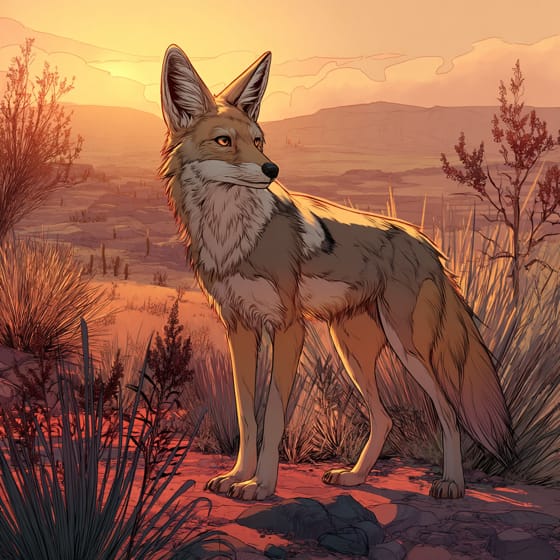
Canis latrans
Coyotes are major predators of swift foxes.
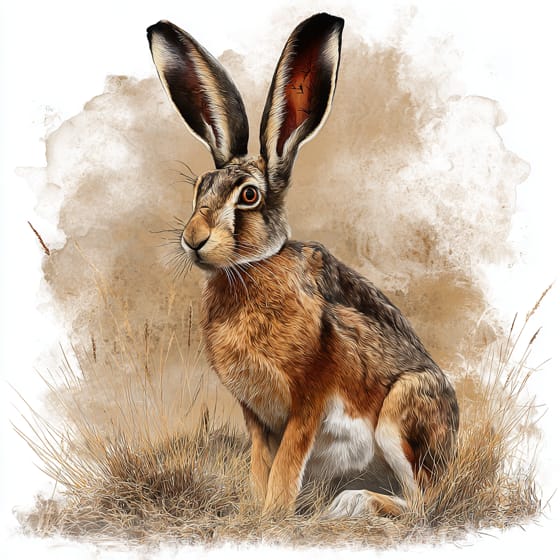
Lepus californicus
Swift foxes often hunt juvenile jackrabbits.
Cynomys ludovicianus
Swift foxes hunt prairie dogs and use their burrows.

Aquila chrysaetos
Golden eagles prey on swift foxes from above.
Furry describes animals possessing a dense covering of soft hair or fur.
Solitary animals live alone for most of their lives, only interacting with others for mating or parental care.
Burrowing animals dig tunnels and chambers in the ground, using these subterranean structures for shelter, hunting, or breeding.
Grassland habitats are terrestrial biomes dominated by grasses and herbaceous plants, supporting a variety of grazing animals.

This trait identifies organisms whose diet consists entirely or primarily of animal tissue.

This trait identifies organisms that exhibit exceptional swiftness in movement for hunting, escape, or travel.

Nocturnal animals are primarily active during the nighttime hours, typically resting or sleeping during the day.
Danger
2/5 · Low
If you see a swift fox in the wild, enjoy watching it from a distance and do not approach.
The easiest way to identify swift fox is to use the Snappit nature identifier app.
37-53 cm
1.8-3 kg
3-6 years
60 km/h
These foxes eat mostly small mammals and insects, with some plants too.
Grasslands
Pursuit
Zoom in to split clusters and explore where this object has been snapped.
Recent snaps will appear here as new observations are added.
Take the discovery with you
Snap it with Snappit to identify it, learn what makes it special, and add the discovery to your collection.





.jpg&width=800)



.JPG&width=800)

.jpg&width=800)
