




tall bellflower
Campanulastrum americanum
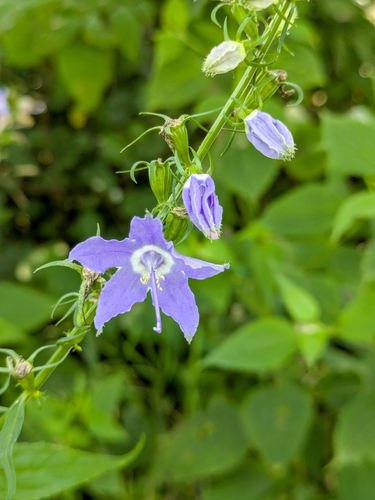
The tall bellflower is a beautiful flower that grows tall and has lovely blue or purple petals. It often blooms in the summer and can be found in fields and along roadsides.
Habitat: Fields and roadsides
The tall bellflower is a striking plant with a single, unbranched stem crowned by numerous star-shaped, blue-violet flowers. Its unique flat, wheel-like blooms feature a prominent, curved white pistil extending from the center, making it visually distinct.
Category
PlantsRarity
Common
Danger
1/5 · Very low
Snaps
8
Early American settlers used its leaves and roots for various remedies.
It's the only species in its entire genus, making it truly unique!
Its flowers are star-shaped, not bell-shaped like other bellflowers!
The stamens release pollen before the pistil is ready, stopping self-pollination.
It can thrive in dappled light, adapting its growth to flourish where many sun-loving plants struggle.
This plant readily drops seeds around its base, creating new plants each year without needing much help.
Apis mellifera
Collects nectar and pollen, aiding reproduction.
Bombus impatiens
Visits flowers for nectar, transferring pollen.
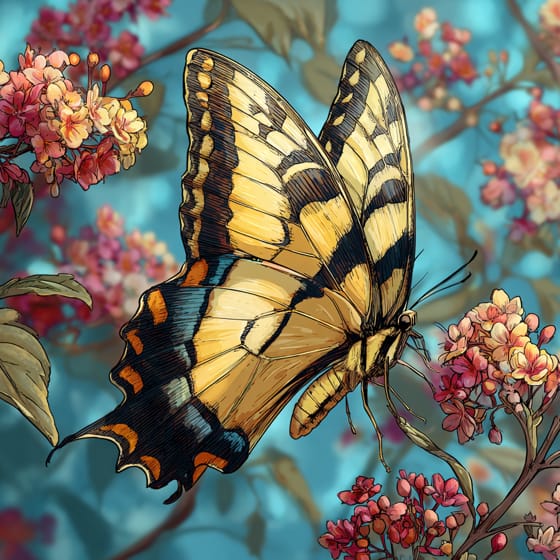
Papilio glaucus
Feeds on nectar, helping to spread pollen.
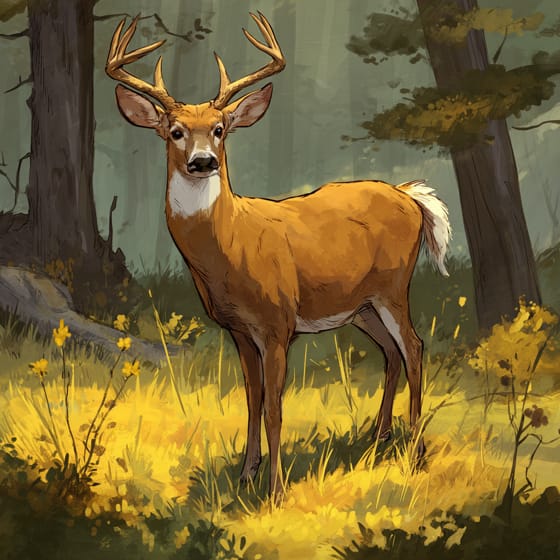
Odocoileus virginianus
May browse its leaves, especially when young.
Bell-shaped flowers possess petals fused or arranged to form a cup-like or campanulate structure resembling a bell.
Flowering plants are any plants that produce flowers as part of their reproductive cycle.
Summer blooming plants produce their flowers during the summer season, often providing vibrant color when many other plants have finished.
Fragrant flowers emit a pleasant aroma, often to attract pollinators or for defense.

Colorful describes organisms or objects displaying a wide range of bright and distinct colors.

Grassland habitats are terrestrial biomes dominated by grasses and herbaceous plants, supporting a variety of grazing animals.

Describes plants that are particularly attractive and beneficial to a wide range of pollinating organisms.
No aliases listed yet.
Danger
1/5 · Very low
Always look but don't touch flowers without asking an adult first.
The easiest way to identify tall bellflower is to use the Snappit nature identifier app.
30-240 cm
30-60 cm
1-2.5 cm
Summer to early fall
Yes
None
Biennial
Zoom in to split clusters and explore where this object has been snapped.
Aug 3, 2025
Scales Mound Historic DistrictPhoto attribution
(c) Tom Field, some rights reserved (CC BY)
License: CC BY 4.0 ↗
Image may be shown cropped inside the card frame.
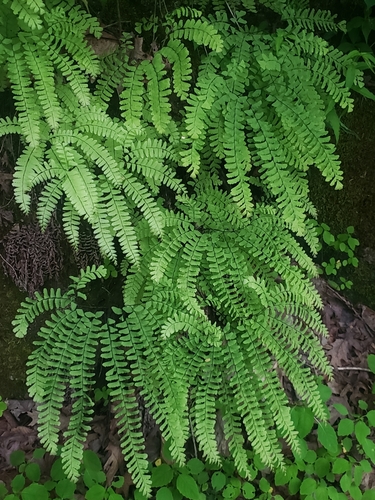
Iowa, US
You might spot Northern Maidenhair Fern and Wood Nettle.
View guide →

Tennessee, US
You might spot Cut-Leaved Toothwort, Virginia Bluebells, and Barred Owl.
View guide →

Michigan, US
You might spot Mayapple, Bluegill, and Sassafras.
View guide →

Illinois, US
You might spot Common Milkweed, Great Blue Heron, and Canada Goose.
View guide →

Kentucky, US
You might spot Virginia Bluebells and Tall Bellflower.
View guide →

Tennessee, US
You might spot Pond Slider, Blue Phlox, and Mayapple.
View guide →
Take the discovery with you
Snap it with Snappit to identify it, learn what makes it special, and add the discovery to your collection.








.jpg&width=800)


_001.jpg&width=800)




