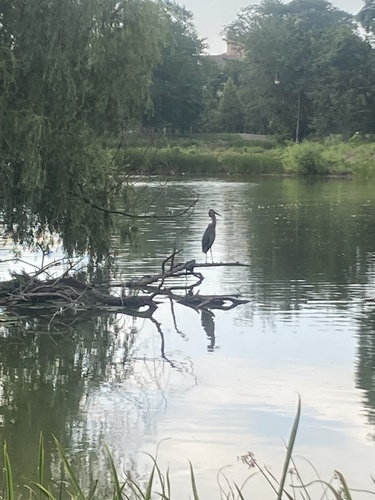
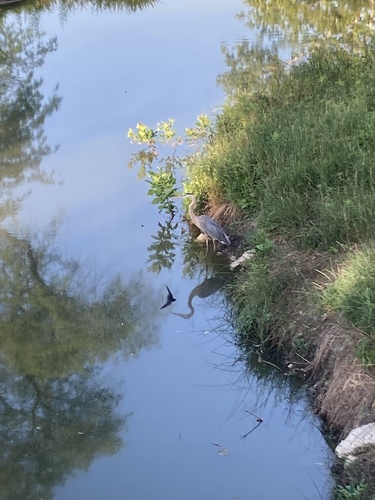
Great Blue Heron

Garfield Park Conservatory is a botanical oasis, a true "landscape art under glass" nestled in Chicago.
Garfield Park Conservatory is a botanical oasis, a true "landscape art under glass" nestled in Chicago. As one of the largest and most stunning conservatories in the nation, it offers visitors an immersive journey through diverse plant ecosystems from around the world within its two acres of indoor gardens and 10 acres of outdoor gardens. This living museum provides a vibrant escape, inviting guests to explore lush flora and tropical temperatures, a stark contrast to the city's urban environment.
Step inside to discover eight magnificent indoor rooms, each a carefully curated environment. Marvel at the soaring palms in the Palm House, explore the prehistoric landscape of the Fern Room with its ancient cycads and indoor lagoon, and witness the changing beauty of the seasonal displays in the Show House. The Desert House showcases an impressive collection of cacti and succulents, while the Aroid House features striking flowering houseplants, including Dale Chihuly's permanent glass lily pad installation in the "Persian Pool." Children will delight in the interactive Elizabeth Morse Genius Children's Garden.
Garfield Park Conservatory is more than just a collection of plants; it's an experience designed to connect people with nature. Whether you're seeking a warm refuge in winter, a burst of color in spring, or a tranquil stroll among diverse botanical wonders, this free-to-enter conservatory offers an educational and inspiring visit for all ages. Its blend of architectural beauty, horticultural excellence, and commitment to community engagement makes it a memorable destination. Eager to name that creature? Identify any animal you find during your visit using the Snappit app.
The Garfield Park Conservatory boasts a rich history, with its origins tracing back to the late 19th century when Chicago's West Park System featured three smaller conservatories. These Victorian glass houses eventually fell into disrepair, leading to the ambitious vision of renowned landscape architect Jens Jensen. In 1905, Jensen spearheaded the demolition of these smaller structures to create what he intended as "the largest publicly owned conservatory under one roof in the world" in Garfield Park. Completed between 1906 and 1907, the new conservatory was a revolutionary concept, described as "landscape art under glass." Jensen, in collaboration with Prairie School architects Schmidt, Garden and Martin and the New York engineering firm Hitchings & Company, designed the structure to emulate the simple form of a Midwestern haystack. He focused on displaying plants in naturalistic settings, rather than traditional potted containers, even hiding mechanical systems behind stratified stonework to enhance the natural aesthetic. The centerpiece, the Fern Room, with its naturalistic waterfall, was a particular triumph of his design philosophy. The conservatory, along with the larger Garfield Park, remains a prime example of Jensen's pioneering Prairie-style landscape design.
Explore the themed indoor gardens, attend seasonal flower shows, participate in educational programs and workshops (like beekeeping or composting), and wander through the extensive outdoor gardens when weather permits. Look for the 200-year-old cycads scattered throughout the rooms.
Winter: A warm, humid escape from Chicago's cold, offering a vibrant green sanctuary.
Spring: Highlighted by the spectacular Spring Flower Show in the Show House (February-May).
Summer: Enjoy the 10 acres of outdoor gardens.
Events: The Conservatory hosts various events and programs throughout the year, such as Sweet Saturdays, County Fair, Creatures of the Night, and Fleurotica.
The Conservatory is largely wheelchair accessible, with pathways made of concrete, pavers, or hard-packed gravel. Limited wheelchairs are available for rent at no cost. The Elizabeth Morse Genius Children's Garden has a wheelchair-accessible spiral ramp. The only exception is the Fern Room, which is not fully wheelchair accessible due to its terrain. Accessible restrooms and baby changing stations are available. Accommodations can be requested in advance.
Experience a recreation of prehistoric Illinois, complete with lush ferns, rocky outcroppings, an indoor lagoon, and ancient cycads, some over 300 years old.
The largest house, featuring a soaring 65-foot ceiling that showcases graceful palms and various tropical plants from around the world.
Home to one of the region's most varied collections of cacti and succulents.
Features diverse aroid plants and Dale Chihuly's 16 yellow glass lily pads permanently displayed in the "Persian Pool."
Each card links to a full Explore page with photos, traits, and fun facts.
Start with the big picture, then zoom in to explore individual wildlife observations around this place.
Make reservations
** Even though it's free, timed-entry reservations are strongly recommended, especially during busy periods, to guarantee entry.
Dress in layers
Temperatures can vary significantly between the different indoor rooms due to their diverse environments.
Explore outside
Don't miss the 10 acres of outdoor gardens, especially during warmer months.
Look for hidden gems
Ask staff about the oldest cycad specimens; some are not prominently labeled.
Parking and transportation
Free parking is available in the visitor's lot. The Conservatory is also easily accessible via the CTA Green Line, with a stop directly at Conservatory-Central Park Drive. Bike corrals and a Divvy bike station are also available.
Visit in winter
For a truly magical experience, visit on a cold winter day to enjoy the warmth and lush greenery inside.

Maryland, US
You might spot White-Tailed Deer and Eastern Gray Squirrel.
View guide →
.jpg)
District of Columbia, US
You might spot Eastern Gray Squirrel, Duck, and House Sparrow.
View guide →

Illinois, US
You might spot American Robin, Canada Goose, and House Sparrow.
View guide →

Virginia, US
You might spot Spotted Lanternfly and Northern Cardinal.
View guide →
Take the discovery with you
Identify the wildlife you spot, learn as you go, and keep a collection of the adventure.