





Tall Evening Primrose
oenothera elata
The Tall Evening Primrose is a beautiful flower that opens its yellow petals in the evening. It's a favorite of many nighttime pollinators like moths!
Habitat: Tall Evening Primrose typically grows in open fields, meadows, and along roadsides.
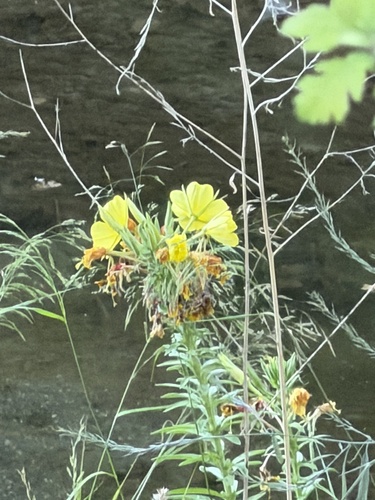
The Tall Evening Primrose has slender, upright stems topped with bright lemon-yellow, cup-shaped flowers. Its petals are delicate and crinkled in the bud, dramatically unfurling at dusk to reveal a vibrant bloom. It stands out with its distinct height and nocturnal floral display.
Category
PlantsRarity
Common
Danger
0/5 · No known danger
Snaps
7
Its petals quickly unfurl, sometimes in minutes, right before your eyes at sunset!
Some parts of the plant taste peppery, like a spicy salad green.
The plant's seeds contain an oil rich in beneficial fatty acids.
The roots were once eaten like potatoes by Indigenous peoples.
Tall Evening Primrose can open its flowers rapidly at dusk to attract nocturnal pollinators like moths.
Tall Evening Primrose has a long taproot that helps it find water and nutrients in dry, poor soils.
Tall Evening Primrose produces many small seeds that allow it to spread and colonize new disturbed areas easily.
Manduca sexta
Drinks nectar from evening blooms.
Hyles lineata
A frequent nocturnal visitor for nectar.

Schinia florida
Larvae feed exclusively on evening primrose plants.
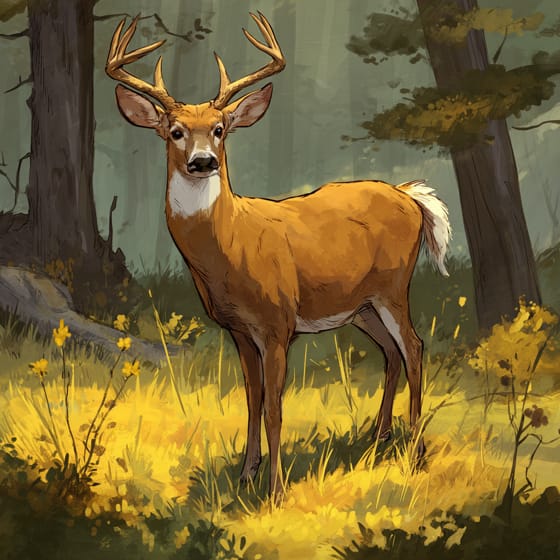
Odocoileus virginianus
Browses on the leaves and stems.
Colorful describes organisms or objects displaying a wide range of bright and distinct colors.
Grassland habitats are terrestrial biomes dominated by grasses and herbaceous plants, supporting a variety of grazing animals.
This trait characterizes organisms whose diet consists entirely or primarily of plant material.
Diurnal animals are primarily active during daylight hours, typically resting or sleeping at night.

Describes organisms that transfer pollen, enabling the fertilization and reproduction of plants.
No aliases listed yet.
Danger
0/5 · No known danger
No special safety notes yet.
The easiest way to identify Tall Evening Primrose is to use the Snappit nature identifier app.
90-180 cm
30-60 cm
3-5 cm
Summer to Fall
Yes
None
Biennial
Zoom in to split clusters and explore where this object has been snapped.
Jun 6, 2026
Iron Horse Regional TrailPhoto attribution
(c) Irina Mitine, some rights reserved (CC BY)
License: CC BY 4.0 ↗
Image may be shown cropped inside the card frame.

California, US
You might spot Western Fence Lizard, Eastern Fox Squirrel, and Duck.
View guide →

California, US
You might spot Snowy Egret, Great Blue Heron, and Western Gull.
View guide →

Arizona, US
You might spot Saguaro and Graham's Nipple Cactus.
View guide →

California, US
You might spot Western Fence Lizard, Eastern Fox Squirrel, and Duck.
View guide →

California, US
You might spot White-Crowned Sparrow and Bermuda Buttercup.
View guide →

California, US
You might spot Hollyleaf Cherry, Toyon, and Lemonade Berry.
View guide →
Take the discovery with you
Snap it with Snappit to identify it, learn what makes it special, and add the discovery to your collection.









.jpg&width=800)



_001.jpg&width=800)




