





Tamanend's Bottlenose Dolphin
Tursiops erebennus
Tamanend's Bottlenose Dolphin is a playful and friendly marine mammal. They love to swim in the ocean and can often be seen jumping out of the water, showing off their acrobatic skills!
Habitat: Coastal areas
The Tamanend's Bottlenose Dolphin is a robust dolphin with a short, distinct beak and a stocky body. Its coloration ranges from dark grey on the back to a lighter grey or white belly, often appearing darker than offshore bottlenose dolphins.
Category
MammalsRarity
Common
Danger
1/5 · Very low
Snaps
11
Dolphins don't have a sense of smell, but their hearing is super sharp!
Dolphins sleep with half their brain awake and one eye open!
Every Tamanend's dolphin has a unique whistle, like its very own name!
They often work together in groups to herd fish into a tight ball!
Tamanend's Bottlenose Dolphin can navigate and find prey in murky water because of its advanced echolocation.
Tamanend's Bottlenose Dolphin can leap and swim at high speeds because of its powerful tail flukes.
Tamanend's Bottlenose Dolphin can hold its breath for many minutes, helping it hunt underwater.
These clever hunters love to eat various fish and squid found in coastal waters.
Brevoortia tyrannus
A primary food source in its coastal habitat.
Mugil cephalus
Often hunted cooperatively in shallow waters.
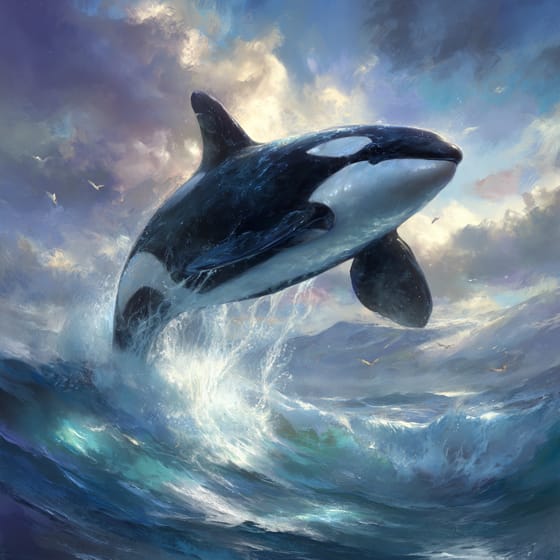
Orcinus orca
An apex predator, though less common in coastal areas.
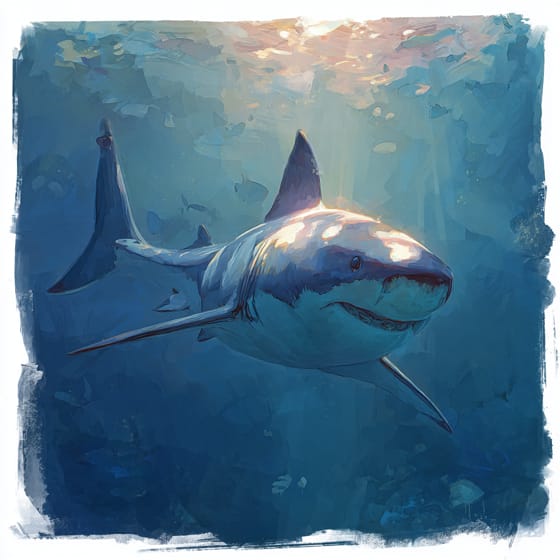
Carcharodon carcharias
Occasionally preyed upon by large marine predators.
Furry describes animals possessing a dense covering of soft hair or fur.
Social animals live in organized groups, cooperating for survival benefits such as foraging, defense, and raising offspring.
This trait describes organisms that manipulate external objects to achieve a specific goal.
Echolocation is a biological sonar used by animals to navigate, hunt, and communicate by emitting sound waves and interpreting the echoes.

Coastal habitats are dynamic environments located along the interface between land and sea, influenced by tides, waves, and saltwater.

This trait identifies organisms whose diet consists entirely or primarily of animal tissue.

This trait identifies organisms that exhibit exceptional swiftness in movement for hunting, escape, or travel.

Marine habitats encompass all saltwater environments of the Earth's oceans, supporting an immense diversity of aquatic life.

Endangered status indicates a species is at a very high risk of extinction in the wild in the near future.
No aliases listed yet.
Danger
1/5 · Very low
Always watch dolphins from a safe distance and never try to touch or feed them.
The easiest way to identify Tamanend's Bottlenose Dolphin is to use the Snappit nature identifier app.
220-300 cm
190-280 kg
35-50 years
35 km/h
These clever hunters love to eat various fish and squid found in coastal waters.
Coastal areas
Pursuit
Zoom in to split clusters and explore where this object has been snapped.

Georgia, US
You might spot Brown Anole, Anole, and Gulf Fritillary.
View guide →

South Carolina, US
You might spot Brown Pelican, Boat-Tailed Grackle, and Great Egret.
View guide →

Florida, US
You might spot Crested Anole, Brown Anole, and Peters's Rock Agama.
View guide →

Florida, US
You might spot American Beautyberry and Brown Anole.
View guide →

US
You might spot Brown Pelican, Boat-Tailed Grackle, and Great Egret.
View guide →

South Carolina, US
You might spot Gulf Fritillary, Poey's Furrow Bee, and Anole.
View guide →
Take the discovery with you
Snap it with Snappit to identify it, learn what makes it special, and add the discovery to your collection.




.jpg&width=800)



.JPG&width=800)



.jpg&width=800)
