





Tan Jumping Spider
platycryptus undatus
The Tan Jumping Spider is a small and lively spider known for its incredible jumping ability! These little creatures are great at catching insects and are often found in gardens and grassy areas.
Habitat: Gardens, grassy areas, and shrubs.
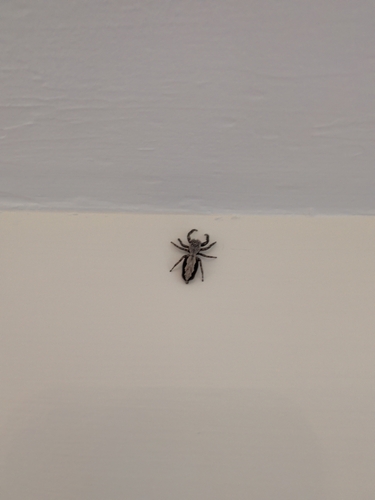
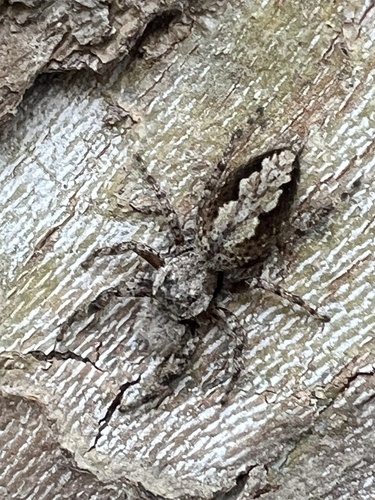
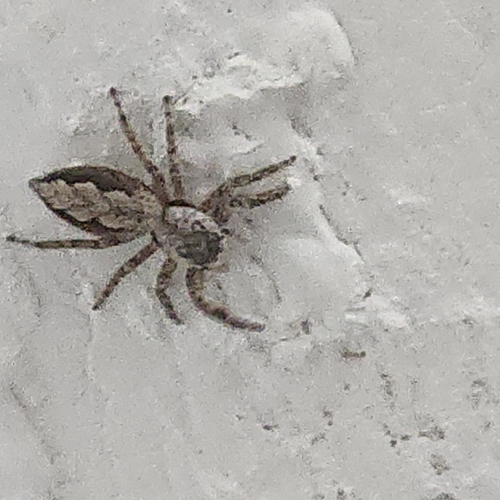
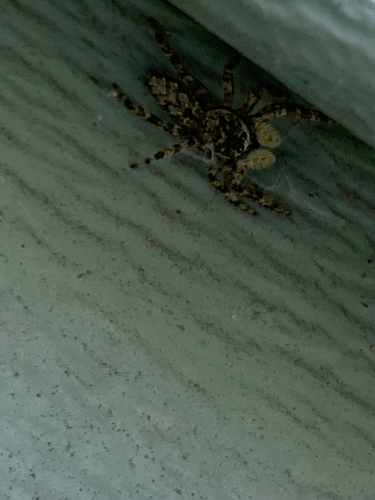
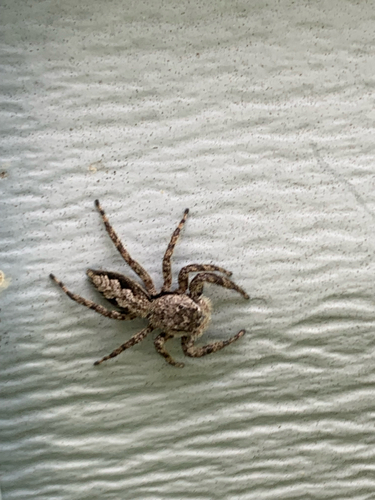
The Tan Jumping Spider is a small, stout spider typically tan to grayish-brown with a flattened body, often featuring a distinctive herringbone pattern on its abdomen. It has large, forward-facing eyes, giving it excellent vision, and sometimes shows white stripes under its eyes, especially males.
Category
InsectsRarity
Common
Danger
1/5 · Very low
Snaps
135
Despite being tiny, their intelligence allows them to plan hunting routes to catch tricky prey.
Tan Jumping Spiders clean their large front eyes by wiping them with their tiny leg-like pedipalps!
Their eight eyes are arranged for 360-degree vision, with two giant forward-facing ones for focus!
They perform elaborate, unique courtship dances to attract a mate, showing off their patterns!
Tan Jumping Spider has incredibly sharp eyesight that helps them spot tiny prey from a distance.
Tan Jumping Spider can leap many times its body length to pounce on unsuspecting insects with precision.
Tan Jumping Spider spins a silk dragline that acts as a safety rope for jumps and quick descents.
Tan Jumping Spider has a mottled brown and tan coloration that helps them blend perfectly into tree bark.
Tiny predators, they eat many different small insects they hunt with their excellent eyesight.
Musca domestica
a quick protein meal on sunny walls.
Aedes aegypti
helping to control pesky insect populations.
.jpg&width=800)
Sitta carolinensis
a small, nutritious snack for hungry birds.
Anolis carolinensis
a common meal for garden lizards.
Solitary animals live alone for most of their lives, only interacting with others for mating or parental care.
Arboreal animals live primarily in trees, utilizing them for shelter, food, and protection from predators.
Colorful describes organisms or objects displaying a wide range of bright and distinct colors.
This trait identifies organisms whose diet consists entirely or primarily of animal tissue.

Diurnal animals are primarily active during daylight hours, typically resting or sleeping at night.
Danger
1/5 · Very low
No special safety notes yet.
The easiest way to identify Tan Jumping Spider is to use the Snappit nature identifier app.
8-13 mm
300-450 days
Tiny predators, they eat many different small insects they hunt with their excellent eyesight.
Gardens, grassy areas, and shrubs.
Ambush
8
Zoom in to split clusters and explore where this object has been snapped.
Jun 19, 2026
Wellfleet Bay Wildlife SanctuaryPhoto attribution
no rights reserved
License: CC0 1.0 ↗
Image may be shown cropped inside the card frame.
Jun 12, 2026
Great Falls ParkPhoto attribution
(c) Mark Richman, some rights reserved (CC BY)
License: CC BY 4.0 ↗
Image may be shown cropped inside the card frame.
Jun 9, 2026
Haym Salomon Memorial ParkPhoto attribution
(c) i_da_naturalist, some rights reserved (CC BY)
License: CC BY 4.0 ↗
Image may be shown cropped inside the card frame.
Jun 6, 2026
J. Edward Roush LakePhoto attribution
no rights reserved
License: CC0 1.0 ↗
Image may be shown cropped inside the card frame.
Jun 6, 2026
J. Edward Roush LakePhoto attribution
no rights reserved
License: CC0 1.0 ↗
Image may be shown cropped inside the card frame.

Illinois, US
You might spot Common Eastern Bumble Bee and Brown-Belted Bumble Bee.
View guide →

Rhode Island, US
You might spot Common Mugwort, Duck, and Azure Bluet.
View guide →

Connecticut, US
You might spot Striped Wintergreen and Common Eastern Bumble Bee.
View guide →

Rhode Island, US
You might spot Spotted Lanternfly, Duck, and American Robin.
View guide →

Michigan, US
You might spot Monarch, Canada Goose, and Eastern Gray Squirrel.
View guide →

Rhode Island, US
You might spot Spotted Lanternfly, Duck, and American Robin.
View guide →
Take the discovery with you
Snap it with Snappit to identify it, learn what makes it special, and add the discovery to your collection.








.jpg&width=800)



