.jpg&width=800)





Eight-spotted Skimmer
Libellula forensis
The Eight-spotted Skimmer is a beautiful dragonfly with eight spots on its wings! It loves to fly over ponds and lakes, catching tiny insects to eat.
Habitat: Wetlands
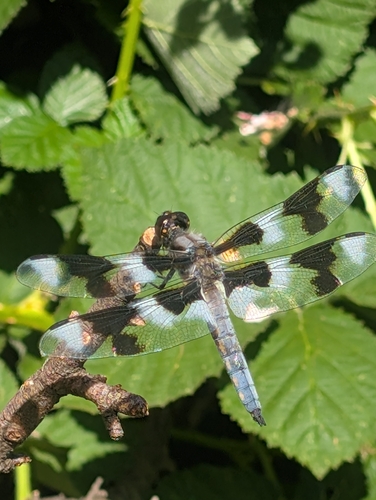
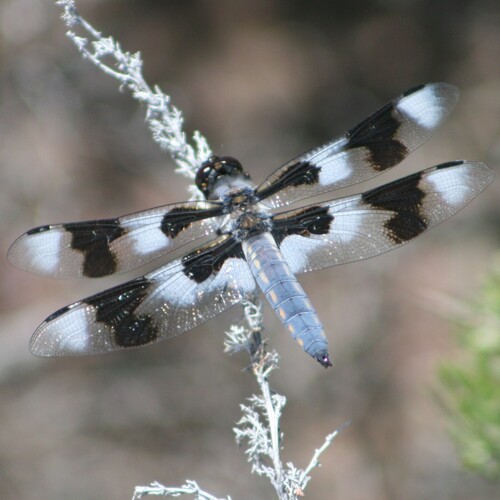
The Eight-spotted Skimmer is a medium-sized dragonfly with a dark body, often with yellow side stripes. Its most distinctive feature is its wings, which have two prominent dark brown or black patches on each wing, making a total of eight spots. There is often a striking white or pale patch between the dark wing spots.
Category
InsectsRarity
Common
Danger
1/5 · Very low
Snaps
10
Dragonflies spend most of their lives as fierce hunters underwater before taking to the sky!
Its amazing compound eyes have up to 30,000 tiny lenses for spotting the smallest prey!
They help keep pesky mosquito populations in check, especially around wetlands!
This ancient insect's ancestors flew the Earth over 300 million years ago, before dinosaurs!
Eight-spotted Skimmer has massive compound eyes that give it nearly 360-degree vision for spotting tiny insects.
Eight-spotted Skimmer can fly backward, hover, and dart rapidly, catching prey mid-air with incredible agility.
Eight-spotted Skimmer can move its four wings independently, allowing for amazing control and complex flight patterns.
An excellent hunter, it eats many flying insects, helping keep pest populations in check.
Age differences: Nymphs (young) hunt aquatic insects and small tadpoles, while adults exclusively catch flying insects.
Culex pipiens
helps control mosquito populations
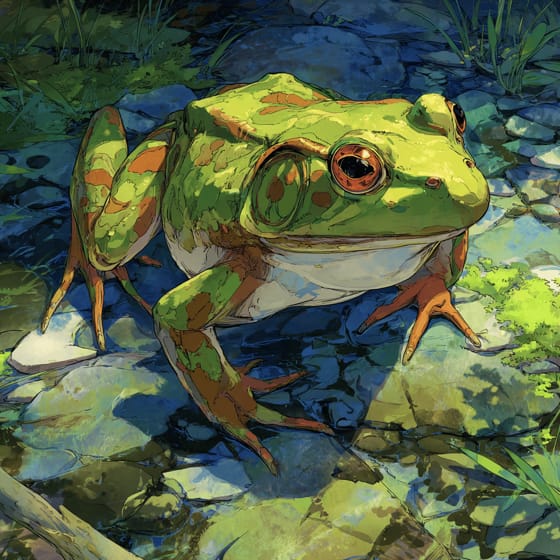
Lithobates catesbeianus
nymphs are prey for this hungry amphibian
.jpg&width=800)
Tyrannus tyrannus
adults are a quick meal for this agile bird
Musca domestica
an active predator of these common pests
Marked with spots or patches of a different color.
Solitary animals live alone for most of their lives, only interacting with others for mating or parental care.
Aerial creatures spend a significant portion of their lives airborne, utilizing flight for various activities such as hunting, migration, or nesting.
Colorful describes organisms or objects displaying a wide range of bright and distinct colors.

This trait identifies organisms whose diet primarily consists of insects and other small invertebrates.

This habitat trait identifies species found in wetlands, which are areas of land saturated with water, either permanently or seasonally, including marshes, swamps, and bogs.

Diurnal animals are primarily active during daylight hours, typically resting or sleeping at night.

Freshwater habitats include non-saline aquatic environments such as rivers, lakes, ponds, and wetlands, vital for numerous species.

This trait identifies organisms that exhibit exceptional swiftness in movement for hunting, escape, or travel.

Describes organisms that transfer pollen, enabling the fertilization and reproduction of plants.
No aliases listed yet.
Danger
1/5 · Very low
Dragonflies are friendly and won't hurt you, but it's best to watch them from a distance.
The easiest way to identify Eight-spotted Skimmer is to use the Snappit nature identifier app.
70-90 mm
45-55 mm
30-90 days
35 km/h
An excellent hunter, it eats many flying insects, helping keep pest populations in check.
Wetlands
Pursuit
Zoom in to split clusters and explore where this object has been snapped.
Jun 19, 2026
Discovery ParkPhoto attribution
(c) Zachary M.C., some rights reserved (CC BY)
License: CC BY 4.0 ↗
Image may be shown cropped inside the card frame.
Jun 7, 2026
Painted HillsPhoto attribution
(c) John Clonce, some rights reserved (CC BY)
License: CC BY 4.0 ↗
Image may be shown cropped inside the card frame.
May 22, 2026
Drumheller Channels National Natural LandmarkPhoto attribution
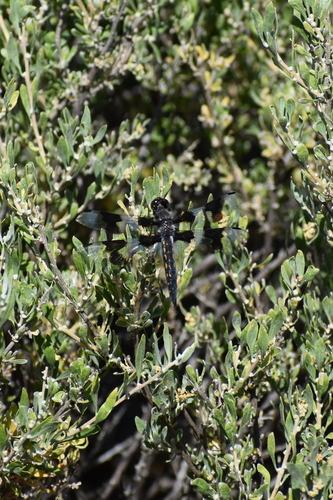
no rights reserved
License: CC0 1.0 ↗
Image may be shown cropped inside the card frame.

Washington, US
You might spot Pacific Banana Slug and Oregon Forestsnail.
View guide →

Washington, US
You might spot Great Blue Heron, Aggregating Anemone, and Ochre Sea Star.
View guide →

Oregon, US
You might spot Mule Deer, Song Sparrow, and Northern Yellow Warbler.
View guide →

Oregon, US
You might spot Blue Mountain Prairie Clover and Munro's Globemallow.
View guide →

Washington, US
You might spot Rock Pigeon, American Crow, and Pigeon Guillemot.
View guide →

Washington, US
You might spot Duck, Western Sword Fern, and Rock Pigeon.
View guide →
Take the discovery with you
Snap it with Snappit to identify it, learn what makes it special, and add the discovery to your collection.








.jpg&width=800)



