.jpg&width=800)





White-breasted Nuthatch
Sitta carolinensis
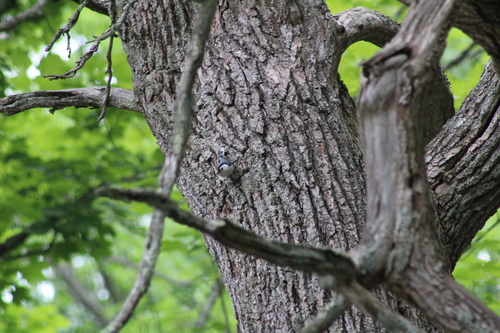
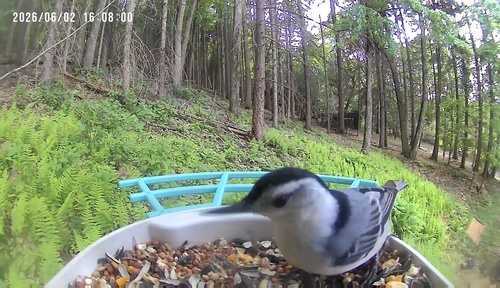
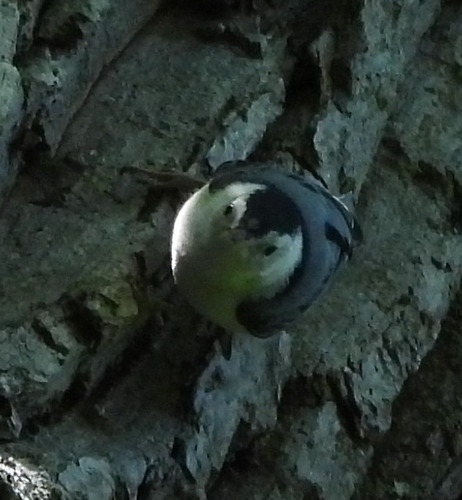
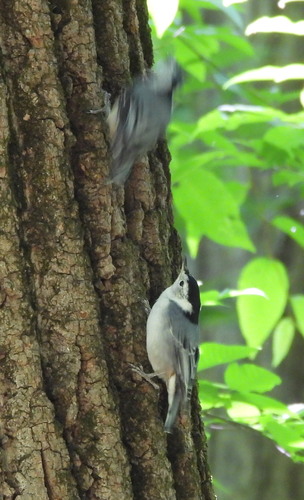
The White-breasted Nuthatch is a small bird with a white belly and a blue-gray back. They love to climb trees and can often be seen hanging upside down while looking for food!
Habitat: Forests
The White-breasted Nuthatch has a striking blue-gray back, a bright white chest, and a contrasting black cap. Its sharp, pointed bill and short tail distinguish it from other small forest birds.
Category
BirdsRarity
Common
Danger
1/5 · Very low
Snaps
81
"Nuthatch" means "nut hacker" because they famously wedge nuts into bark to open them!
Their distinctive "yank-yank" call is often one of the first sounds heard in the morning forest!
These clever birds sometimes smear insects or plants around their nest entrance to keep predators away!
They often line their cozy nests with soft fur or pieces of bark to make them extra warm.
White-breasted Nuthatch can climb down tree trunks headfirst because of its strong claws and unique leg structure.
White-breasted Nuthatch can expertly extract insects and seeds from tiny bark crevices because of its sharp, pointed beak.
White-breasted Nuthatch has a clever memory that helps them hide seeds and nuts in bark for later snacks.
A diet of insects and seeds keeps this bird healthy year-round.
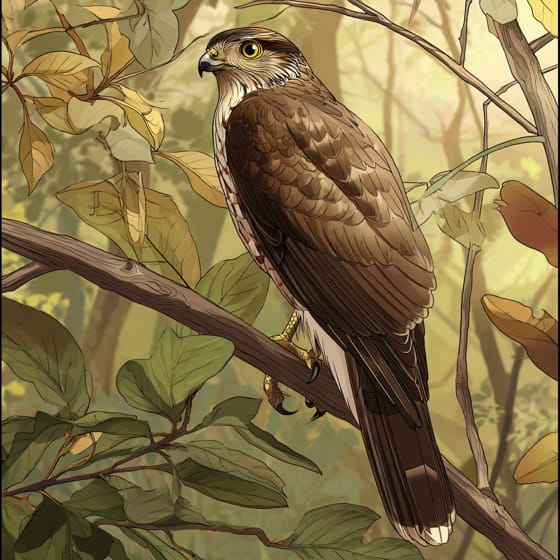
Accipiter cooperii
A common avian predator of small forest birds.
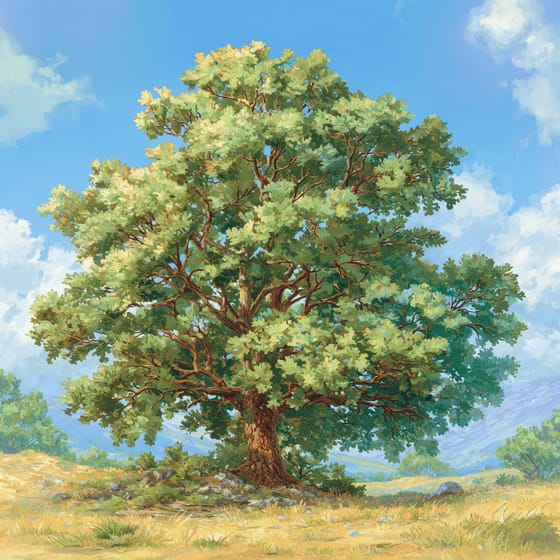
Quercus alba
Provides acorns, a crucial winter food source.
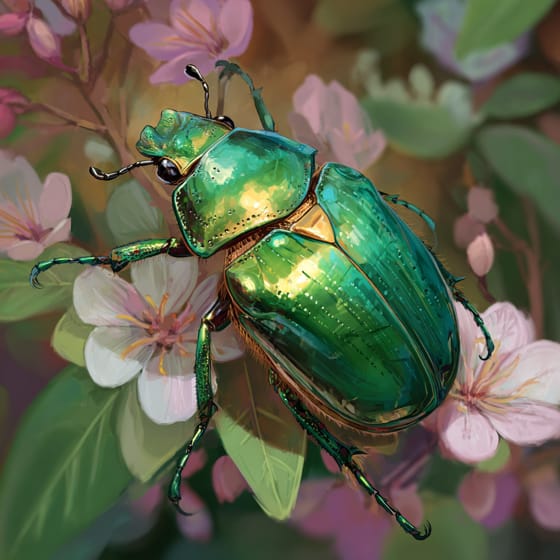
Popillia japonica
Eats beetles found hidden in tree bark.
Formica fusca
Forages on ants from tree trunks and branches.
Feathered describes animals, primarily birds, possessing a covering of feathers.
Social animals live in organized groups, cooperating for survival benefits such as foraging, defense, and raising offspring.
Singing animals produce complex vocalizations, often for purposes of attracting mates, defending territory, or communicating within their species.
Arboreal animals live primarily in trees, utilizing them for shelter, food, and protection from predators.

This trait identifies organisms whose diet primarily consists of insects and other small invertebrates.

Forest habitats are terrestrial environments dominated by dense tree cover, supporting a high diversity of plant and animal life.

Diurnal animals are primarily active during daylight hours, typically resting or sleeping at night.
No aliases listed yet.
Danger
1/5 · Very low
Enjoy watching birds from a distance, and don't try to touch or catch them.
The easiest way to identify White-breasted Nuthatch is to use the Snappit nature identifier app.
13-14 cm
20-27 cm
0.02-0.03 kg
2-10 years
35 km/h
A diet of insects and seeds keeps this bird healthy year-round.
Forests
Zoom in to split clusters and explore where this object has been snapped.
Jun 6, 2026
Harvard Shaker Village Historic DistrictPhoto attribution
(c) Lythronax246, some rights reserved (CC BY)
License: CC BY 4.0 ↗
Image may be shown cropped inside the card frame.
Jun 2, 2026
Binghamton Zoo at Ross ParkPhoto attribution
(c) David Weisenbeck, some rights reserved (CC BY)
License: CC BY 4.0 ↗
Image may be shown cropped inside the card frame.
May 16, 2026
Aurora Highlands Historic DistrictPhoto attribution
(c) Steve Young, some rights reserved (CC BY)
License: CC BY 4.0 ↗
Image may be shown cropped inside the card frame.
May 16, 2026
Aurora Highlands Historic DistrictPhoto attribution
(c) Steve Young, some rights reserved (CC BY)
License: CC BY 4.0 ↗
Image may be shown cropped inside the card frame.

Florida, US
You might spot Anole, Eastern Box Turtle, and Golden Silk Spider.
View guide →

California, US
You might spot Acorn Woodpecker and Western Fence Lizard.
View guide →

California, US
You might spot Western Fence Lizard and California Brittlebush.
View guide →

New Mexico, US
You might spot Tree Cholla, Colorado Pinyon, and House Finch.
View guide →

Utah, US
You might spot Common Golden-Mantled Ground Squirrel and Steller's Jay.
View guide →

Utah, US
You might spot Common Golden-Mantled Ground Squirrel and Steller's Jay.
View guide →
Take the discovery with you
Snap it with Snappit to identify it, learn what makes it special, and add the discovery to your collection.




.jpg&width=800)








