


Toothed Midsorus Fern
telmatoblechnum serrulatum
The Toothed Midsorus Fern is an elegant, robust wetland plant that thrives in the humid marshes, swamps, and wet flatwoods of the Americas. Forming dense, verdant colonies, this hardy fern plays a crucial role in stabilizing soggy soils and providing shelter for various aquatic and semi-aquatic organisms. Its ability to tolerate prolonged flooding makes it a champion of subtropical wetlands, where it stands tall amidst cypress knees and marsh grasses. What makes this fern particularly captivating is its highly organized spore structure and its resilience. It is one of the few fern species that can bounce back rapidly after wetland wildfires, thanks to its deep, protected underground rhizomes.
Habitat: Typically found in subtropical wetlands, marshes, wet pine flatwoods, and along the banks of sluggish swamp streams.
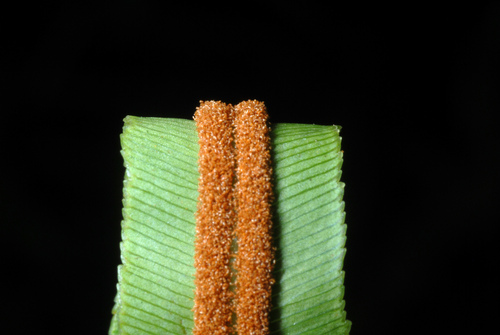
This fern features erect, glossy green fronds that typically grow between 50 and 150 centimeters tall. The fronds are once-pinnate, meaning they consist of a single central stem with individual leaflets (pinnae) branching out on either side. Each leaflet is elongated and features distinct, finely toothed (serrated) edges. On the undersides of fertile leaflets, look for the defining characteristic of this species: continuous, dark brown lines of sori (spore cases) running perfectly parallel to the midrib.
Category
PlantsRarity
Common
Danger
1/5 · Very low
Snaps
Be the first to snap!
It is an incredibly ancient lineage of plants, with close relative fossils dating back tens of millions of years.
The name 'serrulatum' means 'finely saw-toothed' in Latin, referring directly to the jagged margins of its individual leaflets.
Unlike many ferns whose spores are arranged in small, round dots, this species organizes them in long, unbroken rows.
The fern can survive for extended periods in waterlogged, oxygen-depleted soils by utilizing specialized root adaptations.
Deeply buried underground rhizomes allow the plant to quickly regenerate and send up new fronds after devastating wetland fires.
It arranges its spore-producing sori in continuous lines parallel to the leaflet midrib, optimizing spore release into humid air currents.
As a photoautotrophic plant, it produces its own energy by performing photosynthesis, using sunlight, carbon dioxide, and water.
Taxodium distichum
Grows abundantly under the canopy of this wetland tree, which provides the essential shade and humidity required for fern growth.

Odocoileus virginianus
Occasionally grazes on the young fronds of the fern during periods of low food availability in Florida wetlands.
No trait badges are assigned for this object yet.
No aliases listed yet.
Collections for this object will appear here as more themes are added.
Danger
1/5 · Very low
No special safety notes yet.
Compare frond shape, how the leaflets are arranged, the stalk, and any spore clusters you can see. A single detached leaflet often hides the plant's overall growth pattern. Fern Identifier: upload a photo and compare the visible details.
30-150 cm
0.1-1.5 kg
5-15 years
As a photoautotrophic plant, it produces its own energy by performing photosynthesis, using sunlight, carbon dioxide, and water.
Typically found in subtropical wetlands, marshes, wet pine flatwoods, and along the banks of sluggish swamp streams.
Zoom in to split clusters and explore where this object has been snapped.
Recent snaps will appear here as new observations are added.
Take the discovery with you
Snap it with Snappit to identify it, learn what makes it special, and add the discovery to your collection.

















