.jpg&width=800)





Two-leaved Toothwort
Cardamine diphylla
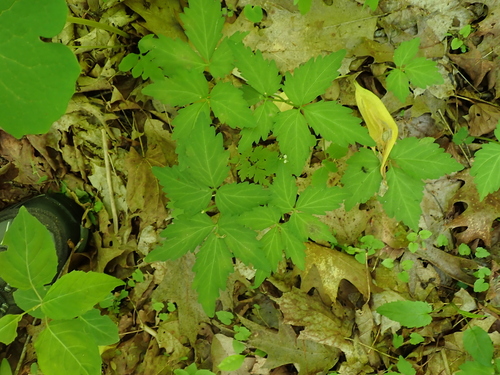
Two-leaved Toothwort is a small plant with pretty white flowers that bloom in spring. It grows in shady forests and has two leaves that look like little hands reaching up to the sky!
Habitat: Forests
The Two-leaved Toothwort has striking clusters of white to pale lavender four-petaled flowers atop stems. Its name comes from the two large, opposite, deeply three-parted leaves that grow high on the stem, making it distinct among forest floor plants.
Category
PlantsRarity
Common
Danger
1/5 · Very low
Snaps
10
Its scientific name, Cardamine, means 'heart-calming,' perhaps from its spicy taste!
The 'toothwort' name actually refers to the tooth-like bumps on its underground rhizomes!
This plant is a close cousin to broccoli and cabbage, both in the mustard family!
You can munch on its peppery leaves and roots in a salad for a spicy kick!
Two-leaved Toothwort has creeping rhizomes that help it spread and store energy, allowing it to pop up year after year.
Two-leaved Toothwort can flower very early in spring, capturing sunlight before the forest canopy fully shades the ground.
Two-leaved Toothwort has seeds with a special fatty attachment, enticing ants to carry and disperse them to new locations.
Two-leaved Toothwort has a peppery taste from special compounds that can deter some herbivores from munching its leaves.
Apis mellifera
Collects nectar and pollen from flowers.
Bombus impatiens
A key pollinator of its early spring blooms.

Odocoileus virginianus
Browses on its leaves and flowers, especially in early spring.
Formica exsectoides
Disperses seeds for the plant, enjoying a fatty seed attachment.
Deciduous plants periodically shed all their leaves, typically during autumn or dry seasons.
Flowering plants are any plants that produce flowers as part of their reproductive cycle.
Cluster flowers are inflorescences where individual flowers are arranged closely together on a common stem.
Shade tolerant plants are adapted to grow and thrive in areas with low light levels, requiring less direct sunlight.

Spring blooming plants produce their flowers during the spring season, often signifying the end of winter and the start of new growth.

Medicinal plants possess chemical compounds that can be used for therapeutic purposes to treat illnesses or maintain health.

Edible plants are those parts of a plant that are considered safe for human consumption.

Forest habitats are terrestrial environments dominated by dense tree cover, supporting a high diversity of plant and animal life.
No aliases listed yet.
Danger
1/5 · Very low
Always look but don't touch wild plants unless a grown-up says it's okay.
The easiest way to identify Two-leaved Toothwort is to use the Snappit nature identifier app.
15-40 cm
15-30 cm
0.8-1.5 cm
Spring (April-May)
Yes
None
Perennial
Zoom in to split clusters and explore where this object has been snapped.
May 17, 2026
October Mountain State ForestPhoto attribution
no rights reserved
License: CC0 1.0 ↗
Image may be shown cropped inside the card frame.

Vermont, US
You might spot Japanese Knotweed and Red-Bellied Woodpecker.
View guide →

Vermont, US
You might spot Northern Cardinal, Wood Frog, and White-Breasted Nuthatch.
View guide →

West Virginia, US
You might spot Eastern Boxelder Bug, Canada Goose, and Groundhog.
View guide →

Massachusetts, US
You might spot Eastern Newt, Red Trillium, and Hobblebush.
View guide →

Vermont, US
You might spot Asian Lady Beetle, Hickory Tussock Moth, and Green Frog.
View guide →

Massachusetts, US
You might spot Eastern Newt, Admiral Butterfly, and Bluebead Lily.
View guide →
Take the discovery with you
Snap it with Snappit to identify it, learn what makes it special, and add the discovery to your collection.





.jpg&width=800)



_001.jpg&width=800)


