





Two-Lined Spittlebug
prosapia bicincta
The Two-Lined Spittlebug is a small, green insect that loves to hop around on plants! It creates bubbly foam that helps protect it while it grows.
Habitat: They live in fields, gardens, and grassy areas.
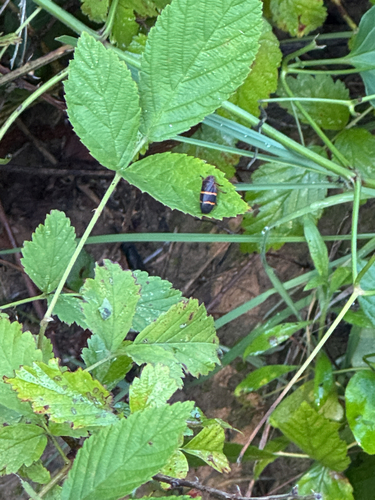
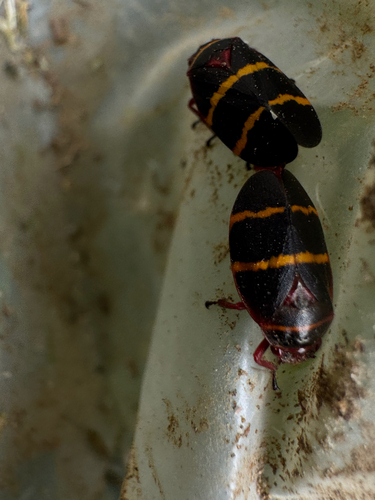
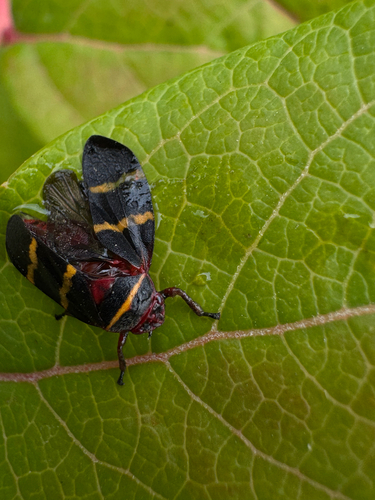
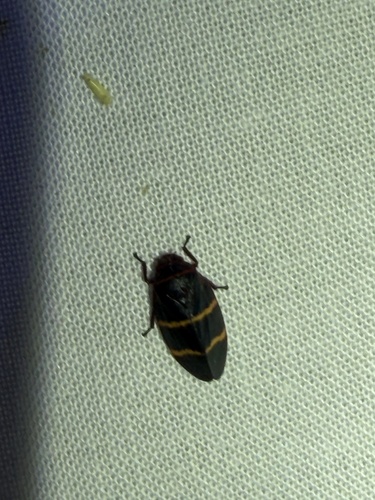
The Two-Lined Spittlebug is a small, oval-shaped insect, typically dark brown to black. It has two distinctive bright red or orange bands that stretch across its back, making it visually unique from other spittlebugs.
Category
InsectsRarity
Common
Danger
0/5 · No known danger
Snaps
28
Imagine blowing bubbles: spittlebug nymphs make their own bubbly houses from sap!
The adult bugs are often mistaken for froghoppers due to their jumping skills!
Their amazing jumps can cover distances 100 times their own body length!
Two-lined spittlebugs drink only plant juice, like tiny vampires of the garden!
Two-Lined Spittlebug has a 'Spittle Shield' that helps its nymph hide from predators and stay moist within a protective foam bubble.
Two-Lined Spittlebug can leap incredibly high because of powerful hind legs, escaping danger with a sudden spring.
Two-Lined Spittlebug can suck plant sap because of specialized piercing-sucking mouthparts, getting nutrients directly from plant stems.
These tiny bugs drink plant sap from various grasses and herbaceous plants, like sipping juice.
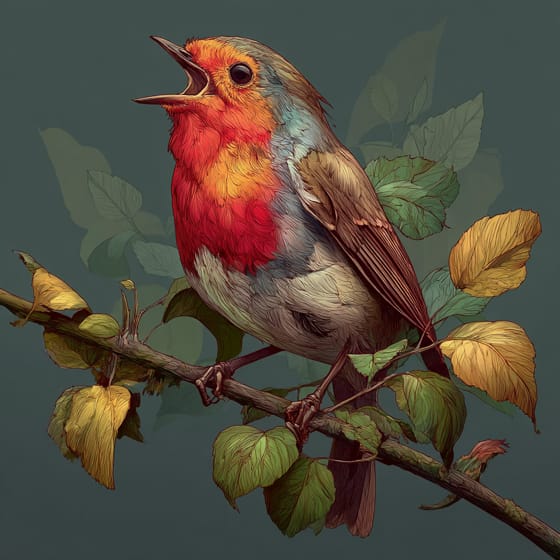
Turdus migratorius
Adults are a food source for hungry birds.
Argiope aurantia
Spiders often trap adult spittlebugs in their webs.
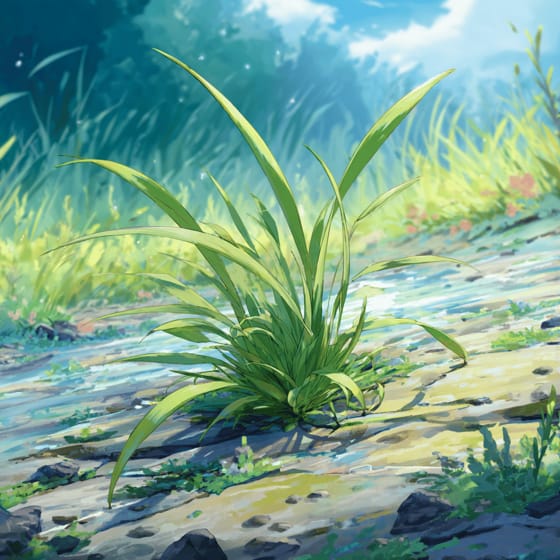
Cynodon dactylon
Feeds on sap, sometimes causing damage to this grass.

Trifolium repens
Nymphs and adults feed on plant juices from clover.
Social animals live in organized groups, cooperating for survival benefits such as foraging, defense, and raising offspring.
Colorful describes organisms or objects displaying a wide range of bright and distinct colors.
Grassland habitats are terrestrial biomes dominated by grasses and herbaceous plants, supporting a variety of grazing animals.
This trait characterizes organisms whose diet consists entirely or primarily of plant material.

Diurnal animals are primarily active during daylight hours, typically resting or sleeping at night.
Danger
0/5 · No known danger
No special safety notes yet.
The easiest way to identify Two-Lined Spittlebug is to use the Snappit nature identifier app.
12-18 mm
6-9 mm
30-90 days
1-3 km/h
These tiny bugs drink plant sap from various grasses and herbaceous plants, like sipping juice.
They live in fields, gardens, and grassy areas.
Foraging
Zoom in to split clusters and explore where this object has been snapped.
Jun 15, 2026
Columbia Historic District IPhoto attribution
no rights reserved
License: CC0 1.0 ↗
Image may be shown cropped inside the card frame.
Jun 5, 2026
Mount Nord Historic DistrictPhoto attribution
(c) Zachary Long, some rights reserved (CC BY)
License: CC BY 4.0 ↗
Image may be shown cropped inside the card frame.
Jun 5, 2026
Mount Nord Historic DistrictPhoto attribution
(c) Zachary Long, some rights reserved (CC BY)
License: CC BY 4.0 ↗
Image may be shown cropped inside the card frame.
Jun 4, 2026
Auburn University Historic DistrictPhoto attribution
(c) Djibo Zanzot, some rights reserved (CC BY-SA)
License: CC BY-SA 4.0 ↗
Image may be shown cropped inside the card frame.

Tennessee, US
You might spot House Sparrow, Northern Mockingbird, and Gulf Fritillary.
View guide →

Georgia, US
You might spot Gulf Fritillary, Anole, and American Beautyberry.
View guide →

Arkansas, US
You might spot Widow's-Cross, Yucca Giant-Skipper, and Outis Skipper.
View guide →

US
You might spot Wharf Louse, Osprey, and Ruddy Turnstone.
View guide →

Oklahoma, US
You might spot Western Ratsnake and Spotted Chorus Frog.
View guide →

South Carolina, US
You might spot Anole, Asian Lady Beetle, and Gulf Fritillary.
View guide →
Take the discovery with you
Snap it with Snappit to identify it, learn what makes it special, and add the discovery to your collection.






.jpg&width=800)



