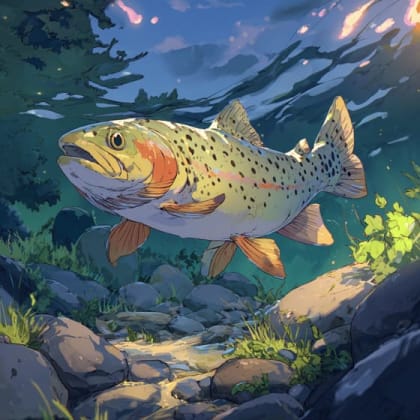
.jpeg&width=800)





Utah Chub
Gila atraria
The Utah Chub is a friendly fish that lives in lakes and rivers. They have a shiny body and love to swim in schools with their friends. They are an important part of their watery home!
Habitat: Wetlands
The Utah Chub has a sleek, torpedo-shaped body with a dark olive or brownish back and silvery sides. Its mouth points slightly downward, and it can have a faint dark stripe along its side, making it blend well in various water environments.
Category
FishRarity
Common
Danger
1/5 · Very low
Snaps
2
Sometimes, so many Utah Chubs school together that they look like a moving dark cloud in the water!
Their scientific name, Gila atraria, means 'dark chub,' even though many are quite silvery.
These hardy fish once thrived in ancient Lake Bonneville, a massive prehistoric lake!
Utah Chubs can change their color slightly to better hide from hungry predators!
Utah Chub can live in many water types, from clear mountain streams to salty lake edges, because it tolerates wide temperature and salinity changes.
Utah Chub forms huge schools, which helps them confuse predators and find food more easily as a big team.
Utah Chub has a flexible diet, eating plants, insects, and tiny creatures, which helps it survive when food is scarce.
An omnivore, the Utah Chub eats almost anything it can find, from plants to tiny insects!
Age differences: Younger chubs primarily eat tiny plankton, shifting to a broader diet of insects and plant matter as they grow.
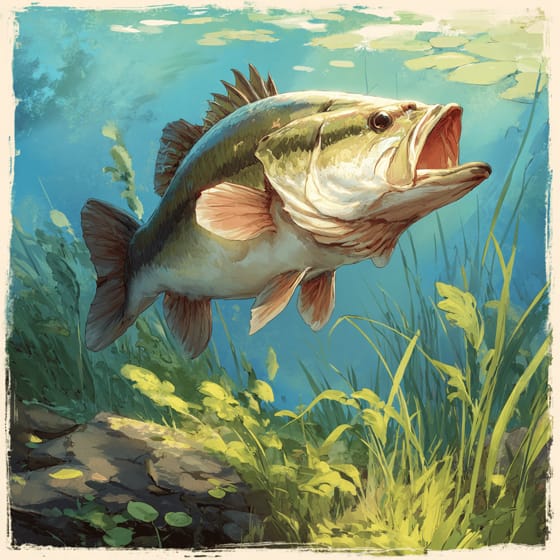
Micropterus salmoides
An introduced predator that significantly preys on chubs.
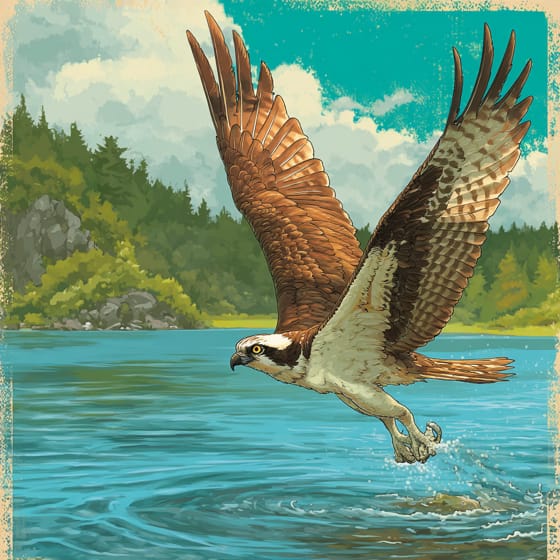
Pandion haliaetus
This fish-eating bird is a common aerial predator.
Chironomus plumosus
Utah Chubs frequently consume these small aquatic insect larvae.
Social animals live in organized groups, cooperating for survival benefits such as foraging, defense, and raising offspring.
Colorful describes organisms or objects displaying a wide range of bright and distinct colors.
This trait characterizes organisms whose diet consists entirely or primarily of plant material.
This habitat trait identifies species found in wetlands, which are areas of land saturated with water, either permanently or seasonally, including marshes, swamps, and bogs.

Freshwater habitats include non-saline aquatic environments such as rivers, lakes, ponds, and wetlands, vital for numerous species.

Describes a species whose presence and role have a disproportionately large effect on its environment.

Aquatic habitats encompass environments where organisms live predominantly in water, including oceans, rivers, lakes, and wetlands.
No aliases listed yet.
Danger
1/5 · Very low
Always stay close to an adult when near water to stay safe.
The easiest way to identify Utah Chub is to use the Snappit nature identifier app.
10-45 cm
0.05-1.5 kg
3-10 years
An omnivore, the Utah Chub eats almost anything it can find, from plants to tiny insects!
8 km/h
Wetlands
Foraging
Zoom in to split clusters and explore where this object has been snapped.
Take the discovery with you
Snap it with Snappit to identify it, learn what makes it special, and add the discovery to your collection.