.jpg&width=800)




Venus Flytrap
Dionaea muscipula
The Venus Flytrap is a fascinating plant that catches insects for its meals. It has special leaves that snap shut when bugs land on them. This plant is like a sneaky hunter in the garden!
Habitat: Wetlands
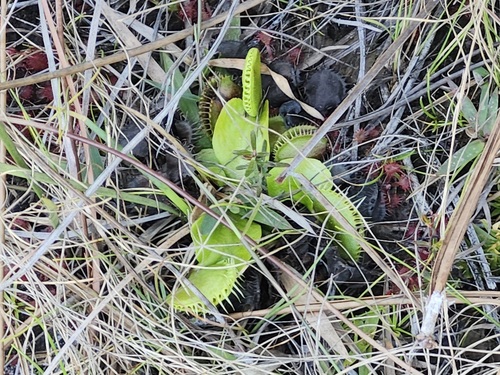
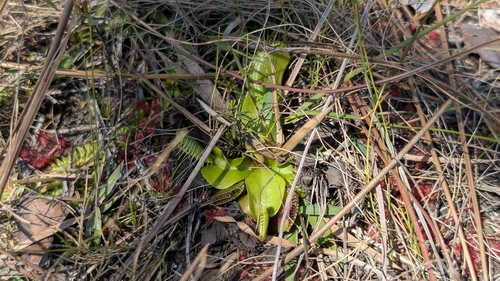
The Venus Flytrap has a rosette of small, flat leaves ending in iconic, hinged lobes that form a trap. Each trap is fringed with stiff, bristle-like 'teeth' and can be vibrant green on the outside, often with striking crimson or reddish interiors. Three to six tiny trigger hairs are visible on the inner surface of each lobe, making it visually distinct from non-carnivorous plants.
Category
PlantsRarity
Common
Danger
1/5 · Very low
Snaps
4
It must count at least two touches on its triggers before snapping shut to save energy!
Its snapping traps can close in less than a second, faster than your eye can blink!
The bright red color inside its trap acts like a delicious sign for unsuspecting insects!
These plants are native to a tiny wetland area in North and South Carolina only!
Venus Flytrap can quickly snap its specialized leaves shut in under a second to capture unsuspecting insects.
Venus Flytrap has trigger hairs that count touches, ensuring the trap only closes for live prey and saves energy.
Venus Flytrap can produce digestive enzymes that break down captured insects, absorbing essential nutrients from them.
Formica pallidefulva
Common prey item for Venus Flytraps
.jpg&width=800)
Toxomerus marginatus
A type of hoverfly that pollinates the plant's flowers
Sphagnum capillifolium
Thrives in the acidic, nutrient-poor conditions created by the moss
Deciduous plants periodically shed all their leaves, typically during autumn or dry seasons.
This trait identifies organisms whose diet primarily consists of insects and other small invertebrates.
Carnivorous plants are predatory flowering plants that derive some or most of their nutrients from trapping and consuming animals or protozoans.
This habitat trait identifies species found in wetlands, which are areas of land saturated with water, either permanently or seasonally, including marshes, swamps, and bogs.
Danger
1/5 · Very low
Venus Flytraps are safe to touch, but don't try to make them close their traps with your fingers.
The easiest way to identify Venus Flytrap is to use the Snappit nature identifier app.
5-30 cm
10-20 cm
0.5-1 cm
Spring
No
None
Perennial
Zoom in to split clusters and explore where this object has been snapped.
Mar 21, 2026
Dead Lakes ParkPhoto attribution
(c) Arturo Santos, some rights reserved (CC BY)
License: CC BY 4.0 ↗
Image may be shown cropped inside the card frame.
Mar 21, 2026
Dead Lakes ParkPhoto attribution
(c) rainbowkitten, some rights reserved (CC BY)
License: CC BY 4.0 ↗
Image may be shown cropped inside the card frame.
Take the discovery with you
Snap it with Snappit to identify it, learn what makes it special, and add the discovery to your collection.









.jpg&width=800)



_001.jpg&width=800)




