.jpg&width=800)





Margined Calligrapher
Toxomerus marginatus
The Margined Calligrapher is a small, friendly fly that loves to buzz around flowers. It has beautiful stripes and helps flowers by spreading pollen as it visits them.
Habitat: Urban areas
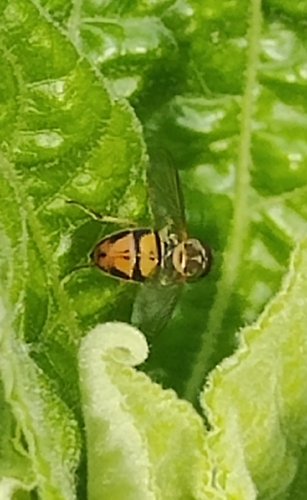
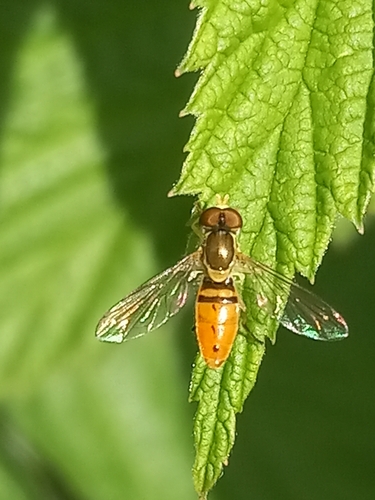
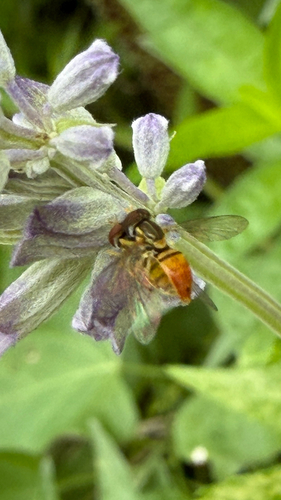
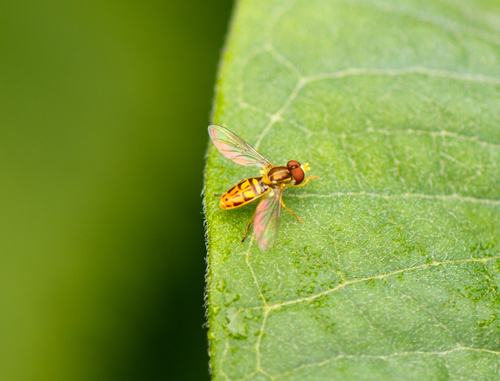
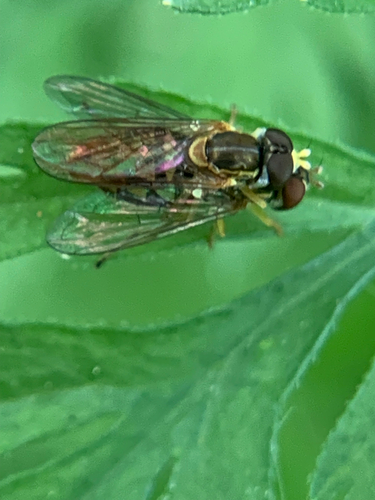
The Margined Calligrapher is a small fly with a striking appearance. It has a black and yellow striped abdomen, often resembling a tiny wasp or bee, and clear, delicate wings. Its body often has a slightly flattened look.
Category
InsectsRarity
Common
Danger
1/5 · Very low
Snaps
81
Even though they look striped like a scary wasp, they can't sting you at all!
Some people call them 'flower flies' because they love visiting bright blossoms.
Their tiny eyes have thousands of lenses, giving them super amazing vision.
They can fly backwards and even sideways, a rare trick for an insect!
Margined Calligrapher can hover in place like a tiny helicopter, allowing them to precisely collect nectar and scout for aphids.
Margined Calligrapher larvae can gobble up hundreds of garden aphids, helping plants stay healthy and strong.
Margined Calligrapher can visit many flowers, transferring pollen from bloom to bloom and helping plants reproduce.
Adults sip sweet nectar and collect pollen, while their larvae are tiny garden heroes, eating pesky aphids.
Age differences: Larvae are carnivorous, feeding on soft-bodied insects like aphids, while adults are herbivorous, seeking nectar and pollen from flowers.
Aphis gossypii
Larvae feast on these tiny plant pests.
Daucus carota
Adults visit their flowers for nectar and pollen.
Araneus diadematus
Sometimes caught in their sticky webs by garden spiders.
Marked with parallel bands or lines of color.
Social animals live in organized groups, cooperating for survival benefits such as foraging, defense, and raising offspring.
Colorful describes organisms or objects displaying a wide range of bright and distinct colors.
This trait characterizes organisms whose diet consists entirely or primarily of plant material.

Describes plants that are particularly attractive and beneficial to a wide range of pollinating organisms.

Diurnal animals are primarily active during daylight hours, typically resting or sleeping at night.

This habitat trait indicates species that can coexist with humans in urban and suburban environments, utilizing man-made structures and green spaces.

Describes organisms that transfer pollen, enabling the fertilization and reproduction of plants.
No aliases listed yet.
Danger
1/5 · Very low
These flies are harmless, but it's best to watch them from a distance.
The easiest way to identify Margined Calligrapher is to use the Snappit nature identifier app.
8-14 mm
4-7 mm
15-30 days
5-10 km/h
Adults sip sweet nectar and collect pollen, while their larvae are tiny garden heroes, eating pesky aphids.
Urban areas
Foraging
Zoom in to split clusters and explore where this object has been snapped.
Jun 19, 2026
Photo attribution
(c) jamie bee, some rights reserved (CC BY)
License: CC BY 4.0 ↗
Image may be shown cropped inside the card frame.
Jun 15, 2026
Delaware Division of the Pennsylvania CanalPhoto attribution
(c) Aleks, some rights reserved (CC BY)
License: CC BY 4.0 ↗
Image may be shown cropped inside the card frame.
Jun 7, 2026
King William Historic DistrictPhoto attribution
(c) IDClaire, some rights reserved (CC BY)
License: CC BY 4.0 ↗
Image may be shown cropped inside the card frame.
Jun 6, 2026
Brookfield ZooPhoto attribution
(c) threelark, some rights reserved (CC BY)
License: CC BY 4.0 ↗
Image may be shown cropped inside the card frame.
Jun 4, 2026
Johnny Appleseed ParkPhoto attribution
no rights reserved
License: CC0 1.0 ↗
Image may be shown cropped inside the card frame.

New Jersey, US
You might spot Garlic Mustard, Sensitive Fern, and Common Mugwort.
View guide →

Tennessee, US
You might spot House Sparrow, Northern Mockingbird, and Gulf Fritillary.
View guide →

Massachusetts, US
You might spot Eastern Cottontail and American Robin.
View guide →

Alabama, US
You might spot Anole, Eastern Gray Squirrel, and Asian Lady Beetle.
View guide →

Oregon, US
You might spot Duck, Pacific Trillium, and Wood Duck.
View guide →

Illinois, US
You might spot Brown-Belted Bumble Bee and Eastern Gray Squirrel.
View guide →
Take the discovery with you
Snap it with Snappit to identify it, learn what makes it special, and add the discovery to your collection.







.jpg&width=800)



