





Vesper Bats
Vespertilioninae
Vesper bats are small, friendly creatures that love to fly at night. They help keep the insect population down by eating bugs while you sleep!
Habitat: Forests
The Vesper Bat has generally plain facial features, lacking the elaborate nose-leaves of many other bat families. They typically have fur that ranges from brown to grey, sometimes reddish, and prominent, often large ears. Their wings are dark and leathery, making them look like small, furry gliders.
Category
MammalsRarity
Common
Danger
1/5 · Very low
Snaps
Be the first to snap!
A single Vesper Bat can eat hundreds of mosquitoes and other bugs in one night, helping to control pests!
These amazing mammals can roost in giant colonies of thousands inside caves or hollow trees!
Unlike birds, bats launch into flight by letting go and falling, rather than pushing off with their legs!
Vesper Bats are often called 'evening bats' because they become active just as the sun sets!
Vesper Bats can 'see' in the dark using echolocation, emitting high-pitched sounds and listening to the echoes to build a sound map of their surroundings.
Vesper Bats have incredibly agile flight, allowing them to perform complex maneuvers and rapid turns to catch fast-moving insect prey.
Vesper Bats can enter torpor or hibernate during cold months, drastically lowering their body temperature and metabolism to save energy.
These bats mostly munch on flying insects, catching them mid-air with incredible skill.
Culex pipiens
Vesper Bats consume vast numbers of mosquitoes.
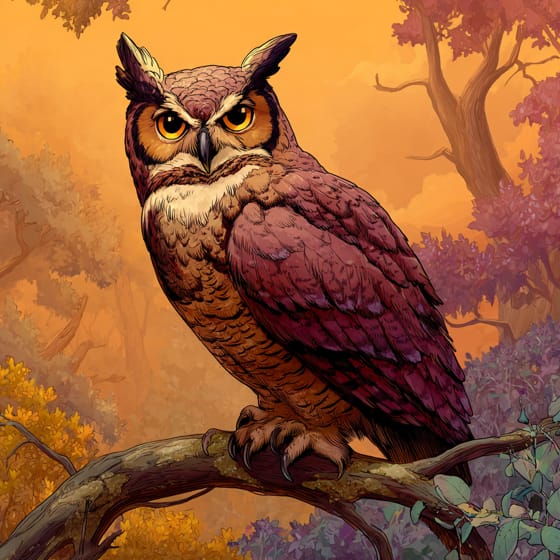
Bubo virginianus
Owls are common predators of foraging Vesper Bats.
Lymantria dispar
Many species help control moth populations.

Quercus alba
Many Vesper Bats roost in tree cavities of large trees.
Furry describes animals possessing a dense covering of soft hair or fur.
Social animals live in organized groups, cooperating for survival benefits such as foraging, defense, and raising offspring.
Aerial creatures spend a significant portion of their lives airborne, utilizing flight for various activities such as hunting, migration, or nesting.
Cave dwelling describes organisms specifically adapted to live in underground cave systems, often exhibiting specialized traits due to lack of light.

This trait identifies organisms whose diet primarily consists of insects and other small invertebrates.
Echolocation is a biological sonar used by animals to navigate, hunt, and communicate by emitting sound waves and interpreting the echoes.

Forest habitats are terrestrial environments dominated by dense tree cover, supporting a high diversity of plant and animal life.

Describes a species whose presence and role have a disproportionately large effect on its environment.

This trait identifies organisms that exhibit exceptional swiftness in movement for hunting, escape, or travel.

Nocturnal animals are primarily active during the nighttime hours, typically resting or sleeping during the day.
No aliases listed yet.
Danger
1/5 · Very low
If you see a bat, it's best to watch from a distance and not try to touch it.
The easiest way to identify Vesper Bats is to use the Snappit nature identifier app.
3-13 cm
15-40 cm
0.003-0.05 kg
5-20 years
40 km/h
These bats mostly munch on flying insects, catching them mid-air with incredible skill.
Forests
Zoom in to split clusters and explore where this object has been snapped.
Recent snaps will appear here as new observations are added.
Take the discovery with you
Snap it with Snappit to identify it, learn what makes it special, and add the discovery to your collection.




.jpg&width=800)


.JPG&width=800)



.jpg&width=800)
