





Vine's Rustic
Hoplodrina ambigua
Vine's Rustic is a small, brown moth that loves to hide in gardens and fields. Its wings look like dried leaves, helping it blend in with nature!
Habitat: Grasslands
The Vine's Rustic is a small moth with pale brownish-yellow to grayish-brown forewings, often featuring two indistinct dark kidney-shaped spots and a faint wavy cross-line. Its hindwings are much paler, almost white, giving it a subtle two-toned appearance compared to other drab moths.
Category
InsectsRarity
Common
Danger
1/5 · Very low
Snaps
Be the first to snap!
It's considered a 'generalist' feeder, meaning its caterpillars munch on many different plants!
Its caterpillars are called cutworms because they often 'cut' young plant stems at the soil line!
The female moth can lay hundreds of tiny eggs, ensuring many new caterpillars hatch!
This moth's name 'Rustic' comes from its plain, earthy colours that blend with nature.
Vine's Rustic has dull-coloured wings that perfectly mimic dead leaves or bark, helping them vanish from predators.
Vine's Rustic can see well in low light, guiding them to nectar sources and mates under the cover of darkness.
Vine's Rustic has special ears on its thorax that can detect bat ultrasonic calls, allowing it to take evasive action.
Vine's Rustic has a long, tube-like proboscis, perfect for sipping sweet nectar deep inside flowers.
Adult moths sip nectar from flowers, while caterpillars munch on various plant leaves.
Age differences: Larvae feed on leaves and stems, while adult moths feed on flower nectar.
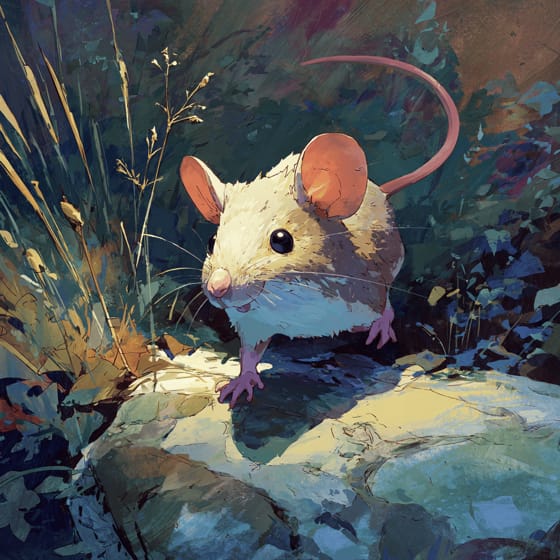
Mus musculus
Moths can be prey for small mammals, including mice.
Pipistrellus pipistrellus
Bats are a significant predator, hunting adult moths at night.
_Clock_-_Tennessee%2C_USA_-_May_31%2C_2014.jpg&width=800)
Taraxacum officinale
The caterpillars feed on the leaves of this common plant.

Plantago major
Vine's Rustic caterpillars often munch on plantain leaves.
Solitary animals live alone for most of their lives, only interacting with others for mating or parental care.
Camouflaged describes organisms that possess coloring or patterns that allow them to blend into their environment.
Grassland habitats are terrestrial biomes dominated by grasses and herbaceous plants, supporting a variety of grazing animals.
This trait characterizes organisms whose diet consists entirely or primarily of plant material.

Describes plants that are particularly attractive and beneficial to a wide range of pollinating organisms.

Nocturnal animals are primarily active during the nighttime hours, typically resting or sleeping during the day.

Describes organisms that transfer pollen, enabling the fertilization and reproduction of plants.
No aliases listed yet.
Danger
1/5 · Very low
Don't touch moths, as they can be delicate and might fly away quickly.
The easiest way to identify Vine's Rustic is to use the Snappit nature identifier app.
28-36 mm
9-18 mm
10-30 days
5-8 km/h
Adult moths sip nectar from flowers, while caterpillars munch on various plant leaves.
Grasslands
Foraging
Zoom in to split clusters and explore where this object has been snapped.
Recent snaps will appear here as new observations are added.
Take the discovery with you
Snap it with Snappit to identify it, learn what makes it special, and add the discovery to your collection.







.jpg&width=800)




