




viper's-bugloss
Echium vulgare
Viper's bugloss is a beautiful flower with bright blue petals that attract bees and butterflies. It grows tall and can be found in sunny places, making gardens and fields look lovely.
Habitat: Grasslands
The viper's-bugloss has vibrant, funnel-shaped blue-purple flowers that emerge from pink buds, clustered along tall, hairy stems. Its long, lance-shaped leaves are also covered in stiff hairs, giving the plant a rough texture.
Category
PlantsRarity
Common
Danger
1/5 · Very low
Snaps
5
Its speckled stem and curving flower spikes reminded people of a viper's head!
People once used this plant to help with snake bites and ward off evil spirits!
The flowers amazingly change color from pink to bright blue as they open!
Tiny seeds are a tasty treat for small birds, helping them get through winter!
Viper's-bugloss produces abundant nectar, attracting many pollinators like bees to help it spread its seeds.
It has deep taproots, helping viper's-bugloss find water and survive in dry, poor soil where others struggle.
Stiff, bristly hairs cover its stems and leaves, making viper's-bugloss less appealing for hungry animals.
Apis mellifera
Viper's-bugloss flowers provide abundant nectar and pollen.
Bombus terrestris
A highly attractive nectar source for these important pollinators.
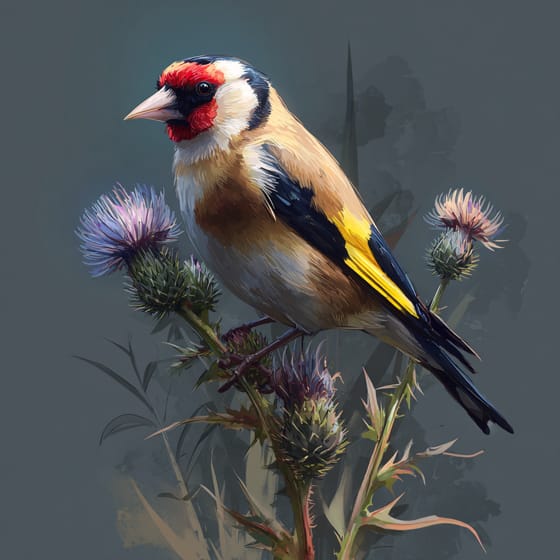
Carduelis carduelis
These birds feed on the mature seeds of the plant.
Papilio machaon
Its showy flowers are visited by various butterfly species for nectar.
Flowering plants are any plants that produce flowers as part of their reproductive cycle.
Describes organisms capable of converting atmospheric nitrogen into compounds usable by plants.
Biennial plants complete their life cycle over two growing seasons, typically forming foliage in the first year and flowering/seeding in the second.
A tube flower has petals fused together at the base, forming a distinct tubular structure that typically holds nectar deep within.

Fragrant flowers emit a pleasant aroma, often to attract pollinators or for defense.

Colorful describes organisms or objects displaying a wide range of bright and distinct colors.

Grassland habitats are terrestrial biomes dominated by grasses and herbaceous plants, supporting a variety of grazing animals.

Describes plants that are particularly attractive and beneficial to a wide range of pollinating organisms.
No aliases listed yet.
Danger
1/5 · Very low
Always look but don't touch flowers unless a grown-up says it's okay.
The easiest way to identify viper's-bugloss is to use the Snappit nature identifier app.
30-90 cm
30-60 cm
1-2 cm
Late Spring to Early Autumn
No
Mild
Biennial
Zoom in to split clusters and explore where this object has been snapped.

Ohio, US
You might spot Spotted Lanternfly and American Robin.
View guide →

Minnesota, US
You might spot Red-Tailed Hawk, Canada Goose, and Western Meadowlark.
View guide →

New Jersey, US
You might spot Eastern Newt, Spongy Moth, and Viper's-Bugloss.
View guide →

New Hampshire, US
You might spot Eastern White Pine and Asian Bittersweet.
View guide →

Washington, US
You might spot Duck, Common Alkanet, and Arrowleaf Balsamroot.
View guide →

Quebec, CA
You might spot Double-Crested Cormorant, Rock Pigeon, and Wild Bergamot.
View guide →
Take the discovery with you
Snap it with Snappit to identify it, learn what makes it special, and add the discovery to your collection.








.jpg&width=800)


_001.jpg&width=800)




