





Wayfaring-tree
Viburnum lantana
The Wayfaring-tree is a lovely shrub with beautiful white flowers that turn into bright red berries. It grows in many places and is great for birds who love to eat its fruit!
Habitat: Forests
The Wayfaring-tree has distinctive grey-green leaves, covered in soft, felt-like hairs, especially underneath. It produces flat-topped clusters of creamy-white flowers in spring, followed by berries that change from green to bright red, then eventually shiny black.
Category
PlantsRarity
Common
Danger
2/5 · Low
Snaps
1
Its strong, flexible branches were once used by people to make ropes!
Look closely! Its soft leaves are covered in tiny, star-shaped hairs!
The plant's old English name means "traveler's tree" as it grew along ancient paths!
Unlike most trees, its winter buds are 'naked' – they have no protective scales!
Wayfaring-tree's berries change from green to red, then shiny black, acting as a visual signal to birds that they are ripe and ready to eat.
Wayfaring-tree has tough, flexible branches that allow it to bend and sway with strong winds without breaking.
Turdus merula
Eats the ripe black berries.
Apis mellifera
Visits the white flowers for nectar.
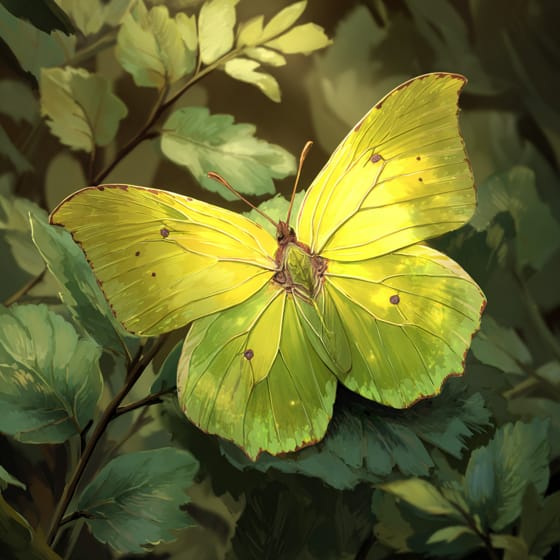
Gonepteryx rhamni
Its caterpillars feed on the leaves.
%2C_Parc_de_Woluw%C3%A9%2C_Brussels_(13042792905).jpg&width=800)
Parus major
Nests in its dense branches.
Deciduous plants periodically shed all their leaves, typically during autumn or dry seasons.
Flowering plants are any plants that produce flowers as part of their reproductive cycle.
A shrub is a woody plant smaller than a tree, typically with multiple stems branching from or near the ground.
Spring blooming plants produce their flowers during the spring season, often signifying the end of winter and the start of new growth.

Fragrant flowers emit a pleasant aroma, often to attract pollinators or for defense.

Fruit-bearing plants produce fruits, which are the mature ovaries of flowering plants containing seeds.

Edible plants are those parts of a plant that are considered safe for human consumption.

Describes plants that are particularly attractive and beneficial to a wide range of pollinating organisms.

Forest habitats are terrestrial environments dominated by dense tree cover, supporting a high diversity of plant and animal life.

This trait characterizes organisms with an exceptionally long lifespan compared to others of their kind.
Danger
2/5 · Low
While the berries are fun to look at, it's best not to eat them without asking an adult.
The easiest way to identify Wayfaring-tree is to use the Snappit nature identifier app.
200-500 cm
150-400 cm
0.5-1 cm
Spring
No
Mild
Perennial
Zoom in to split clusters and explore where this object has been snapped.
Take the discovery with you
Snap it with Snappit to identify it, learn what makes it special, and add the discovery to your collection.







.jpg&width=800)


_001.jpg&width=800)


