





western blue-eyed grass
Sisyrinchium bellum
The western blue-eyed grass is a pretty little flower that blooms in spring. Its bright blue petals and yellow centers make it look like a tiny star shining in the grass!
Habitat: Grasslands
The western blue-eyed grass has slender, grass-like leaves that form small clumps. Its vibrant, star-shaped flowers typically display six deep blue to violet petals, often with a bright yellow eye at the center, standing out from its green stem.
Category
PlantsRarity
Common
Danger
1/5 · Very low
Snaps
12
Despite its name, it's not a true grass, but a beautiful member of the iris family!
Each individual flower lives for only one day, but new ones bloom daily!
Its tiny, star-like flowers open fully only on sunny days, greeting the warm sun!
Some indigenous peoples traditionally used its tough leaves for weaving small baskets!
Western blue-eyed grass can survive dry periods thanks to its tough, fibrous root system that efficiently stores water.
Western blue-eyed grass produces many tiny seeds that are easily spread by wind or water, helping it colonize new areas.
Western blue-eyed grass grows in dense clumps, allowing it to outcompete other plants for light and nutrients in meadows.
Apis mellifera
Collects nectar and pollen from its flowers.

Bombus vosnesenskii
Vital for transferring pollen between its flowers.
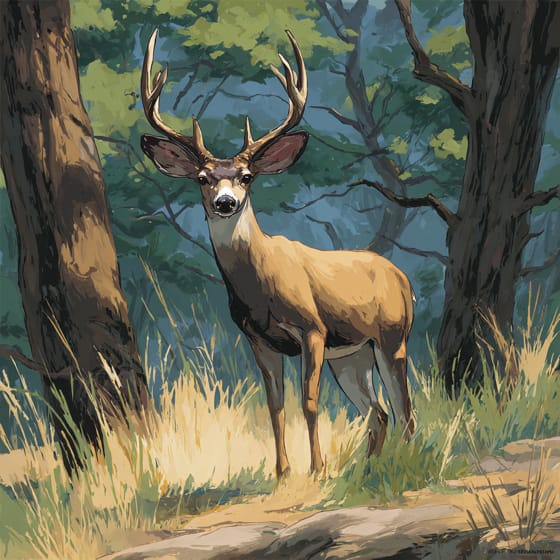
Odocoileus hemionus
May browse on its tender leaves and shoots.
Flowering plants are any plants that produce flowers as part of their reproductive cycle.
Cluster flowers are inflorescences where individual flowers are arranged closely together on a common stem.
Grass-like plants are herbaceous plants that visually resemble true grasses, typically having long, narrow leaves.
Spring blooming plants produce their flowers during the spring season, often signifying the end of winter and the start of new growth.

Colorful describes organisms or objects displaying a wide range of bright and distinct colors.

Grassland habitats are terrestrial biomes dominated by grasses and herbaceous plants, supporting a variety of grazing animals.

Describes plants that are particularly attractive and beneficial to a wide range of pollinating organisms.
No aliases listed yet.
Danger
1/5 · Very low
Always look but don't pick flowers, so everyone can enjoy them!
The easiest way to identify western blue-eyed grass is to use the Snappit nature identifier app.
10-60 cm
15-30 cm
1-2.5 cm
Spring to early summer
Yes
None
Perennial
Zoom in to split clusters and explore where this object has been snapped.

California, US
You might spot Sunburst Anemone, Ochre Sea Star, and Striped Shore Crab.
View guide →

California, US
You might spot Great Blue Heron, Western Gull, and Coyote.
View guide →

California, US
You might spot Western Fence Lizard, Eastern Fox Squirrel, and Duck.
View guide →

California, US
You might spot Checkerbloom and Fuchsiaflower Gooseberry.
View guide →

California, US
You might spot Snowy Egret, Great Blue Heron, and Western Gull.
View guide →

California, US
You might spot Harbor Seal, Ochre Sea Star, and Sea Thrift.
View guide →
Take the discovery with you
Snap it with Snappit to identify it, learn what makes it special, and add the discovery to your collection.







.jpg&width=800)



_001.jpg&width=800)




