





Western Leafcutter Bee
Megachile perihirta
The Western Leafcutter Bee is a small, friendly bee that loves to collect leaves to make its nest. These bees are important for helping flowers grow by spreading pollen.
Habitat: Urban areas
The Western Leafcutter Bee is a medium-sized bee, typically dark-bodied with bands of pale hairs on its abdomen. It has a fuzzy appearance, especially on its head and thorax, which can range from yellowish to grey. It is distinctive for carrying pollen on a dense brush of hairs (scopa) on its underside, rather than on its legs.
Category
InsectsRarity
Common
Danger
1/5 · Very low
Snaps
Be the first to snap!
Each baby bee gets its own leafy bedroom, sealed up tight with plant glue for safety!
Female leafcutter bees build solo nests, creating individual nurseries for each of their babies!
They are expert 'surgeons' of leaves, cutting perfect circles without harming the plant!
Unlike honeybees, they carry pollen on their tummies, making them look extra fuzzy underneath!
Western Leafcutter Bee can precisely cut circular pieces from leaves because of its strong mandibles, which helps them build safe, cylindrical nest cells for their young.
Western Leafcutter Bee has special, thick hairs (scopa) on its abdomen that help them carry large amounts of pollen, making them efficient pollinators.
Western Leafcutter Bee can use mud, chewed plant matter, and resin to seal their individual nest chambers, protecting their developing larvae from predators.
These busy bees feed on nectar for energy and pollen for protein from a variety of flowering plants.
Helianthus annuus
Gathers nectar and pollen from sunflower blooms.

Medicago sativa
An important pollinator for alfalfa crops.
_Misumena_vatia_male.jpg&width=800)
Misumena vatia
Spiders ambush foraging bees on flowers.

Sayornis saya
Insectivorous bird that preys on bees in flight.
Furry describes animals possessing a dense covering of soft hair or fur.
Solitary animals live alone for most of their lives, only interacting with others for mating or parental care.
This trait characterizes organisms whose diet consists entirely or primarily of plant material.
Describes plants that are particularly attractive and beneficial to a wide range of pollinating organisms.

This habitat trait indicates species that can coexist with humans in urban and suburban environments, utilizing man-made structures and green spaces.

Describes organisms that transfer pollen, enabling the fertilization and reproduction of plants.
No aliases listed yet.
Danger
1/5 · Very low
Leafcutter bees are not aggressive, but it's best to watch them from a distance.
The easiest way to identify Western Leafcutter Bee is to use the Snappit nature identifier app.
15-25 mm
8-15 mm
30-60 days
15 km/h
These busy bees feed on nectar for energy and pollen for protein from a variety of flowering plants.
Urban areas
Foraging
Zoom in to split clusters and explore where this object has been snapped.
Recent snaps will appear here as new observations are added.
British Columbia, CA
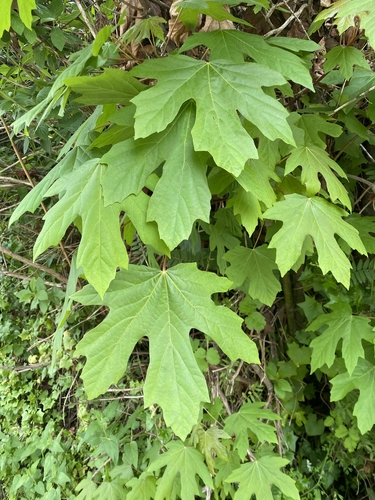
You might spot Bigleaf Maple, Western Sword Fern, and Vanilla Leaf.
View guide →

British Columbia, CA
You might spot Canada Goose, Oregon Oak, and Barn Swallow.
View guide →
Take the discovery with you
Snap it with Snappit to identify it, learn what makes it special, and add the discovery to your collection.







.jpg&width=800)




