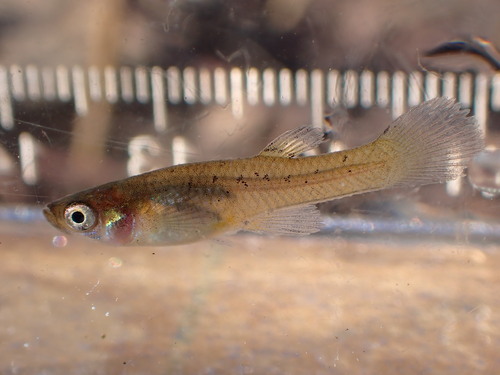


Western Mosquitofish
gambusia affinis
The Western Mosquitofish (Gambusia affinis) is a small, hardy freshwater fish renowned for its voracious appetite for mosquito larvae. Originally native to the watersheds of the south-central United States, this resilient species has been introduced to freshwater ecosystems worldwide as a biological control agent to combat malaria and other mosquito-borne diseases. Despite its helpful reputation in vector control, the Western Mosquitofish is also a highly successful and aggressive invader. In many areas where it has been introduced, it outcompetes native fish species and poses a significant threat to local amphibians by preying on their eggs and tadpoles. Its ability to tolerate high water temperatures, low oxygen levels, and moderate salinity has allowed it to colonize diverse aquatic habitats easily, making it one of the most widely distributed freshwater fish on Earth.
Habitat: Found in slow-moving or stagnant fresh and brackish waters, including shallow ponds, warm marshes, sluggish streams, and urban drainage ditches.
This small fish is characterized by a dull grey-to-olive-brown body with translucent fins and slight dark speckling on its sides and tail. It features an upturned mouth adapted for surface feeding and a rounded caudal fin. Females are significantly larger than males, reaching up to 7 centimeters in length, and can be distinguished by a dark, distinct 'gravid spot' located near their anal fin when pregnant. Males are smaller and possess a specialized, elongated anal fin called a gonopodium, which is used for internal fertilization.
Category
FishRarity
Common
Danger
1/5 · Very low
Snaps
6
A single Western Mosquitofish can consume up to 100 mosquito larvae in just one day.
Despite their small size, they are incredibly aggressive and will attack fish many times their size by nipping their fins.
They are among the top 100 worst invasive species in the world due to how quickly they displace native aquatic biodiversity.
Can survive in harsh aquatic conditions, including low oxygen levels, high salinities, and temperatures up to 42 degrees Celsius.
Females give birth to fully developed, free-swimming young, bypassing the vulnerable egg stage to ensure high juvenile survival rates.
Frequently attacks and nips the fins of larger fish and tadpoles, effectively driving competitors away from food sources.
Primarily feeds on aquatic insects, zooplankton, and algae, with a strong preference for mosquito larvae.
Age differences: Juveniles feed almost exclusively on microscopic zooplankton, while adults consume larger insect prey and plant matter.
Anopheles quadrimaculatus
The Western Mosquitofish hunts mosquito larvae as a primary component of its diet.

Ardea herodias
Large wading birds like the Great Blue Heron frequently prey on schools of these small fish in shallow waters.
Cyprinodon variegatus
They compete intensely with native pupfish for food and space, often outcompeting them in disturbed habitats.
No trait badges are assigned for this object yet.
No aliases listed yet.
Collections for this object will appear here as more themes are added.
Danger
1/5 · Very low
No special safety notes yet.
Look at body shape, where the fins sit and their outline, mouth position, stripes and spots. Young fish and breeding adults can wear different patterns, and aquarium color varieties can look nothing like wild fish. Fish Identifier: upload a photo and compare the visible details.
4+ cm
0.001+ kg
1+ years
Primarily feeds on aquatic insects, zooplankton, and algae, with a strong preference for mosquito larvae.
Found in slow-moving or stagnant fresh and brackish waters, including shallow ponds, warm marshes, sluggish streams, and urban drainage ditches.
Foraging
21+ days
Zoom in to split clusters and explore where this object has been snapped.

New Jersey, US
You might spot Garlic Mustard, Sensitive Fern, and Common Mugwort.
View guide →

New Jersey, US
You might spot Common Mugwort and White-Tailed Deer.
View guide →

Oregon, US
You might spot Oregon Oak, Pacific Poison Oak, and American Bullfrog.
View guide →

Texas, US
You might spot Question Mark, Buttonbush, and Pomegranate.
View guide →

California, US
You might spot Western Fence Lizard, Duck, and Black Phoebe.
View guide →

California, US
You might spot Canada Goose, Duck, and California Towhee.
View guide →
Take the discovery with you
Snap it with Snappit to identify it, learn what makes it special, and add the discovery to your collection.