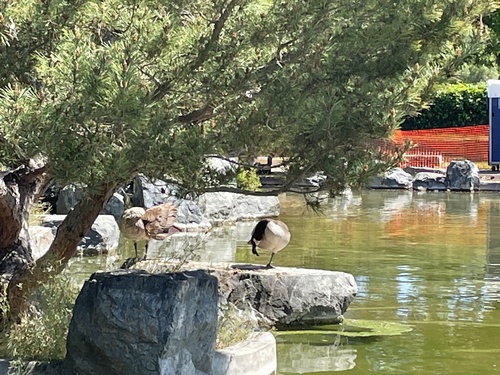
Canada Goose

The Japanese Friendship Garden in San Diego's Balboa Park offers an immersive cultural experience and tranquil escape.
The Japanese Friendship Garden in San Diego's Balboa Park offers an immersive cultural experience and tranquil escape. It beautifully blends traditional Japanese garden design tenets with the local San Diego climate and flora, symbolizing the enduring friendship between San Diego and its sister city, Yokohama. Known in Japanese as "San-Kei-En," meaning "three-scene garden," it artfully represents water, pastoral, and mountain landscapes across its 12 acres.
Visitors can explore a diverse array of features, including a stunning 200-strong cherry tree grove, specially double-grafted to thrive in San Diego's climate. Serene koi ponds, home to show-quality koi fish, invite peaceful contemplation, while the meticulous Bonsai collection showcases the ancient art of miniature tree cultivation. Key architectural elements like the iconic Dragon Bridge, a 30-foot dry stone waterfall, the traditional Charles C. Dail Memorial Gate, and the elegant Inamori Pavilion further enhance the authentic Japanese aesthetic. The garden also features a Zen garden (Karesansui) of raked pebbles and stones, a Shishi-odoshi (deer scare), and a magnificent 280-year-old bronze Kannon Bosatsu statue.
More than just a botanical display, the Japanese Friendship Garden is a living exhibition designed to foster a relationship between humans and nature. It provides a respite from city life, attuned to Japanese simplicity, serenity, and aestheticism, making it a memorable destination for cultural understanding and peaceful reflection. Seasonal events, particularly the vibrant Cherry Blossom Festival, draw visitors from around the world, offering unique opportunities to celebrate Japanese culture amidst natural beauty. Be ready to snap and learn! Get the Snappit app to identify any nature species you find here.
The origins of the Japanese Friendship Garden in Balboa Park trace back to the 1915 Panama-California Exposition, where a Japanese Teahouse and Garden were established to introduce Japanese aesthetics and culture. The Asakawa family meticulously cared for this teahouse from 1917 until 1941, when they, along with thousands of other Japanese Americans, were forced into internment camps during World War II. The teahouse later fell into disrepair and was eventually demolished in 1955 to make way for the Children's Zoo. Following World War II, renewed efforts to establish a Japanese garden in Balboa Park gained momentum, propelled by San Diego's sister-city relationship with Yokohama, formed in 1957. The modern Japanese Friendship Garden officially opened to the public in 1991, embodying this bond of friendship. Significant expansions followed, with the second phase completed in 1999, adding the Exhibit Hall, Activity Center, and Upper Koi Pond, designed by renowned landscape architect Takeo Uesugi. The third phase, completed in 2015 for Balboa Park's centennial, expanded the garden to its current 12 acres, incorporating the 200-cherry tree grove, a large azalea and camellia garden, a water feature mimicking the San Diego watershed, and the state-of-the-art Inamori Pavilion.
Take a peaceful stroll along the winding paths, feed the koi fish in the ponds, admire the diverse plant life, and appreciate the traditional Japanese garden design. Attend a tea ceremony (check schedule), explore current art exhibits, and participate in cultural events and festivals. Photography is highly encouraged.
Spring (March): The annual Cherry Blossom Festival is a major draw, featuring vibrant blooms, performances, and vendors. Peak bloom lasts approximately 1-2 weeks. Azaleas and camellias also add significant color.
Summer (May-July): Gardenias, daylilies, jasmine, magnolias, and hydrangeas offer their beauty.
Fall/Winter: The changing foliage of Japanese maples provides seasonal interest, and evergreens maintain the garden's serene atmosphere.
Be aware that resident free days (the 3rd Tuesday of every month) and festival days are significantly more crowded.
All pathways throughout the garden are ADA-accessible, ensuring ease of navigation for all visitors. ADA service animals are welcome. Shuttle service assistance from the Lower Garden back to the Upper Garden is available upon request at the gift shop. Braille guides and virtual guides for visitors with autism are also offered.
Don't miss the Cherry Tree Grove (especially during bloom), the serene Koi Ponds, the intricate Bonsai Collection, the meditative Zen Garden (Karesansui), the architectural beauty of the Dragon Bridge, the Inamori Pavilion, the historic Charles C. Dail Memorial Gate, and the ancient Kannon Bosatsu statue. Look for the carefully pruned Japanese Black Pine Trees and the unique Shishi-odoshi.
Each card links to a full Explore page with photos, traits, and fun facts.
Start with the big picture, then zoom in to explore individual wildlife observations around this place.
Visit on a Weekday
To avoid the largest crowds and experience the garden's tranquility more fully, plan your visit for a weekday, especially outside of major festival times.
Arrive Early for Parking
Parking in Balboa Park can be challenging, particularly on weekends or during special events. Arriving before 10 AM can help secure a spot.
Utilize the Free Balboa Park Tram
If parking is difficult, consider parking further away and taking the free Balboa Park tram, which has a convenient stop near the garden.
Check Bloom Status and Events Online
Before your visit, consult the official Japanese Friendship Garden website for up-to-date information on cherry blossom bloom percentages, hours of operation, and any scheduled events or temporary exhibits.
Allow Ample Time
Give yourself at least 2-3 hours to fully explore both the Upper and Lower Gardens, as there are many intricate details and peaceful spots to discover.
Bring a Camera
The garden offers countless picturesque scenes, from the vibrant koi to the sculpted trees and traditional architecture, making it a paradise for photography.
Apr 13, 2026
Photo attribution
no rights reserved
License: CC0 1.0 ↗
Image may be shown cropped inside the card frame.
May 27, 2026
May 27, 2026
Apr 9, 2026
Apr 9, 2026

Maryland, US
You might spot White-Tailed Deer and Eastern Gray Squirrel.
View guide →
.jpg)
District of Columbia, US
You might spot Eastern Gray Squirrel, Duck, and House Sparrow.
View guide →

Illinois, US
You might spot American Robin, Canada Goose, and House Sparrow.
View guide →

Virginia, US
You might spot Spotted Lanternfly and Northern Cardinal.
View guide →
Take the discovery with you
Identify the wildlife you spot, learn as you go, and keep a collection of the adventure.