





western poison ivy
Toxicodendron rydbergii
Western poison ivy is a plant that can grow as a vine or a small shrub. It has shiny green leaves that can turn red in the fall. Be careful, as touching it can make your skin itchy!
Habitat: Forests
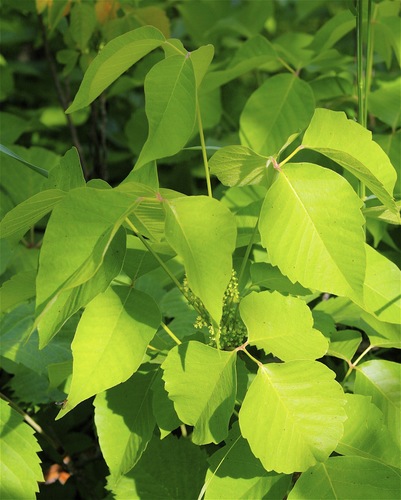
The western poison ivy typically grows as a low shrub or groundcover, but can also be a climbing vine. It has shiny green leaves arranged in sets of three leaflets, which turn brilliant red or orange in fall. Small, whitish berries are produced in clusters.
Category
PlantsRarity
Common
Danger
4/5 · High
Snaps
10
Burning poison ivy can send its oily smoke into your lungs, causing internal rashes!
The rash from poison ivy isn't contagious, it's an allergic reaction to the oil!
The sticky oil can stay active on tools, clothes, and pets for many years!
This plant is surprisingly related to tasty cashews and sweet mangoes!
Western poison ivy has a special oil called urushiol that helps it defend against animals that might try to eat its leaves.
Western poison ivy can grow as a low plant, a shrub, or a climbing vine, helping it survive in many places.
Western poison ivy produces white berries that birds safely eat, helping spread its seeds far and wide.
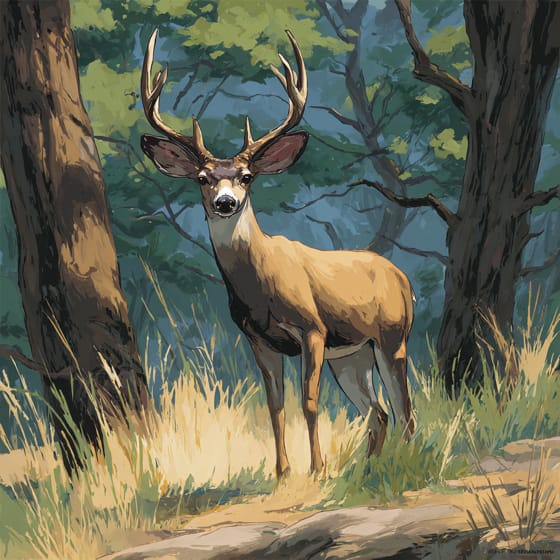
Odocoileus hemionus
Safely browses its leaves.
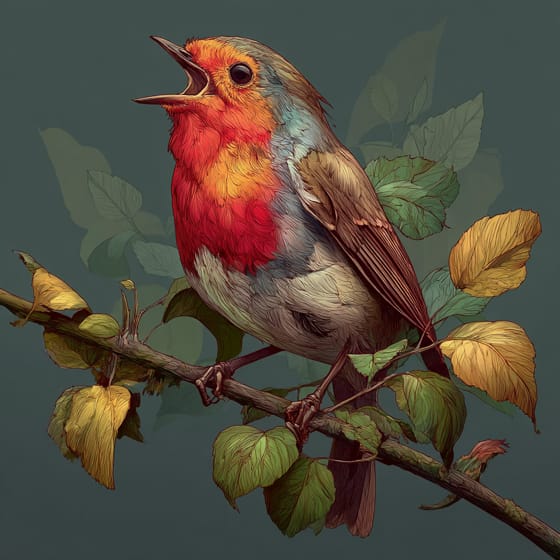
Turdus migratorius
Eats its white berries.
Apis mellifera
Collects nectar from its flowers.
Deciduous plants periodically shed all their leaves, typically during autumn or dry seasons.
A shrub is a woody plant smaller than a tree, typically with multiple stems branching from or near the ground.
Fall color refers to the seasonal change in foliage pigmentation, primarily in deciduous plants, displaying vibrant hues.
Forest habitats are terrestrial environments dominated by dense tree cover, supporting a high diversity of plant and animal life.

Toxic organisms contain substances that are poisonous and can cause adverse effects upon exposure.

Poisonous organisms produce toxins that can cause harm when ingested, inhaled, or absorbed through contact.
Danger
4/5 · High
Do not touch poison ivy, as it can make your skin itchy and uncomfortable.
The easiest way to identify western poison ivy is to use the Snappit nature identifier app.
20-100 cm
50-300 cm
0.2-0.5 cm
Late spring to early summer
No
High
Perennial
Zoom in to split clusters and explore where this object has been snapped.

Wisconsin, US
You might spot Eastern Redcedar, Rock Polypody, and Vulture.
View guide →

Vermont, US
You might spot Northern Cardinal, Wood Frog, and White-Breasted Nuthatch.
View guide →

New Hampshire, US
You might spot White-Tailed Deer, Christmas Fern, and Eastern Hemlock.
View guide →

Nebraska, US
You might spot Canada Goose, Blue Dasher, and Eastern Pondhawk.
View guide →
North Dakota, US
You might spot Western Poison Ivy, Wild Licorice, and Leadplant.
View guide →

Vermont, US
You might spot Eastern Newt and Common Eastern Bumble Bee.
View guide →
Take the discovery with you
Snap it with Snappit to identify it, learn what makes it special, and add the discovery to your collection.







.jpg&width=800)



_001.jpg&width=800)




