





Western Starflower
Lysimachia latifolia
The Western Starflower is a pretty flower with bright yellow petals that look like stars! It grows in fields and meadows, making them look cheerful and colorful.
Habitat: Meadows
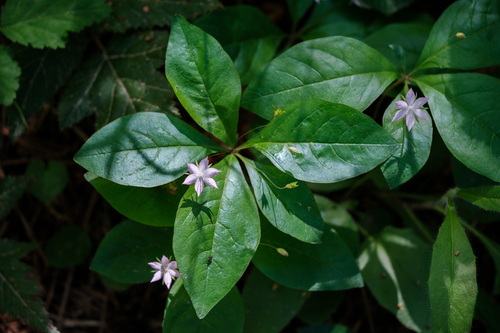
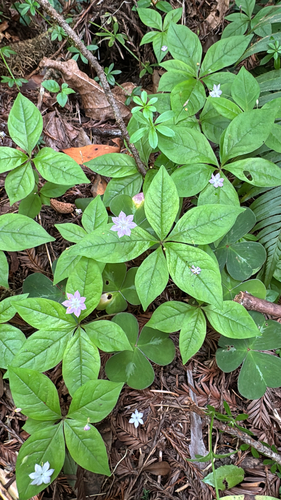
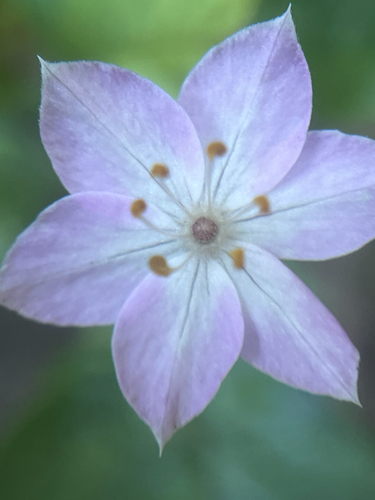
The Western Starflower has bright yellow, star-shaped flowers, often dotted with tiny red specks in the center. Its lance-shaped leaves grow on upright stems, creating a lovely green backdrop for the blooms, making it visually distinct from many woodland plants.
Category
PlantsRarity
Common
Danger
1/5 · Very low
Snaps
23
Each star-shaped flower has five perfect petals, symmetrical like a superhero's emblem!
Its name comes from a king who used it to calm rowdy oxen! Wow!
Its tiny seeds are often carried by wind or water, finding new spots to grow!
These cheerful yellow flowers are a sunny sign that warm summer days are here!
Western Starflower has tiny red dots on its petals that act like landing strips, guiding busy bees straight to its sweet nectar!
Western Starflower can spread underground with special roots, helping it colonize new areas and create patches of sunny yellow blooms.
The Western Starflower's leaves are positioned to capture as much sunlight as possible, powering its growth and vibrant flowers.
Apis mellifera
collects nectar and pollen
Bombus occidentalis
seeks nectar and pollen
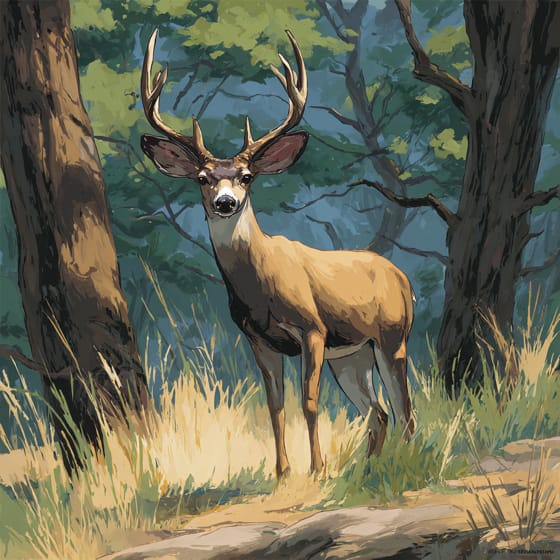
Odocoileus hemionus
may browse its leaves
Flowering plants are any plants that produce flowers as part of their reproductive cycle.
Spring blooming plants produce their flowers during the spring season, often signifying the end of winter and the start of new growth.
Summer blooming plants produce their flowers during the summer season, often providing vibrant color when many other plants have finished.
Fragrant flowers emit a pleasant aroma, often to attract pollinators or for defense.

Colorful describes organisms or objects displaying a wide range of bright and distinct colors.

Grassland habitats are terrestrial biomes dominated by grasses and herbaceous plants, supporting a variety of grazing animals.

Describes plants that are particularly attractive and beneficial to a wide range of pollinating organisms.
No aliases listed yet.
Danger
1/5 · Very low
Don't pick flowers without asking an adult first, so they can keep growing for everyone to enjoy.
The easiest way to identify Western Starflower is to use the Snappit nature identifier app.
30-90 cm
15-30 cm
1-2 cm
Late Spring to Mid-Summer
No
None
Perennial
Zoom in to split clusters and explore where this object has been snapped.
May 28, 2026
Hoyt ArboretumPhoto attribution
no rights reserved
License: CC0 1.0 ↗
Image may be shown cropped inside the card frame.
May 24, 2026
Redwood National and State ParksPhoto attribution
no rights reserved
License: CC0 1.0 ↗
Image may be shown cropped inside the card frame.
May 10, 2026
Huckleberry Botanic Regional PreservePhoto attribution
no rights reserved
License: CC0 1.0 ↗
Image may be shown cropped inside the card frame.

Washington, US
You might spot Barrow's Goldeneye and Pacific Banana Slug.
View guide →

British Columbia, CA
You might spot Vanilla Leaf, Western Maidenhair Fern, and Salal.
View guide →

California, US
You might spot Pacific Banana Slug and Ensatina.
View guide →

California, US
You might spot Broad-Leaved Stonecrop and Pacific Bleeding Heart.
View guide →

California, US
You might spot Hoary Rock-Rose, Brittleleaf Manzanita, and Chaparral Pea.
View guide →

California, US
You might spot Yellow Star-Tulip and Mountain Misery.
View guide →
Take the discovery with you
Snap it with Snappit to identify it, learn what makes it special, and add the discovery to your collection.








.jpg&width=800)


_001.jpg&width=800)




